
Only hours before Donald Trump was set to sign a long-awaited executive order on Thursday that would have called for a government safety review of new artificial intelligence models before their release, the president abruptly backed out. Despite growing public backlash to the technology and experts warning new models will pose critical security risks, Trump vowed the US government would not slow down the AI race.
During a meeting with reporters on Thursday, Trump cited both American dominance and competition with China and as his reasoning behind the reversal.
“I didn’t like certain aspects of it, I postponed it,” Trump said of the executive order in the Oval Office. “We’re leading China, we’re leaving everybody, and I don’t want to do anything that’s gonna get in the way of that lead.”
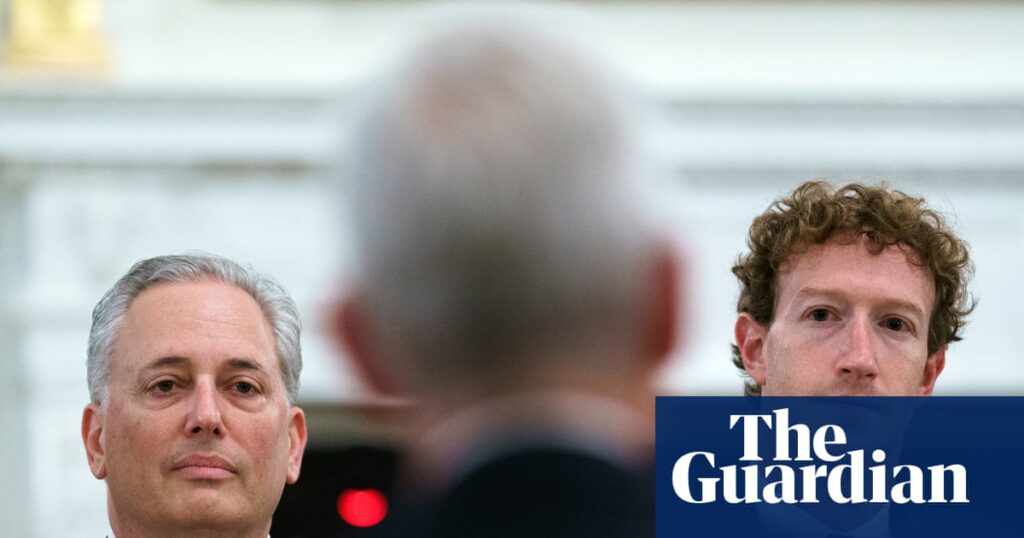
Trump’s postponing of the order was a victory for tech leaders who have long opposed AI regulation and spent millions lobbying against it. The decision was also the direct result of their influence, according to reports from multiple news outlets, with tech billionaires including Elon Musk, Mark Zuckerberg and former White House “AI czar” David Sacks personally urging Trump to reverse course in private phone calls.
After a brief period in which the White House appeared concerned enough about potential security implications to consider restraints on frontier AI, Trump’s decision marks a return to his own earlier hands-off approach and signals a laissez-faire future. The tech industry retains its ability to pursue rapid advancement of AI regardless of the potential harms, and Silicon Valley’s leaders have successfully tested their power to kill any attempts at regulation in infancy.
Powerful cybersecurity AI forces White House to consider regulation
White House discussions around the order began after Anthropic last month announced its latest model, Claude Mythos, but declared that it would hold off on publicly releasing it due to safety concerns – calling the model’s ability to find vulnerabilities in computer code a “reckoning” for the cybersecurity industry. Mythos sparked a small geopolitical crisis, with governments from the UK to India to China worrying the AI model could target financial systems and other critical infrastructure.
The security risks posed by Mythos were also not a one-off. The capabilities of one company’s AI model are historically matched by other firms in the ensuing months, sometimes eventually becoming available in open-source models, which can have fewer restrictions on how they are deployed. Mythos may be unique in its potential harms, but only for now. OpenAI announced a cybersecurity AI product not long after Mythos debuted.
The White House reaction to Mythos, which included JD Vance calling the heads of AI firms to urge cooperation, signaled a potential shift from the administration’s long-held view that the US should advance AI as fast and with as little restriction as possible in order to…
Source link
Disclaimer
We strive to uphold the highest ethical standards in all of our reporting and coverage. We blogs.grocliq.com want to be transparent with our readers about any potential conflicts of interest that may arise in our work. It’s possible that some of the investors we feature may have connections to other businesses, including competitors or companies we write about. However, we want to assure our readers that this will not have any impact on the integrity or impartiality of our reporting. We are committed to delivering accurate, unbiased news and information to our audience, and we will continue to uphold our ethics and principles in all of our work. Thank you for your trust and support.
Website Upgradation is going on for any glitch kindly connect at [email protected]