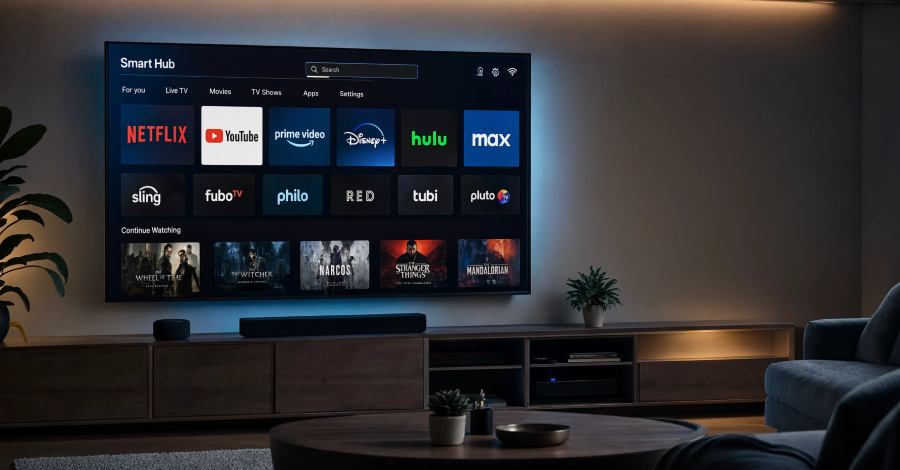


A researcher has reverse-engineered the iOS SDK that Bright Data embeds in consumer apps and documented how it turns devices, including always-on smart TVs, into exit nodes that relay web-scraping traffic for a data business Bright Data markets heavily to the AI industry.
The company, the successor to Luminati, operates what it calls the largest residential proxy network in the world, advertised at more than 400 million residential IPs. Part of that supply comes from this SDK, shipped inside free apps behind an opt-in screen and described as a consent-sourced pool of 150 million-plus IPs.
The findings, published June 5 by Include Security and independent researcher Buchodi, matter because the scraping comes from the user’s home IP, not the customer’s. The immediate risk is not a hacked account or stolen data; it is that a home connection and its bandwidth get used as someone else’s scraping infrastructure.
A connected TV is close to ideal for that: usually plugged in, on a fast connection, effectively unmetered, and unwatched.
The deepest technical evidence is from the iOS SDK; the smart-TV reach rests on Bright Data’s platform support, its public partner list, and earlier reporting. The research found the peer channel that carries scraping jobs has no real authentication, and on iOS, its traffic bypasses a configured VPN.
Inside the peer tunnel
When the app opens, the SDK contacts one of Bright Data’s servers, which hands over its instructions without really checking who is asking. From then on, the server can tell the device to go and fetch pages from other websites, using the user’s home internet connection to do it.
The researcher found the channel that carries those jobs has none of the usual security checks, and described it as weaker than the controls built into most malware.
On iPhones, the researcher found that this traffic slips past a VPN, and that much of what the app does does not show up in the tools security teams normally use to monitor apps. The device can also keep relaying in the background while someone is watching the screen or on a call, as long as the battery is not low.
The consent gap
The opt-in screen does not match what the SDK actually allows. In one Roku app, Petflix, the screen said it would use the device and its connection “occasionally.”
The settings the SDK loads allow up to 200 GB of traffic a month. In a few countries, including Uzbekistan and Oman, the limits are set far higher, and the device is cleared to keep working almost until the battery runs flat. The SDK can also tie together a person’s phone and computers that run the same company’s apps, treating them as one user.
Bright Data publishes its list of app partners on a page anyone can open, and it includes makers of smart-TV apps such as PlayWorks Digital, CloudTV, and Longvision. The researcher is careful to note that being on the list only shows a company worked with Bright Data at some point, not that its app includes the SDK today….
Source link
Disclaimer
We strive to uphold the highest ethical standards in all of our reporting and coverage. We blogs.grocliq.com want to be transparent with our readers about any potential conflicts of interest that may arise in our work. It’s possible that some of the investors we feature may have connections to other businesses, including competitors or companies we write about. However, we want to assure our readers that this will not have any impact on the integrity or impartiality of our reporting. We are committed to delivering accurate, unbiased news and information to our audience, and we will continue to uphold our ethics and principles in all of our work. Thank you for your trust and support.
Website Upgradation is going on for any glitch kindly connect at [email protected]