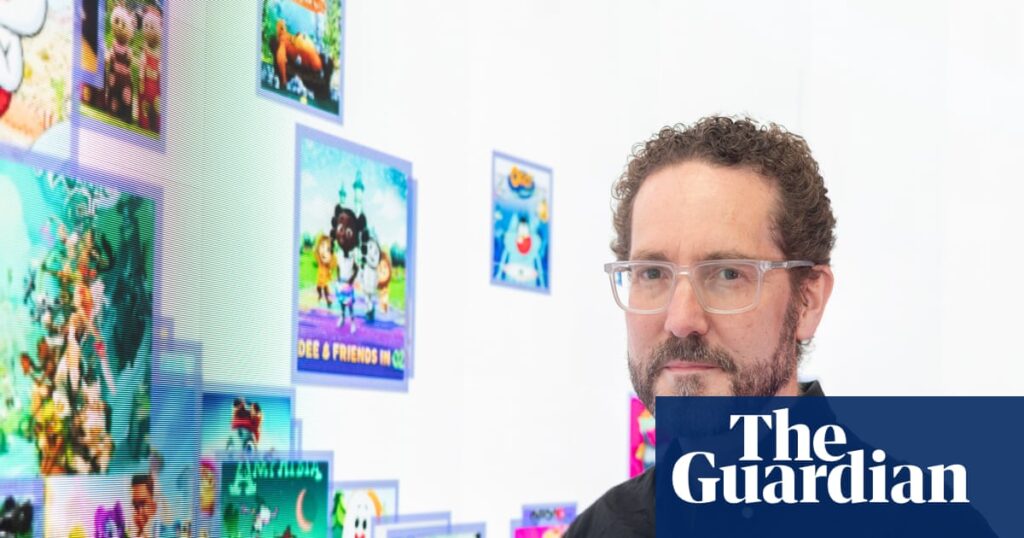

Parents are constantly being told to limit their children’s screen time. But when it comes to deciphering which films or TV shows are best suited to developing minds, the guidance remains largely one-size-fits-all. A relatively slow-paced programme such as Bluey offers a very different viewing experience to a fast-moving action series such as PAW Patrol, yet both are broadly considered suitable for young children.
This challenge is growing as the type of content children are exposed to evolves. “Today’s young viewers are increasingly engaging with short-form, fast-paced, highly captivating content, often created by splicing and rearranging existing episodic content into quickly digestible snippets or compilations,” said Prof Tim Smith, director of University of the Arts London’s Nerve Lab. “This evolution is not only changing how content is produced and distributed, but may also affect children’s attention, comprehension and emotional response.”
Young children process information differently from adults, yet there is still relatively little evidence about how specific features of children’s programmes influence their attention, comprehension and behaviour. “We have kids as young as two spending three or four hours a day on screens. It is really important to have a wider understanding of what it means for them to watch something that’s appropriate for their age,” said Alisa Musatova, a research assistant on the Animating Minds project.
Animating Minds is just one strand of research under way at Nerve Lab, which opened in London earlier this week. The first facility of its kind in the UK, it combines wearable brain imaging, motion capture and AI-powered analytics to study how people respond to media and artistic experiences in real time. Other projects are developing tools to help visually impaired people navigate video games or even shape live dance and music performances.
To better understand how different styles of children’s content affect young viewers, Musatova and her colleagues have assembled a database of about 1,000 episodes of popular animated TV shows and are using AI-based tools to analyse features such as pacing, colourfulness, loudness, shot frequency and narrative structure, while interviewing animators, producers and commissioners about the creative decisions that shape children’s content.
They are also currently recruiting UK families with children aged three to six years to participate in an online study exploring how animated programmes influence their short-term attention.
Their ultimate goal is to develop tools that could help animators, commissioners and regulators understand whether programmes are having the intended effect on their target audience, while laying the foundations for more nuanced classification systems.
“The question is, can we build a computational system where we can…
Source link
Disclaimer
We strive to uphold the highest ethical standards in all of our reporting and coverage. We blogs.grocliq.com want to be transparent with our readers about any potential conflicts of interest that may arise in our work. It’s possible that some of the investors we feature may have connections to other businesses, including competitors or companies we write about. However, we want to assure our readers that this will not have any impact on the integrity or impartiality of our reporting. We are committed to delivering accurate, unbiased news and information to our audience, and we will continue to uphold our ethics and principles in all of our work. Thank you for your trust and support.
Website Upgradation is going on for any glitch kindly connect at [email protected]