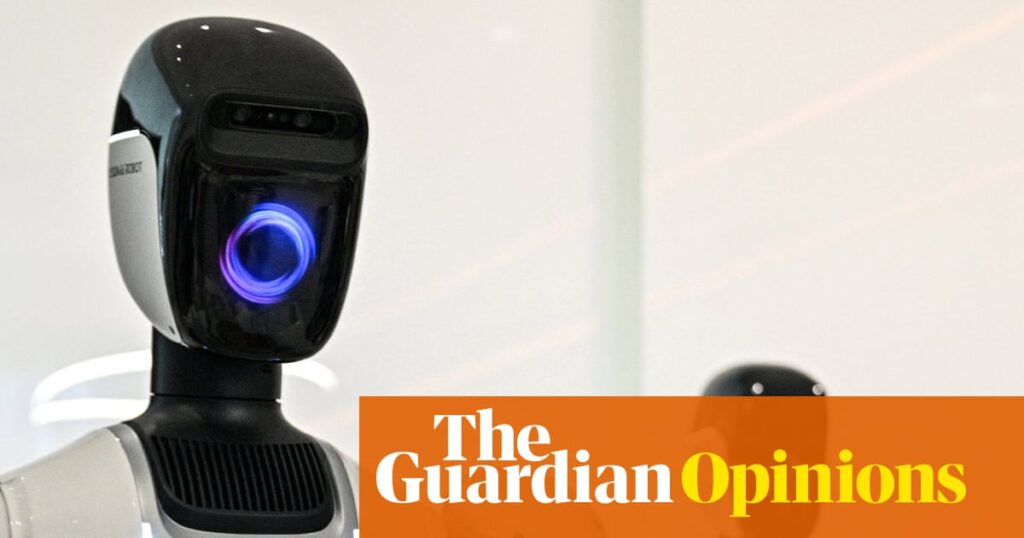

A robot magician called D4YRL was rejected as a member of the Magic Circle last week, for being insufficiently human.
While D4YRL’s tricks were exemplary, the august organisation decided “he” did not engage the audience’s emotions as a flesh-and-blood performer would.
With robotics and AI now advancing at breakneck speed, it was the latest example of an organisation forced to confront questions that were once the province of philosophy – such as what it means to be human.
In her enjoyable new book, We Are Not Machines, the FT journalist Sarah O’Connor takes a long hard look at one pressing aspect of this problem: how AI is changing our jobs, and perhaps in the process, changing us.
She spends time with Amazon employees whose tasks are constantly surveilled; and with invisible staff thousands of miles away in India and Costa Rica, watching hours of mind-numbing video footage, to train the AI systems monitoring the warehouses.
“We think we’re robotising our work, but what if we’re robotising ourselves?” she asks.
She talks to translators who feel the joy has drained out of their work, now that they spend their days correcting mediocre AI-generated text for a fraction of the pay instead of exercising their creativity – a job known as machine translation post-editing.
“I want to have something creative, but I’m not sure that I can have a creative job that’s not endangered,” one translator, Petr, tells her. “Everywhere you step, there’s AI.”
Importantly, O’Connor also reviews the growing evidence that we may be reading, thinking and understanding less, as we lean on technological shortcuts – potentially changing the very nature of human intelligence.
Her conclusion is not that we should resist AI altogether but that we should think more carefully about which aspects of work should be automated, joining, as the book’s subtitle puts it, The Fight for the Future of Work.
Just because a robot may technically be able to perform a task, for example, it doesn’t mean we should accept that it should. O’Connor makes that point powerfully as she watches a Dutch nurse caring for an elderly patient at home, with a humour and empathy that a robot carer couldn’t provide, any more than D4RYL can master a magician’s patter.
“Technology is designed by people, made by people, and adopted by people. And it is perfectly reasonable for policymakers, business leaders, workers and consumers to say ‘yes’ to some uses of new technology, or workplace changes induced by technology, and ‘no’ to others,” she says.
Billionaire tech bros speak with disarming certainty about the coming dominance of AI, with knock-on effects for human workers, who demand to be paid, take holidays and gossip about their weekends.
In her reporting, however, O’Connor uncovers stark differences in the way technology is affecting people’s working lives, depending on their bargaining power over the way it is introduced.
In Sweden, where union-employer…
Source link
Disclaimer
We strive to uphold the highest ethical standards in all of our reporting and coverage. We blogs.grocliq.com want to be transparent with our readers about any potential conflicts of interest that may arise in our work. It’s possible that some of the investors we feature may have connections to other businesses, including competitors or companies we write about. However, we want to assure our readers that this will not have any impact on the integrity or impartiality of our reporting. We are committed to delivering accurate, unbiased news and information to our audience, and we will continue to uphold our ethics and principles in all of our work. Thank you for your trust and support.
Website Upgradation is going on for any glitch kindly connect at [email protected]