
The rise of AI and digitisation could be a turning point in the “race against extinction” faced by botanists trying to identify and save vital plants before they vanish, according to a major report from Royal Botanic Gardens, Kew.
New technology is enabling scientists to track how flowering times have shifted by weeks around the world, rapidly identify new specimens and even get crucial genetic data from 180-year-old fungus specimens, potentially opening a “genomic goldmine”. Digitisation and online access to millions of specimens that were until now only accessible in archives is also producing new insights, especially in the global south.
Plants and fungi underpin all life on Earth, supplying food and medicines, storing carbon and regulating the climate. However, about 40% of the 70,000 plant species that have been assessed are at risk of extinction, while another 330,000 have yet to be analysed. There are also believed to be another 100,000 plant species still to be named by scientists.
About 2,000 new plant species are recorded each year but this “barely scratches the surface” said Prof Alexandre Antonelli, the executive director of science at RBG Kew.
It means potential new medicines and sustainable crops are going extinct before even being discovered.
The situation is even more stark for fungi, with 90% of an estimated 2m species still unknown to science and less than 1% of known species assessed for extinction risk.
“While documenting and protecting all life on Earth remain formidable challenges, digitisation and accompanying technologies make me increasingly hopeful that we’ll succeed,” said Antonelli.
AI can learn how to identify challenging plants, for example, such as sedges and peat mosses whose distinguishing features are microscopic, meaning new or vulnerable species can be spotted faster. “These AI models can sometimes now identify better than specialists – that’s incredibly exciting,” he said.
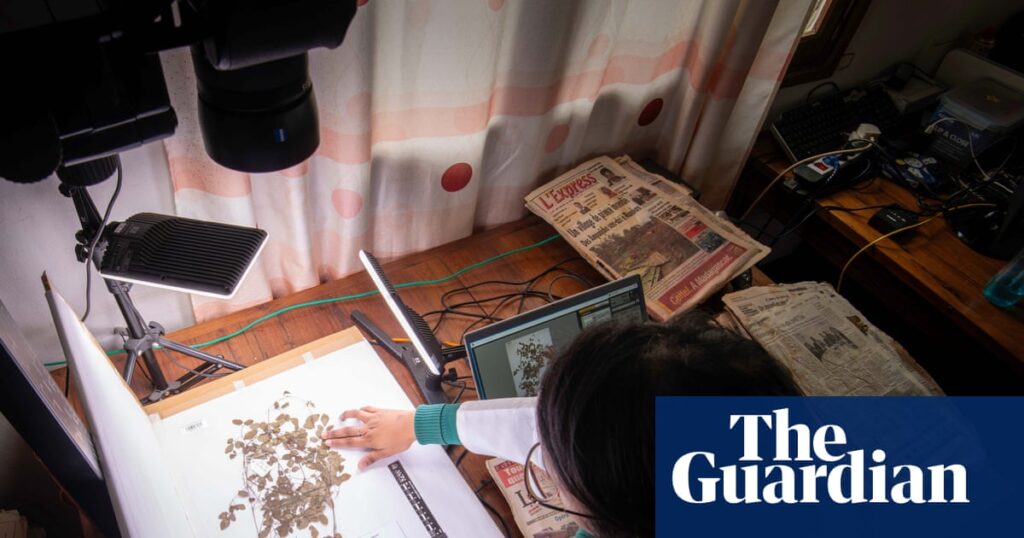
Digitising images and collection data of plant and fungi specimens also speeds up international collaboration and can open up important but rarely accessed collections in biodiversity hotspots, such as Madagascar.
Landy Rajaovelona, a senior botanist at Kew Madagascar, says: ‘Madagascar is one of the world’s most extraordinary biodiversity hotspots. By digitising [37,000 physical specimens], we’ve unlocked a treasure of knowledge spanning centuries, offering invaluable insights into today’s biodiversity.”
RBG Kew has now digitised all 7.4m of its specimens, including those collected by Charles Darwin, and these are freely available…
Source link
Disclaimer
We strive to uphold the highest ethical standards in all of our reporting and coverage. We blogs.grocliq.com want to be transparent with our readers about any potential conflicts of interest that may arise in our work. It’s possible that some of the investors we feature may have connections to other businesses, including competitors or companies we write about. However, we want to assure our readers that this will not have any impact on the integrity or impartiality of our reporting. We are committed to delivering accurate, unbiased news and information to our audience, and we will continue to uphold our ethics and principles in all of our work. Thank you for your trust and support.
Website Upgradation is going on for any glitch kindly connect at [email protected]