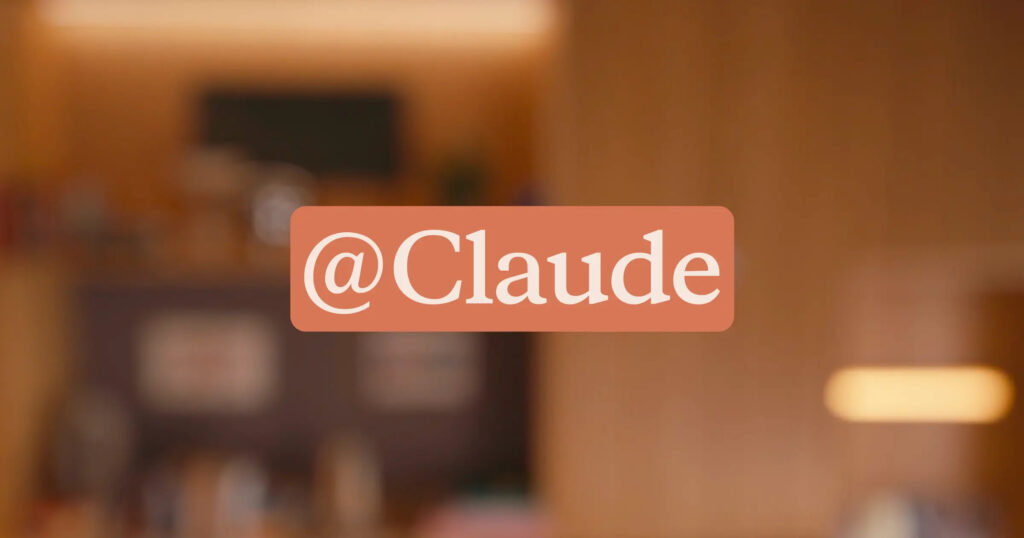

Anthropic launched a beta version of its Claude Tag feature for Enterprise and Team tiers, shifting its chat model into shared Slack channels. Moving away from traditional isolated chat boxes, users pull the artificial intelligence model into active group threads by typing @Claude.
The integration allows any team member in the channel to delegate a task, review the model’s outputs, and pick up the discussion thread from a previous point. This structural shift follows a US$65 billion Series H funding round that brought Anthropic’s post-money valuation to US$965 billion, positioned above rival OpenAI’s US$852 billion mark.
Following a confidential S-1 filing for an initial public offering, market competition for business software placement remains tight. Data from corporate expense platform Ramp’s May 2026 AI Index indicates Anthropic’s enterprise adoption rate reached 34.4%, passing OpenAI’s 32.3% footprint.
Modifying the channel workstream
Standard generative software requires enterprise employees to move data between team chats and separate browser instances. Anthropic aims to reduce this back-and-forth movement by restructuring workplace AI agents to work in multiplayer environments.
“Instead of a private back-and-forth, Claude Tag shows up in the open,” stated Rob Seaman, general manager of Slack, regarding the operational mechanics of the application. This shared visibility alters how context is tracked inside an organisation. Because Claude Tag logs its task status directly inside the communication window, multiple employees can monitor the live execution steps.
The system tracks ongoing information from its active channels to build a contextual background. This automated history tracking limits the need for team members to continuously retype foundational company data or project scopes.
Functional mechanics and asynchronous tasks
The technical foundation for this channel integration relies on Anthropic’s Opus 4.8 engine. When assigned a request, the model divides the operation into sequential execution phases and utilises connected corporate databases, tools, and code repositories to complete the work.
The primary operational difference for these workplace AI agents is their capability to function asynchronously without real-time human prompting. If a network administrator activates the tool’s “ambient” configuration, Claude Tag monitors threads and tracks tasks autonomously. The agent checks inactive text threads, signals priority notifications from integrated software extensions, and tracks unresolved assignments across multi-day intervals.
Cat Wu, head of product for Claude Code, noted that the change centres on user configuration rather than completely new logic. “The form factor of being able to tag it the same way that you would a coworker is really powerful,” Wu told Reuters. Wu explained that connecting her personal Claude Tag agent to her email archive allows the system to analyse…
Source link
Disclaimer
We strive to uphold the highest ethical standards in all of our reporting and coverage. We blogs.grocliq.com want to be transparent with our readers about any potential conflicts of interest that may arise in our work. It’s possible that some of the investors we feature may have connections to other businesses, including competitors or companies we write about. However, we want to assure our readers that this will not have any impact on the integrity or impartiality of our reporting. We are committed to delivering accurate, unbiased news and information to our audience, and we will continue to uphold our ethics and principles in all of our work. Thank you for your trust and support.
Website Upgradation is going on for any glitch kindly connect at [email protected]