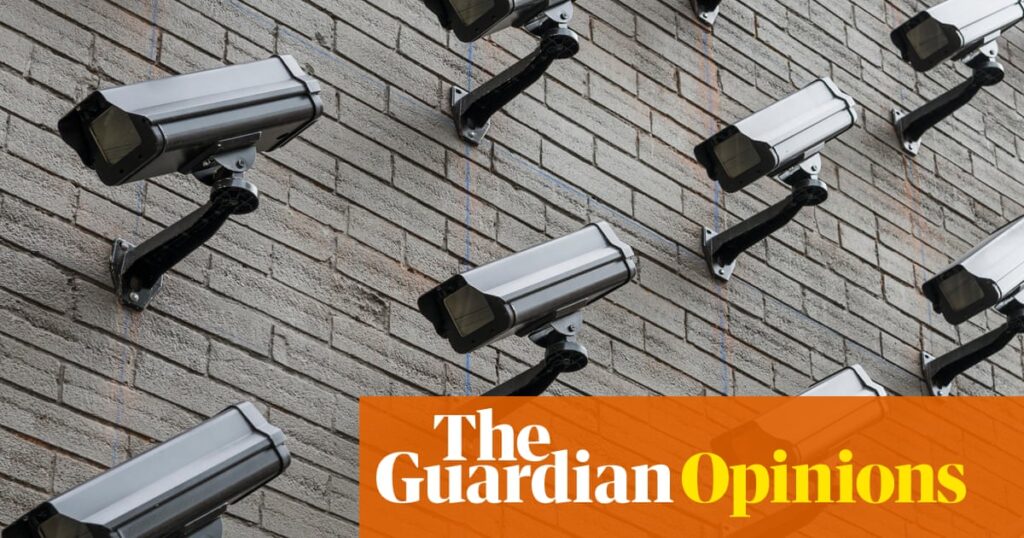

In the near future, AI-powered surveillance systems will be able to track everything we do in public, and much of what we do in private. And if we do something wrong – shoplift, litter, jaywalk, you name it – the system will notice, retain it, tie it to your official government record, communicate that fact to you, and provide real-time alerts to any relevant authorities … and maybe also to the general public.
Think of these systems as automated speed cameras, but on steroids. Only they’ll enforce not just speed limits, but any other rule you can imagine. And you won’t receive a ticket weeks later by mail; you’ll be informed about and fined for your violation immediately.
These systems will combine powerful AI, public and private surveillance via real-time facial recognition technology and digital tracking, mass databases and highly personalized enforcement. If deployed at scale, they will have profound chilling effects not just on personal freedoms, but democracy and social progress itself.
China has been developing its surveillance infrastructure for years. The country has over 600 million surveillance cameras, increasingly powered by AI and facial recognition to enforce legal and social rules. Take the case of Lao Duan, a Chinese citizen blacklisted by the system after he lost his job and was unable to repay a series of loans. When he visited Beijing, the city’s AI surveillance system identified him by his face at a major intersection and displayed his face, name, and citizen ID number on a large electronic billboard nearby with a message that he was an untrustworthy person. Similar systems are now being deployed across China and integrated with its infamous online monitoring, censorship, and social credit systems.
AI surveillance is now being experimented with in North America, South America, Europe, Asia and Africa. According to a new report, the US Department of Homeland Security is rapidly increasing its use of AI-based surveillance, including facial recognition and the monitoring of social media accounts, to keep tabs on immigrants, dissidents, journalists, legal observers and protesters. While the systems are ostensibly used to maintain security and public safety, the real aim is often social control. Larry Ellison, CEO of Oracle – a powerful tech giant that works closely with the Trump administration – has said: “Citizens will be on their best behavior because we’re constantly recording and reporting.” The chilling effects are the point.
AI surveillance raises a range of public policy challenges: technical biases, unauditable systems, and inflexible automated law and social rule enforcement that can promote discrimination and undermine transparency, accountability and the rule of law. But we believe the most urgent and long-term impact will be its broader chilling effects.
In a new book, Chilling Effects: Repression, Conformity, and Power in the Digital Age, Jon Penney explains how surveillance, technology and…
Source link
Disclaimer
We strive to uphold the highest ethical standards in all of our reporting and coverage. We blogs.grocliq.com want to be transparent with our readers about any potential conflicts of interest that may arise in our work. It’s possible that some of the investors we feature may have connections to other businesses, including competitors or companies we write about. However, we want to assure our readers that this will not have any impact on the integrity or impartiality of our reporting. We are committed to delivering accurate, unbiased news and information to our audience, and we will continue to uphold our ethics and principles in all of our work. Thank you for your trust and support.
Website Upgradation is going on for any glitch kindly connect at [email protected]