
Medianama’s take: The Punjab and Haryana High Court (HC) ruling highlights how narrowly courts interpret contempt powers, even when faced with streaming of songs that glorify liquor, drugs, or violence. Notably, this restraint contrasts with how the Ministry of Health and Family Welfare (MoHFW) treats tobacco on streaming services, where platforms must splice in non-skippable disclaimers and health spots every time a character lights a cigarette.
The comparison raises an uncomfortable question. If tobacco depiction triggered blanket, platform-wide interventions, what happens when regulators or Parliament apply the same logic to alcohol and violence? Do platforms insert warnings every time a song lyric praises liquor or guns? Do they start removing tracks altogether?
Moreover, a Parliamentary panel has already urged the Ministry of Information & Broadcasting (I&B) to strengthen its code of ethics and even draft a Media Bill. Consequently, the pressure for new forms of intervention is building. The risk is that India might end up with a patchwork of intrusive, substance-by-substance mandates instead of a coherent media policy for digital platforms.
What’s the News
On September 2, 2025, the Punjab and Haryana HC dismissed a contempt petition filed by Advocate Hardik Ahluwalia, where he accused authorities of ignoring the Court’s 2019 directions in Reet Mohinder Singh v. State of Punjab & Ors., which required police chiefs in Punjab, Haryana, and Chandigarh to stop the playing of songs that glorify liquor, wine, drugs, or violence at live shows.
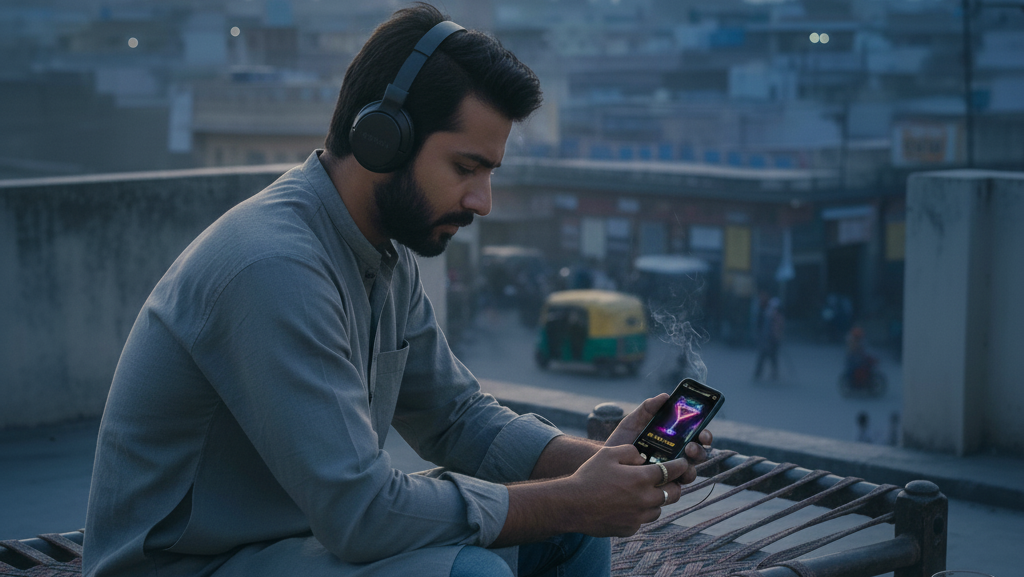
Ahluwalia argued that officials still allowed such songs at public events and that the same tracks remain widely available on streaming platforms like YouTube, Apple Music, JioSaavn, Wynk, and Spotify. Justice Sudeepti Sharma dismissed the plea as misconceived and clarified that the 2019 directions regulated only noise pollution at physical venues and did not extend to online content.
What the Court Said About Streaming the Concerned Songs
Justice Sudeepti Sharma underlined that the 2019 directions were never meant to regulate streaming platforms. “The principal grievance, actually, is directed at the availability of songs on online/digital platforms (YouTube, Apple Music, JioSaavn, Wynk Music, Spotify, etc.). However, the Division Bench directions reproduced above do not regulate the hosting or transmission of online content,” she wrote.
The order, she added, “principally governs noise pollution and the use of sound-producing devices at physical venues, with corresponding on-ground enforcement.” Any remedy for online content, the Court clarified, “lies under the framework governing intermediaries and content, not in contempt of the judgement aimed at noise control.”
The Court also highlighted the limits of contempt powers. It described contempt as “quasi-criminal”, where the standard of proof is high and presumptions cannot replace evidence….
Source link
Disclaimer
We strive to uphold the highest ethical standards in all of our reporting and coverage. We blogs.grocliq.com want to be transparent with our readers about any potential conflicts of interest that may arise in our work. It’s possible that some of the investors we feature may have connections to other businesses, including competitors or companies we write about. However, we want to assure our readers that this will not have any impact on the integrity or impartiality of our reporting. We are committed to delivering accurate, unbiased news and information to our audience, and we will continue to uphold our ethics and principles in all of our work. Thank you for your trust and support.
Website Upgradation is going on for any glitch kindly connect at [email protected]