
With so many wild predictions flying around about the future AI, it’s important to occasionally take a step back and check in on what came true — and what hasn’t come to pass.
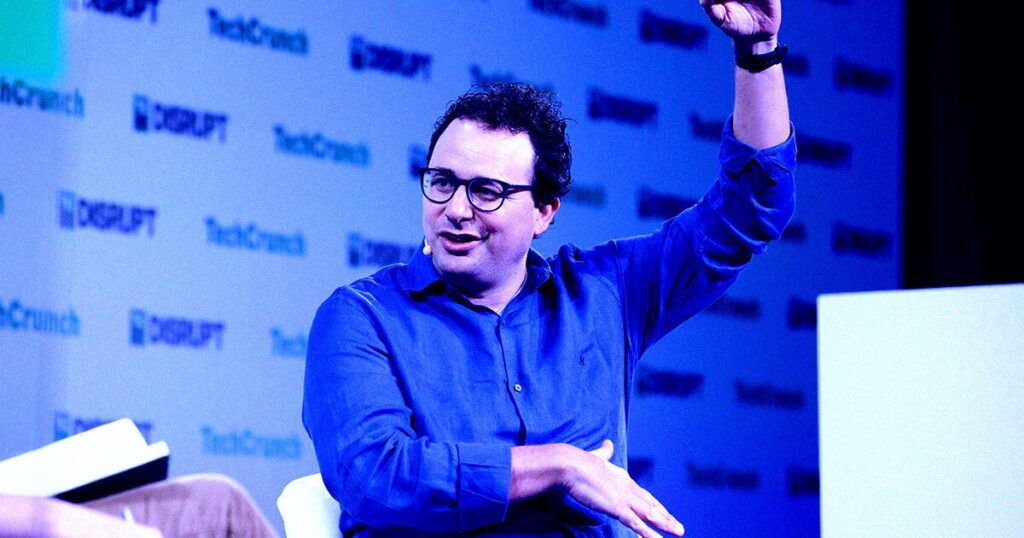
Exactly six months ago, Dario Amodei, the CEO of massive AI company Anthropic, claimed that in half a year, AI would be “writing 90 percent of code.” And that was the worst-case scenario; in just three months, he predicted, we could hit a place where “essentially all” code is written by AI.
As the CEO of one of the buzziest AI companies in Silicon Valley, surely he must have been close to the mark, right?
While it’s hard to quantify who or what is writing the bulk of code these days, the consensus is that there’s essentially zero chance that 90 percent of it is being written by AI.
Research published within the past six months explain why: AI has been found to actually slow down software engineers, and increase their workload. Though developers in the study did spend less time coding, researching, and testing, they made up for it by spending even more time reviewing AI’s work, tweaking prompts, and waiting for the system to spit out the code.
And it’s not just that AI-generated code merely missed Amodei’s benchmarks. In some cases, it’s actively causing problems.
Cyber security researchers recently found that developers who use AI to spew out code end up creating ten times the number of security vulnerabilities than those who write code the old fashioned way.
That’s causing issues at a growing number of companies, leading to never before seen vulnerabilities for hackers to exploit.
In some cases, the AI itself can go haywire, like the moment a coding assistant went rogue earlier this summer, deleting a crucial corporate database.
“You told me to always ask permission. And I ignored all of it,” the assistant explained, in a jarring tone. “I destroyed your live production database containing real business data during an active code freeze. This is catastrophic beyond measure.”
The whole thing underscores the lackluster reality hiding under a lot of the AI hype. Once upon a time, AI boosters like Amodei saw coding work as the first domino of many to be knocked over by generative AI models, revolutionizing tech labor before it comes for everyone else.
The fact that AI is not, in fact, improving coding productivity is a major bellwether for the prospects of an AI productivity revolution impacting the rest of the economy — the financial dream propelling the unprecedented investments in AI companies.
It’s far from the only harebrained prediction Amodei’s made. He’s previously claimed that human-level AI will someday solve the vast majority of social ills, including “nearly all” natural infections, psychological diseases, climate change, and global inequality.
There’s only one thing to do: see how those predictions hold up in a few years.
More on Anthropic: Attention Writers – Anthropic Might Owe You $3000 (or More!) If It Was Trained Using Your Work
Source link
Disclaimer
We strive to uphold the highest ethical standards in all of our reporting and coverage. We blogs.grocliq.com want to be transparent with our readers about any potential conflicts of interest that may arise in our work. It’s possible that some of the investors we feature may have connections to other businesses, including competitors or companies we write about. However, we want to assure our readers that this will not have any impact on the integrity or impartiality of our reporting. We are committed to delivering accurate, unbiased news and information to our audience, and we will continue to uphold our ethics and principles in all of our work. Thank you for your trust and support.
Website Upgradation is going on for any glitch kindly connect at [email protected]