
One of the core appeals of cryptocurrency — other than providing a get-rich-quick scheme for famous people with huge sway over their followers, like a sitting president or an airheaded influencer — is that it’s decentralized and largely unregulated.
Of course, that also makes it a breeding ground for fraud.
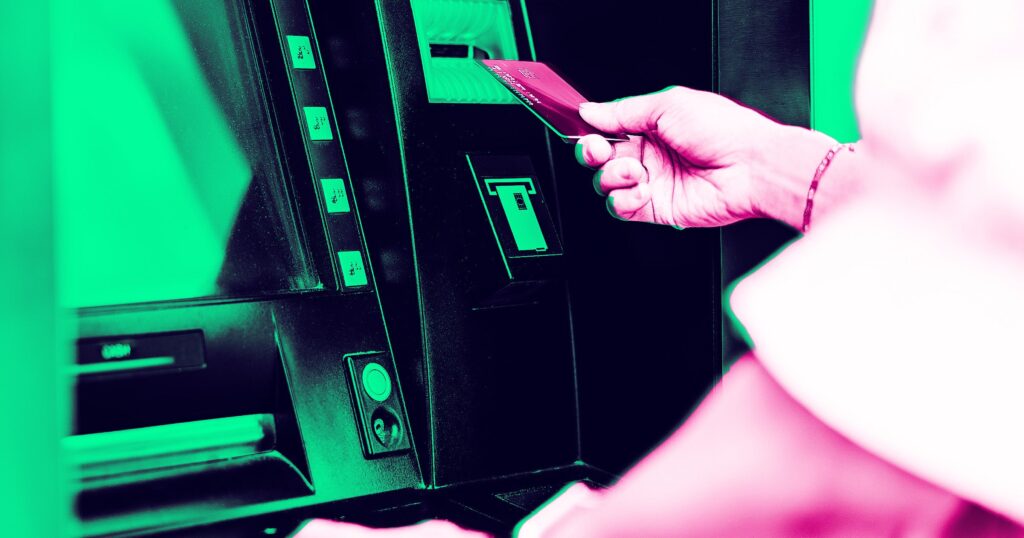
Just ask Boise, Idaho gas station clerk Avalon Hardy. As Inc reports, she ended up repeatedly intervening to stop old ladies from getting ripped off by using the establishment’s Bitcoin ATM.
Hardy noticed elderly women entering the gas station with bags of cash on three separate occasions, looking anxious and usually on the phone or texting someone. Each time, they used the Bitcoin ATM, or BTM, to convert their dead presidents into crypto.
Suspecting something fishy was afoot, Hardy gently prodded the old ladies.
“Do you know where you’re sending the money to?” Hardy would ask, per Inc. “You don’t have to be on the phone to send money, as long as you have the other person’s information.”
That didn’t work.
One of the ladies, a 79-year-old, was hellbent on converting $15,000. So Hardy resorted to drastic action: unplugging the BTM from the wall. The next week, she did the same to save a 75-year-old from losing $19,000.
“It’s not super, super popular, that Bitcoin machine,” Hardy told Inc, estimating that less than two dozen customers have used it for a legitimate purpose in the past year, meaning that an enormous proportion of the machine’s total business is implicated in defrauding the elderly. In all, Hardy says she stopped seven crypto scams from happening in her store.
Crypto scams have become widespread in recent years, with revenue from these schemes jumping to at least $9.9 billion in 2024, according to the analytics firm Chainalysis, which was 40 percent more than the year before.
An FBI report from 2023 found that older adults were the most vulnerable to crypto fraud. People 60 years of age and above reported losing over $1.6 billion in 2023, blowing all other age groups out of the water.
The schemes can vary. Some scammers purport to be government agencies or banks, convincing their victims that they’re owed money. Others use use AI to impersonate a target’s relative, claiming they’re being held hostage and need ransom money for their safe release. Long cons, called pig butchering scams in the cryptosphere, involve forming a close relationship with a victim under a fake identity and persuading them into making sham investments — in other words, fattening them up before the slaughter.
In any case, new digital technologies like AI are making these schemes way more nefarious, especially for old people. Scammers will “email you an arrest warrant” using “AI to enhance it,” Matthew Hogan, a crypto crime specialist with the Connecticut State Police, told Inc. “They’ll take the DOJ logo and throw it on there. They’ll manipulate signatures.”
Bad actors are even starting to use AI-powered “realtime deepfakes” to give themselves entirely new…
Source link
Disclaimer
We strive to uphold the highest ethical standards in all of our reporting and coverage. We blogs.grocliq.com want to be transparent with our readers about any potential conflicts of interest that may arise in our work. It’s possible that some of the investors we feature may have connections to other businesses, including competitors or companies we write about. However, we want to assure our readers that this will not have any impact on the integrity or impartiality of our reporting. We are committed to delivering accurate, unbiased news and information to our audience, and we will continue to uphold our ethics and principles in all of our work. Thank you for your trust and support.
Website Upgradation is going on for any glitch kindly connect at [email protected]