
MediaNama’s Take:
This particular lawsuit is quite interesting, as both Britannica and Merriam-Webster create products that mostly contain facts. Copyright law generally does not protect facts but only their particular expression. This fact of the law is something other AI companies, like OpenAI, have relied upon to defend their use of copyrighted material from news organizations.
On the other hand, if Perplexity is in fact creating verbatim reproductions of Britannica’s works, then the plaintiff might have a much stronger case. Any reader could try asking ChatGPT to write the first page of the Harry Potter novel or any other popular copyrighted work, including news articles. The chatbot very rarely complies, as that would involve reproducing a copyrighted work, expression and all.
What’s The News:
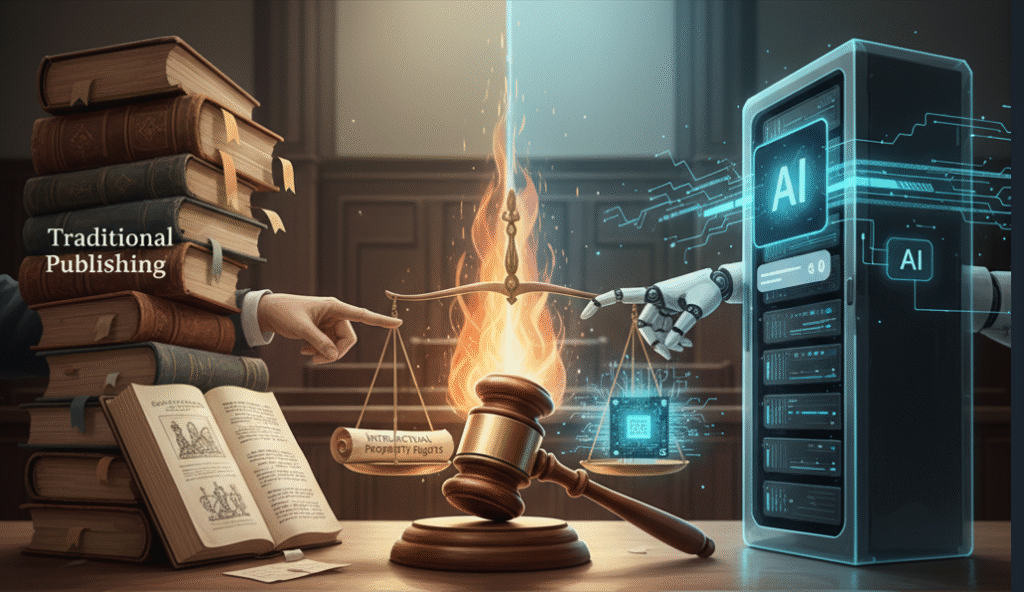
In yet another salvo fired by publishers in their war against Artificial Intelligence (AI) companies, the Encyclopaedia Britannica and its subsidiary Merriam-Webster have sued AI giant Perplexity for copyright infringement. The plaintiffs, which publish encyclopedias and dictionaries respectively, allege that Perplexity’s answer engine “free rides” on their investments by providing AI-generated summaries of their content, diverting traffic that would otherwise have gone to their websites.
Perplexity is an AI-powered chatbot that operates as an “answer engine,” conducting real-time internet searches in response to user queries and returning answers that contain relevant links alongside brief one-line summaries. This differentiates Perplexity from other AI products like ChatGPT, which is designed for creative content generation.
The plaintiffs have sought monetary damages, a permanent injunction prohibiting Perplexity from engaging in such conduct, and compensation for legal costs.
Overview of Both Parties:
Britannica was founded in Edinburgh, Scotland, in 1768 as a hard-copy encyclopedia and has since expanded its services to include curriculum products, language-study courses, and readiness training, reaching over 150 million students across more than 150 countries. The company produces content in over 20 languages and records over seven billion webpage views annually.
The company operates through several brands, including Britannica Education, which provides instructional solutions for classrooms worldwide, and Merriam-Webster, which produces dictionaries.
Britannica owns copyright in at least 12 collective works encompassing nearly 100,000 online articles, as well as copyright in the print volumes of the New Encyclopedia Britannica. The company holds several federally registered trademarks for the name “Britannica” and owns the federally registered trademark for its thistle logo. Merriam-Webster, founded in 1831, owns copyright in the print volume of the Merriam-Webster Collegiate Dictionary and holds several federally registered trademarks for various versions of the “Merriam-Webster”…
Source link
Disclaimer
We strive to uphold the highest ethical standards in all of our reporting and coverage. We blogs.grocliq.com want to be transparent with our readers about any potential conflicts of interest that may arise in our work. It’s possible that some of the investors we feature may have connections to other businesses, including competitors or companies we write about. However, we want to assure our readers that this will not have any impact on the integrity or impartiality of our reporting. We are committed to delivering accurate, unbiased news and information to our audience, and we will continue to uphold our ethics and principles in all of our work. Thank you for your trust and support.
Website Upgradation is going on for any glitch kindly connect at [email protected]