
When I arrived in the US four years ago to start my doctorate at Cornell University, I thought I’d be the last person to be hunted down by the immigration authorities. As far as I could tell, “the special relationship” meant that a British passport carried a sort of immunity akin to that enjoyed by diplomats; it was a mobility that allowed me to work, after all, as a journalist unscathed across west Africa’s restive Sahel belt for years.
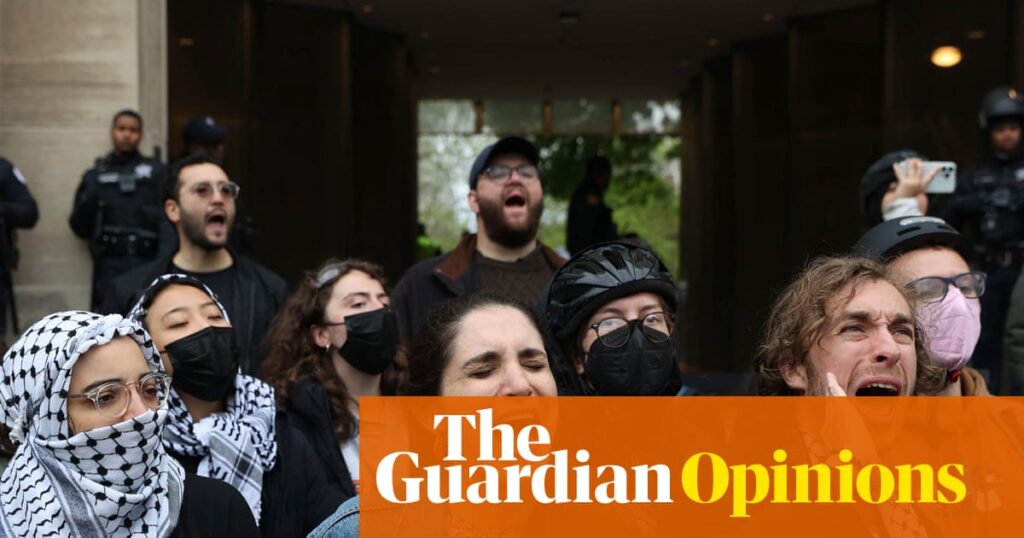
Things began to fall apart after I attended a pro-Palestine protest on campus in September last year. We had brought a job fair to a standstill – because it featured booths from Boeing and L3Harris, companies that supplied Israel with the armaments it needed to carry out its genocidal campaign in Gaza. Although I was there for just five minutes, I was subsequently banned from campus, a punishment that felt like a kind of house arrest because my home was on the university’s Ithaca campus in upstate New York. While I could continue living there, I was barred from entering the university premises.
In January, as Donald Trump steamrolled into office brandishing an arsenal of executive orders targeting non-citizen student protesters, I left my home and went into hiding at the remote home of a professor, fearing the reach of Immigration and Customs Enforcement (Ice). Three months later, I self-deported to Canada, then flew to Switzerland. I was prompted to flee after a friend, who had spent time with me in Ithaca, was detained at a Florida airport – on the other side of the country – and questioned about my whereabouts. I did not return to the UK as reports that pro-Palestine journalists had been arrested there made me fearful.
I hoped my arrival in Switzerland would mark the end of my ordeal. But two weeks in, two distressing emails reached my inbox. The first was from Cornell, informing me that the US government had effectively terminated my student visa status. The second came from Google, informing me that it had “received and responded to legal process” and handed my data to the Department of Homeland Security. These emails arrived 90 minutes apart.
The quickfire emails confirmed my hunch that I had been under surveillance and that if I attempted to re-enter the US, I would likely be detained by Ice, like other student protesters. But the secrecy surrounding these procedures and the lack of due process to challenge them raised more questions than they answered.
Was there any correspondence between Cornell and US government agencies prior to my visa being terminated? (I asked the university this, among other questions, and have not heard back.) What did the most powerful government in the world want with my Google data? Why did the US authorities go after me? Had they woven a yarn of suspicion based on my years working as a journalist covering the US-led “war on terror”? Was I targeted because I was Black and Muslim?
I may never get the full answers, but an investigation by Amnesty…
Source link
Disclaimer
We strive to uphold the highest ethical standards in all of our reporting and coverage. We blogs.grocliq.com want to be transparent with our readers about any potential conflicts of interest that may arise in our work. It’s possible that some of the investors we feature may have connections to other businesses, including competitors or companies we write about. However, we want to assure our readers that this will not have any impact on the integrity or impartiality of our reporting. We are committed to delivering accurate, unbiased news and information to our audience, and we will continue to uphold our ethics and principles in all of our work. Thank you for your trust and support.
Website Upgradation is going on for any glitch kindly connect at [email protected]