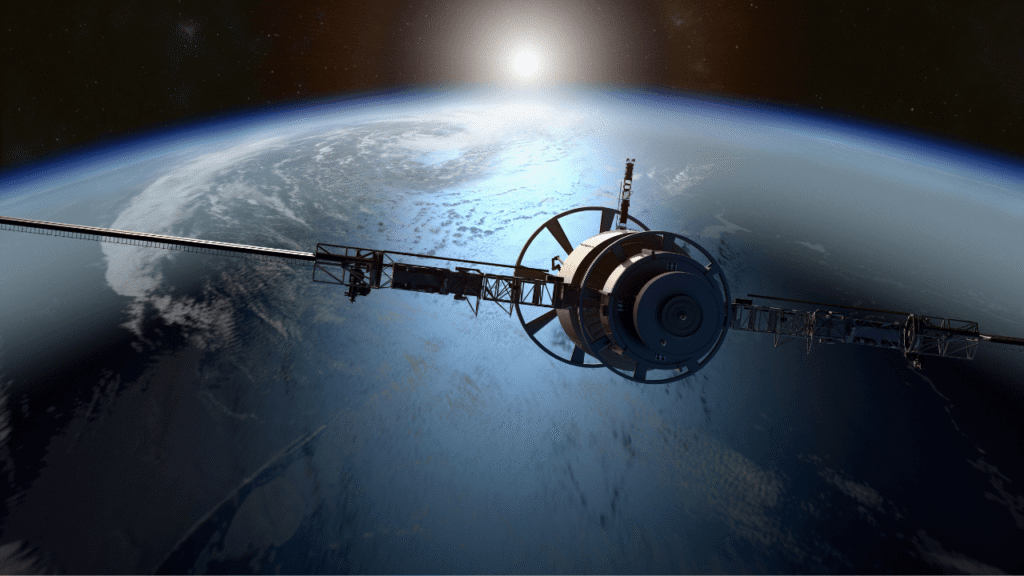

Direct to cell (D2C) is probably the next big race in the satcom ecosystem, Prafulla Kumar, Vice President and Product Head at Reliance Jio, mentioned during the India Mobile Congress on October 8. For context, D2C satellites are those that connect directly to mobile phones.
“If I talk about the India prospect, and we are very happy, and we could leverage this as a technology-neutral tool to provide and expand the network, such as remote regions where the connectivity is essential and needed, or for disaster management,” he said. Kumar mentioned that players in the ecosystem are developing D2C satellites globally and Starlink has already launched hundreds of satellites to provide D2C connectivity.
However, he added that while D2C is the new avenue for satcom demand, there are power limitations with today’s devices, which lead to link budget issues. For context, link budgets are calculations that account for all the power gains and losses that a communication signal experiences within a satellite network.
“The link budget will not close if we move within little higher data rate or for voice calling. And for example, if we see in India, in the remote region, nobody would like to message. Generally, people like to talk. They call on the phone, on WhatsApp and so on,” he explained.
Kumar argued that most people in rural India use low-cost devices. As such, the hurdle to D2C adoption in rural areas is that the device ecosystem which is needed to meet the power demands of the satcom ecosystem isn’t really available at low costs.
The Interference Challenge With D2C Connectivity:
Some satcom operators want to use the same spectrum bands that terrestrial service providers use to provide D2C connectivity. “There are operators who are using the terrestrial spectrum so that the devices are available and it can be connected directly, which will probably be the current option,” Kumar explained.
However, he pointed out the problem with this system is that it leads to a lot of interference between the satellite beam and terrestrial network beam, which will create an exclusion zone. As such, in this system, there would still be a connectivity coverage gap.
The other option to provide D2C connectivity is for satcom providers to shift to L-band, S-band, and MSS (Mobile Satellite Services) spectrum, Kumar argued. However, the problem with doing so is that the device ecosystem to support these frequencies does not exist yet.
Absence of D2C and D2D Regulations:
Within India, satcom company Viasat and Indian telco BSNL demonstrated direct to device (D2D) connectivity in October last year. D2D is a technology that allows regular devices (mobile phones, smart watches, etc.) to connect with both terrestrial and satellite networks without any need for additional hardware.
Discussing the viability of D2C/D2D satcom connectivity, Gautam Sharma, Managing Director at Viasat India, mentioned that despite the…
Source link
Disclaimer
We strive to uphold the highest ethical standards in all of our reporting and coverage. We blogs.grocliq.com want to be transparent with our readers about any potential conflicts of interest that may arise in our work. It’s possible that some of the investors we feature may have connections to other businesses, including competitors or companies we write about. However, we want to assure our readers that this will not have any impact on the integrity or impartiality of our reporting. We are committed to delivering accurate, unbiased news and information to our audience, and we will continue to uphold our ethics and principles in all of our work. Thank you for your trust and support.
Website Upgradation is going on for any glitch kindly connect at [email protected]