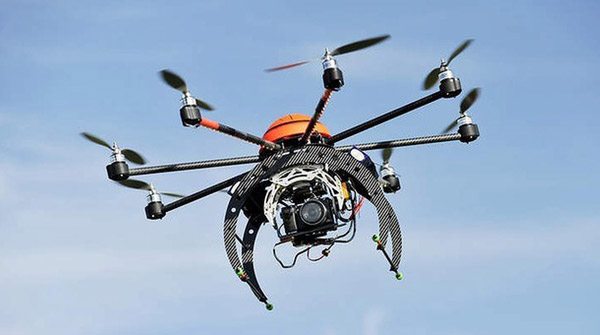

We missed this earlier: The Union Ministry of Civil Aviation released the Draft Civil Drone (Promotion and Regulation) Bill, 2025, in September 2025.
This draft legislation introduces stringent requirements for operating unmanned aircraft systems (UAS) in India, including mandatory registration, type certification, insurance and safety features for drones.
For context, this draft bill seeks to replace the existing Drone Rules, 2021, Drone (Amendment) Rules, 2022, and Drone (Amendment) Rules, 2023: all of which were framed under the provisions of the colonial-era Aircraft Act, 1934.
Notably, the provisions of this Act will only apply to civilian drones, which means that UAS used by the Indian Army and police forces are exempt. Further, the proposed rules will also not apply to drones weighing over 500 kg, which are governed as per the provisions of the Bharatiya Vayuyan Adhiniyam, 2024.
DGCA Retained As Aviation Regulator
The Directorate General of Civil Aviation (DGCA) has been designated as the primary regulatory authority for civilian drones.
Notably, the draft bill mandates that no drone will be allowed to operate in the country without registration and issuance of a Unique Identification Number (UIN) by the DGCA. In a similar vein, manufacturers are required to obtain a type certificate from the aviation regulator before their drones can be sold and operated in India.
It is to be noted that the use of civilian drones was first barred in 2014, when the DGCA imposed a blanket ban until rules were framed. Then came the Civil Aviation Requirements in 2018, which introduced the “No Permission, No Takeoff” system.
Under the draft rules, operating a drone without valid registration, type certification, and a remote pilot training certificate is a punishable offence with a prison term of up to one year or a fine of up to Rs 1 lakh (or both).
Note that companies selling and manufacturing drones for commercial purposes, such as ideaForge and DroneAcharya, are also required to get a type certification from India’s aviation regulator as per this draft legislation.
Mandatory Safety And Security Features
The draft has proposed the inclusion of mandatory safety and security features in civilian drones, which will be notified by the Central Government from time to time. These features are expected to ensure airworthiness, prevent tampering and enable traceability of drone operations.
“No person shall manufacture or assemble, offer for sale, transfer or cause to transfer, operate or cause to operate any unmanned aircraft system that does not incorporate the mandatory safety and security features as prescribed by the Central government or unless the Unmanned Aircraft System is exempted from such requirement,” the draft reads.
Third-Party Insurance For Drones
Notably, the draft states that no person will be allowed to operate drones unless it is covered by a third-party insurance…
Source link
Disclaimer
We strive to uphold the highest ethical standards in all of our reporting and coverage. We blogs.grocliq.com want to be transparent with our readers about any potential conflicts of interest that may arise in our work. It’s possible that some of the investors we feature may have connections to other businesses, including competitors or companies we write about. However, we want to assure our readers that this will not have any impact on the integrity or impartiality of our reporting. We are committed to delivering accurate, unbiased news and information to our audience, and we will continue to uphold our ethics and principles in all of our work. Thank you for your trust and support.
Website Upgradation is going on for any glitch kindly connect at [email protected]