
Nikhil Pahwa’s Take: DigiYatra has a chequered history of mismanagement. The app suffered multiple outages, including an unannounced migration to a new app that bricked the old one, leaving users stranded. While some of these have now been addressed, these disruptions reveal poor data governance and contingency protocols, inadequate planning, and a failure to communicate with users. It hasn’t come clean on its relationship and allegations of data sharing with DataEvolve.
These are hallmarks of weak data governance in digital public infrastructure, which DigiYatra has embodied.
Additionally, it is a private entity where the Airports Authority of India holds just 26%, and private airport operators hold the majority of the stake. As a result, it is not subject to RTI transparency obligations, and there’s minimal public oversight and accountability. There’s no statutory framework governing the deployment of facial recognition, and India also doesn’t have an operational data protection law, because no rules have been passed, largely due to MeitY’s incompetence when it drafted the data protection law.
This is why there were instances of passengers being enrolled without their consent, and there has been the classic voluntary-but-mandatory approach wherein it has been made difficult for passengers not to use DigiYatra by reducing non-DigiYatra gates, both for entry and significantly for security check-in at Delhi’s T3 airport terminal.
DigiYatra might want to expand its scope of operation (which company, especially a private one, doesn’t want to?), but that doesn’t mean that a company that handles this kind of sensitive data without oversight and a history of poor governance should be allowed to. If anything, they should just shut it down and stop “voluntarily” forcing people to share their facial data.
What’s the News?
In an interview with LiveMint, Suresh Khadakbhavi, the Chief Executive Officer (CEO) of the DigiYatra Foundation, said that the foundation is aiming to become a Digital Public Infrastructure (DPI) in the next six to nine months. The CEO also envisions implementing their facial-recognition technology beyond the aviation sector and use it for “hotel check-ins, IT parks, and even online exams.”
This is not the first time DigiYatra has expressed its Intent to expand beyond the aviation sector. Earlier in 2024, Khadakbhavi said that they had built a prototype and could possibly expand the app’s usage into hotels and tourism sectors as well.
DigiYatra and Its Problem Areas
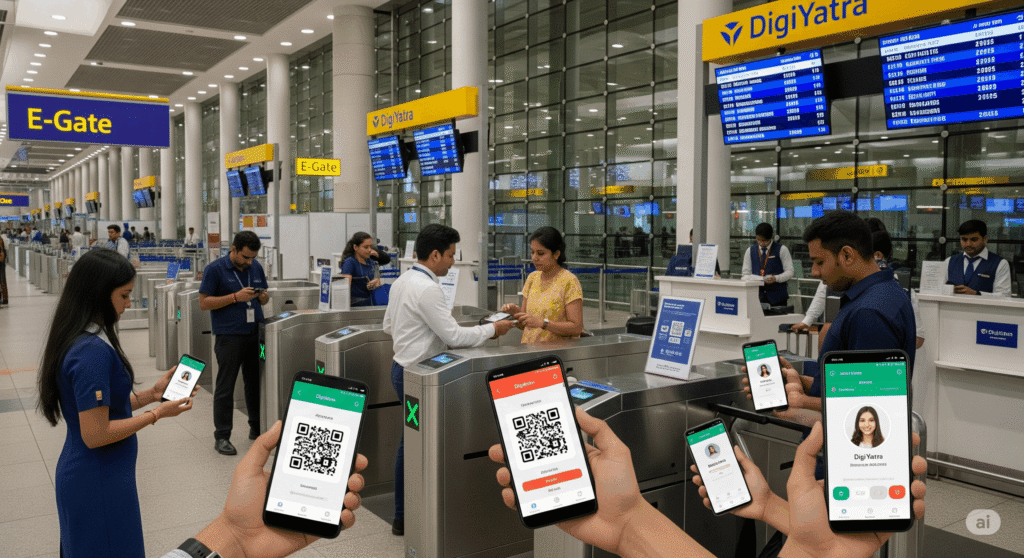
The Digi Yatra is a paperless “biometric boarding system” that uses facial recognition technology (FRT) for verification at Indian airports. In 2019, the government registered DigiYatra Foundation as a Section 8 not-for-profit private company. The Airports Authority of India, under the Ministry of Civil Aviation, holds a 26% stake in the foundation. The international airports in Cochin, Bengaluru,…
Source link
Disclaimer
We strive to uphold the highest ethical standards in all of our reporting and coverage. We blogs.grocliq.com want to be transparent with our readers about any potential conflicts of interest that may arise in our work. It’s possible that some of the investors we feature may have connections to other businesses, including competitors or companies we write about. However, we want to assure our readers that this will not have any impact on the integrity or impartiality of our reporting. We are committed to delivering accurate, unbiased news and information to our audience, and we will continue to uphold our ethics and principles in all of our work. Thank you for your trust and support.
Website Upgradation is going on for any glitch kindly connect at [email protected]