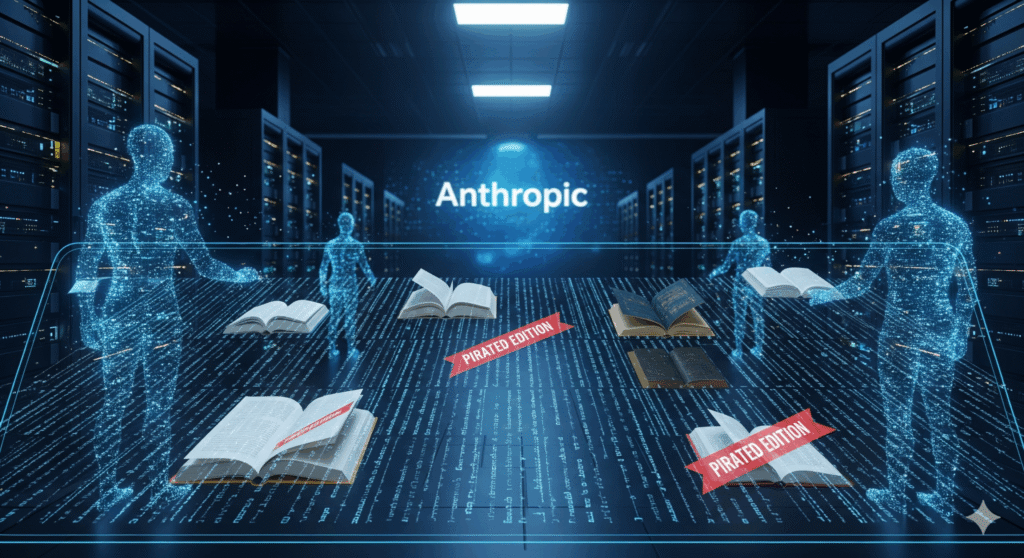

“If approved [by the court], this landmark settlement will be the largest publicly reported copyright recovery in history,” notes the motion filed by the authors as part of preliminary approval of the class settlement in the famous Anthropic vs. Bartz case. Anthropic agreed to pay at least $1.5 billion plus interest to class members to settle the lawsuit, as demanded in their motion plea submitted to the court.
However, on September 9, Judge William Alsup criticized counsel, saying that he was “disappointed” for leaving key issues unresolved, including the Works List, the Class List, and the Claim Form, which identify the books in the settlement class, the members eligible for compensation, and the notices sent to claimants, respectively.
Some Context of the Case
In 2024, authors Andrea Bartz, Charles Graeber, and Kirk Wallace Johnson filed a lawsuit against Anthropic, alleging that the company unlawfully used their work to train its large language models (LLMs). The lawsuit later acquired class action status.
During court proceedings, it was revealed that in 2021, Anthropic co-founder Ben Mann downloaded Books3, a database of more than 196,000 books, which contained pirated works he knew were unauthorized. Similarly, he also downloaded at least 5 million pirated books from LibGen, a popular shadow library banned in India. Later, in 2022, the company downloaded 2 million pirated books from Pirate Library Mirror. Both databases contained at least two titles from each author in the infringement lawsuit, which later turned into a class action case. A class action lawsuit allows one or more people to sue on behalf of a larger group with similar claims.
In August 2025, the U.S. District Court for the Northern District of California ruled that using copyrighted works to train Anthropic’s AI models qualifies as fair use under U.S. copyright law, citing the “purpose and character” of the use as transformative.
The Section 107 of the US Copyright Act defines fair use limits. Courts consider four factors to decide if Anthropic’s use qualifies:
- the purpose of the use,
- the nature of the work,
- the amount used and
- the effect on market value.
Although the court ruled that using copyrighted books could qualify as fair use, it ordered a separate trial on the illegal use of pirated books. In August 2025, Anthropic agreed to settle the case. The $1.5 billion settlement stems from that trial.
What Does the Court Filing Say?
“Plaintiffs’ core allegation is that Anthropic committed large-scale copyright infringement by downloading and commercially exploiting books that it obtained from allegedly pirated datasets,” reads the court filing. To address this issue, the complainants proposed the following key principal terms:
- Antropic must pay at least $1.5 billion, along with interest, which roughly translates to $3,000 per book whose copyrights were infringed and included in the class action…
Source link
Disclaimer
We strive to uphold the highest ethical standards in all of our reporting and coverage. We blogs.grocliq.com want to be transparent with our readers about any potential conflicts of interest that may arise in our work. It’s possible that some of the investors we feature may have connections to other businesses, including competitors or companies we write about. However, we want to assure our readers that this will not have any impact on the integrity or impartiality of our reporting. We are committed to delivering accurate, unbiased news and information to our audience, and we will continue to uphold our ethics and principles in all of our work. Thank you for your trust and support.
Website Upgradation is going on for any glitch kindly connect at [email protected]