
Image by Getty / Futurism
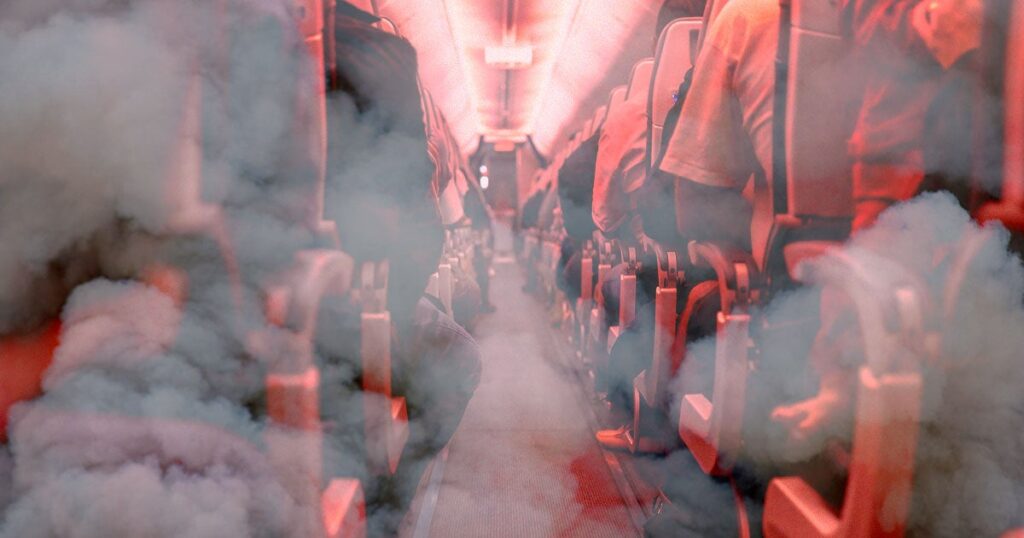
An increasing number of commercial airline passengers and flight attendants are being exposed to dangerous fumes while in the air, at times resulting in traumatic brain injuries that closely resemble the deadly concussions experienced by professional football players.
As the Wall Street Journal reports, fume incidents have led to emergency landings and sickened passengers being taken to hospitals. Even airline pilots have reported affected reaction times and vision due to the hazardous gases.
Aircraft manufacturers, including Airbus and Boeing, have long known about the cause: malfunctions forcing oil and hydraulic fluid to leak into the engines, which are then vaporized at extreme heat. This mix can result in the production of neurotoxins, carbon monoxide, and other chemicals.
Even worse, according to the paper, manufacturers are cutting costs and downplaying health risks by lobbying against safety measures that could alleviate the problem.
It’s a problem that can plague the vast majority of mass-produced aircraft. In commercial jets, fresh air being sucked into a jet engine “bleeds” into the cabin by being compressed and heated. But worn bearing seals can allow oil to mix with the air and be vaporized, leaking toxic compounds into the cabin.
During a February flight, smoke started coming through the vents. Attendants advised passengers to breathe through their clothing, and the pilots announced they would be returning to Atlanta. One of the airplane’s engines’ oil reservoirs, inspectors found, had vaporized into the cabin.
While manufacturers argue it’s not nearly a big enough issue to warrant a comprehensive fix, according to the WSJ, industry insiders have raised concerns about the troubling trend.
The Federal Aviation Administration also notes that incidents are “rare” on its website, though they amounted to a staggering 330 fume events last year in the US alone.
However, the WSJ found in its own investigation that there were actually more than double that number of incidents. The real number could also be far higher, due to incidents that go unreported.
The worst offender, the WSJ found, was Airbus’ A320 family of jets.
Experts are only beginning to understand the health implications. JetBlue flight attendant Florence Chesson, who inhaled fumes during a flight to Puerto Rico, told the newspaper that she had developed migraines, heart arrhythmias, and sensitivity to lights.
Occupational medicine specialist Robert Harrison, who has treated over 100 crew members following toxic exposure, has found that incidents can lead to damage to the central nervous system.
Despite the issue being formally recognized by the United Nations ten years ago, aircraft manufacturers have yet to make any major changes to mitigate risks, the WSJ reports.
A bipartisan bill recently reintroduced in Congress is calling for the installation of specialized filters and the phasing out of bleed air. A previous attempt was ultimately shut down after…
Source link
Disclaimer
We strive to uphold the highest ethical standards in all of our reporting and coverage. We blogs.grocliq.com want to be transparent with our readers about any potential conflicts of interest that may arise in our work. It’s possible that some of the investors we feature may have connections to other businesses, including competitors or companies we write about. However, we want to assure our readers that this will not have any impact on the integrity or impartiality of our reporting. We are committed to delivering accurate, unbiased news and information to our audience, and we will continue to uphold our ethics and principles in all of our work. Thank you for your trust and support.
Website Upgradation is going on for any glitch kindly connect at [email protected]