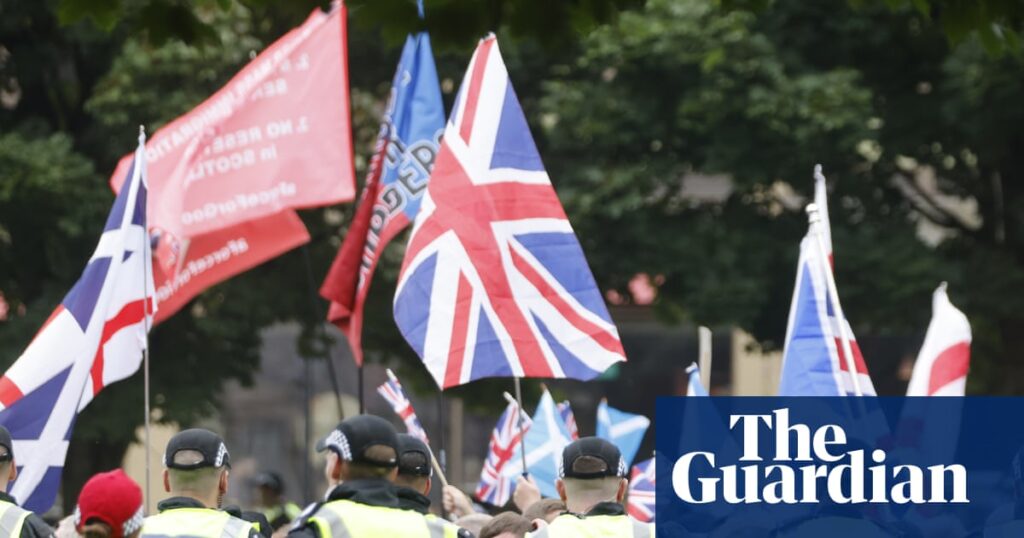

More than 1,100 people have been charged in connection to the summer 2024 riots. A small number of them were charged for offences related to their online activity.
Their jail sentences – which ranged from 12 weeks to seven years – became a flashpoint for online criticism. The people behind the posts were variously defended, held up as a cause célèbre and cast as “political prisoners”; their posts minimised and repeated; their prosecution misrepresented as an attack on free speech (the majority of those prosecuted for online offences faced charges of stirring up racial hatred).
The posts themselves didn’t appear on corners of the internet more readily associated with the far right such as Telegram, Parler, Gettr, 4chan and 8kun – but on mainstream social media platforms including X and Instagram and the largest of them all, Facebook. And while most were posted on these individuals’ personal pages, others were posted in public groups.
Which brought us to thinking: what kind of online communities did these individuals – and the people defending them – belong to? What was being shared in these spaces? And were the views so normalised in such environments that people felt emboldened to post material which the UK authorities and judiciary had deemed met the criminal bar?
Our starting point was to trace the Facebook profiles of the people charged who we had identified for an earlier project, using publicly available information (police and media reports). Of around two dozen people we knew to have been charged with online offences in connection with the 2024 summer riots, we traced five to three public Facebook groups. We also found dozens of visually similar or duplicated posts defending those charged cross-posted in these groups.
From there we mapped the wider network of other Facebook groups, connected not only by these posts, but by a common membership as well as shared moderators and admins.
In doing so we uncovered a thriving ecosystem that is growing in membership and an online community bound together by a deep distrust of government and its institutions, trading in anti-immigrant sentiment, nativism, conspiracy and misinformation including content which experts have identified as far-right.
But we also found people deeply disillusioned, who hold deep-seated concerns about the society of which they form a part and a genuinely held conviction that their freedom of expression is under threat.
Identifying the groups
Why these groups?
The three groups that form the basis of our main analysis were chosen because they contained one or more current or past members charged in connection with the 2024 summer riots or had comments supportive of those involved in the riots, be that in-person or online.
We subsequently found links between these and 13 other groups – all but three of which are also public groups – which have at least one shared moderator or administrators, both of which play important roles in these groups. Moderators can…
Source link
Disclaimer
We strive to uphold the highest ethical standards in all of our reporting and coverage. We blogs.grocliq.com want to be transparent with our readers about any potential conflicts of interest that may arise in our work. It’s possible that some of the investors we feature may have connections to other businesses, including competitors or companies we write about. However, we want to assure our readers that this will not have any impact on the integrity or impartiality of our reporting. We are committed to delivering accurate, unbiased news and information to our audience, and we will continue to uphold our ethics and principles in all of our work. Thank you for your trust and support.
Website Upgradation is going on for any glitch kindly connect at [email protected]