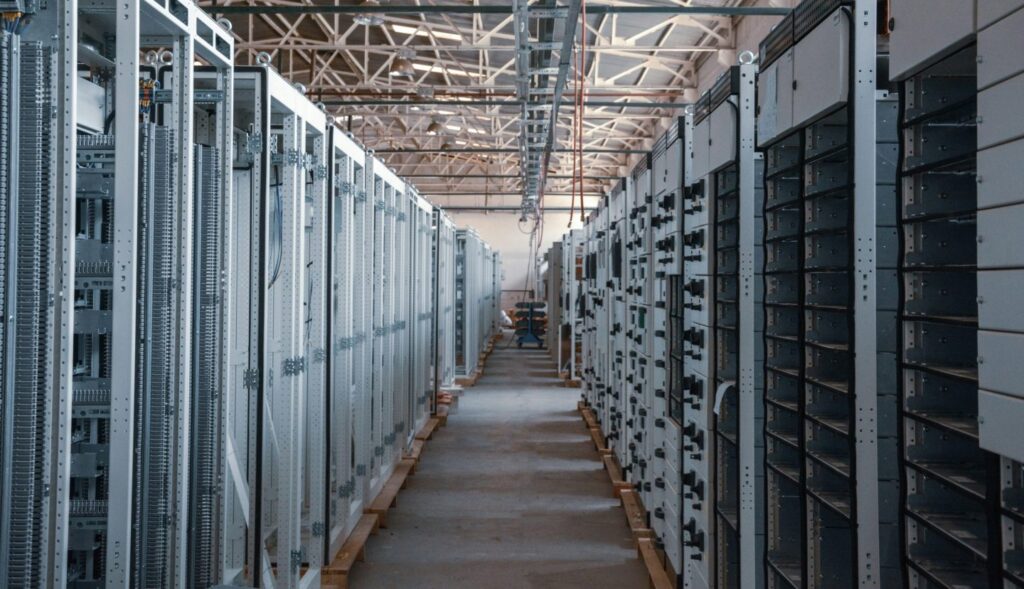

As more companies in Asia Pacific adopt artificial intelligence to boost their operations, the pressure on data centres is growing fast. Traditional facilities, built for earlier generations of computing, are struggling to keep up with the heavy energy use and cooling demands of modern AI systems. By 2030, GPU-driven workloads could push rack power densities toward 1 MW, making incremental upgrades no longer enough. Instead, operators are now turning toward purpose-built “AI factory” data centres that are designed from the ground up.
AI News spoke with Paul Churchill, Vice President of Vertiv Asia, to better understand how the region is preparing for this shift and what kinds of infrastructure changes lie ahead.
Explosive market growth is setting the pace
The AI data-centre market is projected to surge from $236 billion in 2025 to nearly $934 billion by 2030. This growth is driven by rapid adoption of AI in industries like finance, healthcare, and manufacturing. These sectors rely on high-performance computing environments powered by dense GPU clusters, which require far more energy and cooling capacity than traditional servers.
In Asia Pacific, this demand is amplified by government investments in digitalisation, the expansion of 5G, and the rollout of cloud-native and generative AI applications. All of this is pushing compute needs higher at a pace the region has never seen before.
Churchill explained that meeting this demand requires more than just larger facilities. It calls for smarter infrastructure strategies that are scalable and sustainable. “Infrastructure leaders must move beyond piecemeal upgrades. A future-ready strategy involves adopting AI-optimised infrastructure that combines high-capacity power systems, advanced thermal management, and integrated, scalable designs,” he said.
Cooling and power challenges are rising
As rack densities increase from 40 kW to 130 kW, and potentially up to 250 kW by 2030, cooling and power delivery are becoming important issues. Traditional air cooling methods are no longer enough for these conditions.
To address this, Vertiv is developing hybrid cooling systems that mix direct-to-chip liquid cooling with air-based solutions. Systems can adjust to changing workloads, reduce energy use, and maintain reliability. “Our coolant distribution units enable direct-to-chip liquid cooling while ensuring reliability and serviceability in high-density environments,” Churchill said.

Power delivery is also becoming more complex. AI workloads fluctuate rapidly, so infrastructure needs to react in real time. Vertiv is evolving its rack power distribution units and busway systems to handle higher voltages and improve load balancing. Intelligent monitoring helps operators manage loads more efficiently, reduce wasted capacity, and extend uptime – a key consideration in parts of Southeast Asia where power grids are less stable.
Data centres are being redesigned for…
Source link
Disclaimer
We strive to uphold the highest ethical standards in all of our reporting and coverage. We blogs.grocliq.com want to be transparent with our readers about any potential conflicts of interest that may arise in our work. It’s possible that some of the investors we feature may have connections to other businesses, including competitors or companies we write about. However, we want to assure our readers that this will not have any impact on the integrity or impartiality of our reporting. We are committed to delivering accurate, unbiased news and information to our audience, and we will continue to uphold our ethics and principles in all of our work. Thank you for your trust and support.
Website Upgradation is going on for any glitch kindly connect at [email protected]