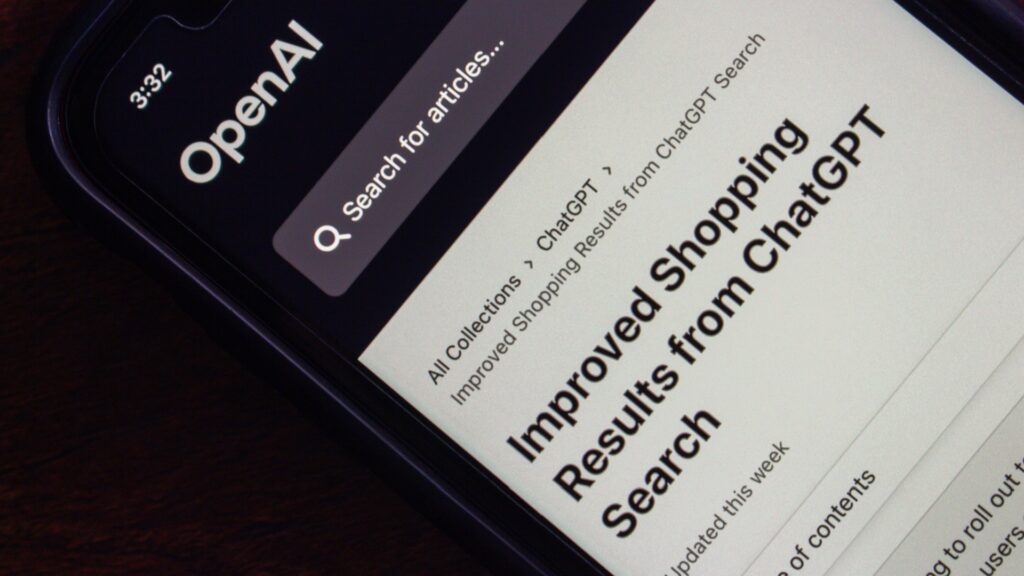

AI-powered search is moving fast. The latest shift? ChatGPT Shopping.
Since April, OpenAI has been rolling out a shopping experience that surfaces product cards directly inside ChatGPT.
Instead of sending users to a long list of search results, the interface now provides curated recommendations with images, labels, and “buy” links.

For ecommerce SEOs, this is a new channel with very different rules.
Placement isn’t driven by ads or bids, at least not yet. Instead, visibility depends on the quality of product data, structured markup, and external signals like reviews and mentions.
The implications are significant.
Results are condensed to just a handful of products, meaning if you’re not in the shortlist, you’re invisible.
As Kevin Indig observes:
- “The clicks that we get … are highly qualified because people will have all their questions answered through ChatGPT … then being sent out … close to a purchase decision.”
ChatGPT Shopping is already being tested across retail verticals, raising questions about traffic, conversion, and how optimization strategies will need to adapt.
Current impact on retail search
ChatGPT Shopping is no longer theoretical. It’s showing up in ecommerce analytics as a distinct referral channel. (In GA4, utm_source=chatgpt.com.)

While the traffic is still small compared to organic or paid search, the early patterns are consistent across verticals:
- Traffic volume is limited: For most retailers, ChatGPT contributes well under 1% of sessions. Even the highest performers in our data are nowhere near our other acquisition channels.
- Conversion rates are disproportionately high: Industry research backs this up. ChatGPT sessions convert at ~15.9% compared to ~1.8% for Google Organic, a Seer Interactive study found.
These benchmarks align with client data, which shows that traffic from ChatGPT converts 2–4 times higher than site averages.
While overall volumes remain small, the trajectory isn’t uniform across industries.
Vertical patterns worth watching
Early analytics and external studies point to three distinct vertical patterns:
- Electronics: High product demand and robust data feeds are leading to electronics brands showing up most consistently. Sessions are rising fastest in this category, and cards often mirror Google Shopping with specs, ratings, and review summaries.
- Food and grocery: Volumes are more modest, but users are steady. Engagement often reflects recurring purchase intent, and bottom-funnel queries like “best grass-fed beef box” or “healthy snack subscription” convert at strong rates when surfaced.
- Fashion and apparel: Traffic is lighter compared to other categories, but conversion rates consistently outperform site averages. When ChatGPT presents a shortlist of robes, dresses, or pajamas, shoppers clicking through are often ready to purchase.
ChatGPT isn’t a discovery engine at scale just yet. But…
Source link
Disclaimer
We strive to uphold the highest ethical standards in all of our reporting and coverage. We blogs.grocliq.com want to be transparent with our readers about any potential conflicts of interest that may arise in our work. It’s possible that some of the investors we feature may have connections to other businesses, including competitors or companies we write about. However, we want to assure our readers that this will not have any impact on the integrity or impartiality of our reporting. We are committed to delivering accurate, unbiased news and information to our audience, and we will continue to uphold our ethics and principles in all of our work. Thank you for your trust and support.
Website Upgradation is going on for any glitch kindly connect at [email protected]