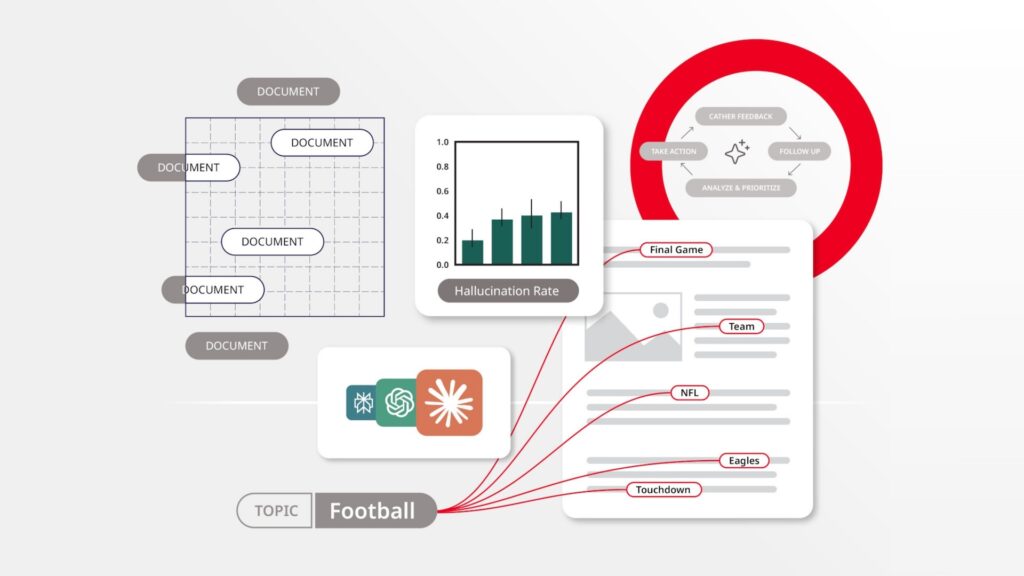


For years, marketers measured digital success through impressions, backlinks and clicks. If you ranked high in search results and won the click, you had visibility and control of the funnel. But that landscape is already shifting.
Large Language Models (LLMs) like ChatGPT, Claude, Gemini and Perplexity are rapidly becoming the first place decision-makers go for answers. These systems don’t return a page of links; they generate a synthesized response. Whether your brand is included, or ignored, in that answer increasingly determines your relevance in the buying journey.
This changes the marketer’s playbook. Visibility is no longer only about ranking on Google. It’s about whether you’re present in AI-generated responses, how you’re framed, and what sources are credited. In this new paradigm, being mentioned is the new click.
The challenge for marketers isn’t simply tracking this new set of KPIs. It’s knowing how to interpret the signals and translate them into action. Let’s look at four core AI KPIs: mentions, sentiment, competitive share of voice and sources. We will explore how each can directly shape strategy.

Mentions: The visibility test
The first KPI is the simplest: how often are you mentioned inside LLM responses? If you’re absent from common category or evaluation queries, things like “top SaaS tools for analytics” or “best project management platforms,” then you’re essentially erased from the conversation before it begins.
But mentions are more than a vanity metric. They are a diagnostic tool. Patterns in where you appear, and where you don’t, can tell you which parts of your content strategy are resonating and which areas need reinforcement.
- Making mention usable: Break mentions down by type of query. Are you showing up in broad “what is” or “how to” questions, or only in head-to-head competitor comparisons? Are you included in trend discussions but missing from buying-decision queries? That breakdown highlights where to expand your authority.
If mentions are low in early-stage educational queries, invest in thought-leadership content that positions you as a voice in defining the category. If mentions are absent in solution-oriented queries, build assets that explain your differentiators more clearly. Mentions are the first signal of where your brand is visible, and where it’s invisible.
For marketers, mentions are the equivalent of oxygen. Without them, everything else is moot. With them, you can begin to shape how buyers see you.
Sentiment: The market’s echo
The second KPI is sentiment. Being mentioned is good, but how you’re described is what really sticks. LLMs add qualifiers to their responses based on available information: “fast,” “trusted,” “expensive,” “hard to use.” These adjectives reflect the narrative that exists in the data the model has absorbed.
- Making sentiment usable: Capture the language used around your…
Source link
Disclaimer
We strive to uphold the highest ethical standards in all of our reporting and coverage. We blogs.grocliq.com want to be transparent with our readers about any potential conflicts of interest that may arise in our work. It’s possible that some of the investors we feature may have connections to other businesses, including competitors or companies we write about. However, we want to assure our readers that this will not have any impact on the integrity or impartiality of our reporting. We are committed to delivering accurate, unbiased news and information to our audience, and we will continue to uphold our ethics and principles in all of our work. Thank you for your trust and support.
Website Upgradation is going on for any glitch kindly connect at [email protected]