

WordPress remains the dominant force in content management systems, powering 43.3% of websites surveyed and holding a 60.7% share among sites using a CMS, according to W3Techs (October 2025). That is still a commanding lead, but it marks a sustained decline from its peak of 65.2% in 2022 and is back to the same level as 2018, prior to the pandemic boom.
For executives and technical teams, this shift signals more than a market statistic.
As WordPress shows its first significant slide in two decades, SaaS competitors like Shopify, Wix, and Squarespace are steadily gaining ground, offering businesses simpler, managed solutions with lower technical overhead. At the same time, the share of websites running without any CMS has dropped to 28.6%, which continues the broader industry trend toward structured platforms and hosted builders.
It means that choosing the right CMS today is less about preference and more about a strategic decision, with measurable impact on site performance, security, costs, and scalability.
This report breaks down the current CMS landscape, compares the top platforms, and outlines how the latest shifts influence platform strategy and technical execution.
How Large Is The CMS Market?
According to W3Techs, 71.4% of websites have a CMS, and Netcraft reports over 281 million domains.
From this, we can assume that the current market size for content management systems has risen to over 200 million websites.
Top 10 CMS By Market Share (Globally), October 2025
| CMS (as of October 2025) | Launched | Type | Market Share | Usage | |
|---|---|---|---|---|---|
| No CMS | 28.6% | ||||
| 1 | WordPress | 2003 | Open source | 60.7% | 43.3% |
| 2 | Shopify | 2006 | SaaS | 6.8% | 4.8% |
| 3 | Wix | 2006 | SaaS | 5.7% | 4.1% |
| 4 | Squarespace | 2004 | SaaS | 3.4% | 2.4% |
| 5 | Joomla | 2005 | Open source | 2.0% | 1.4% |
| 6 | Webflow | 2013 | SaaS | 1.2% | 0.9% |
| 7 | Drupal | 2001 | Open source | 1.1% | 0.8% |
| 8 | Tilda | 2014 | SaaS | 1.1% | 0.8% |
| 9 | Adobe Systems | 2013 | Open source | 1.0% | 0.7% |
| 10 | Duda | 2008 | SaaS | 1.0% | 0.7% |
Data from W3Techs, October 2025. (WooCommerce and Elementor are not listed in the table above as they’re WordPress plugins and not standalone CMS platforms.)
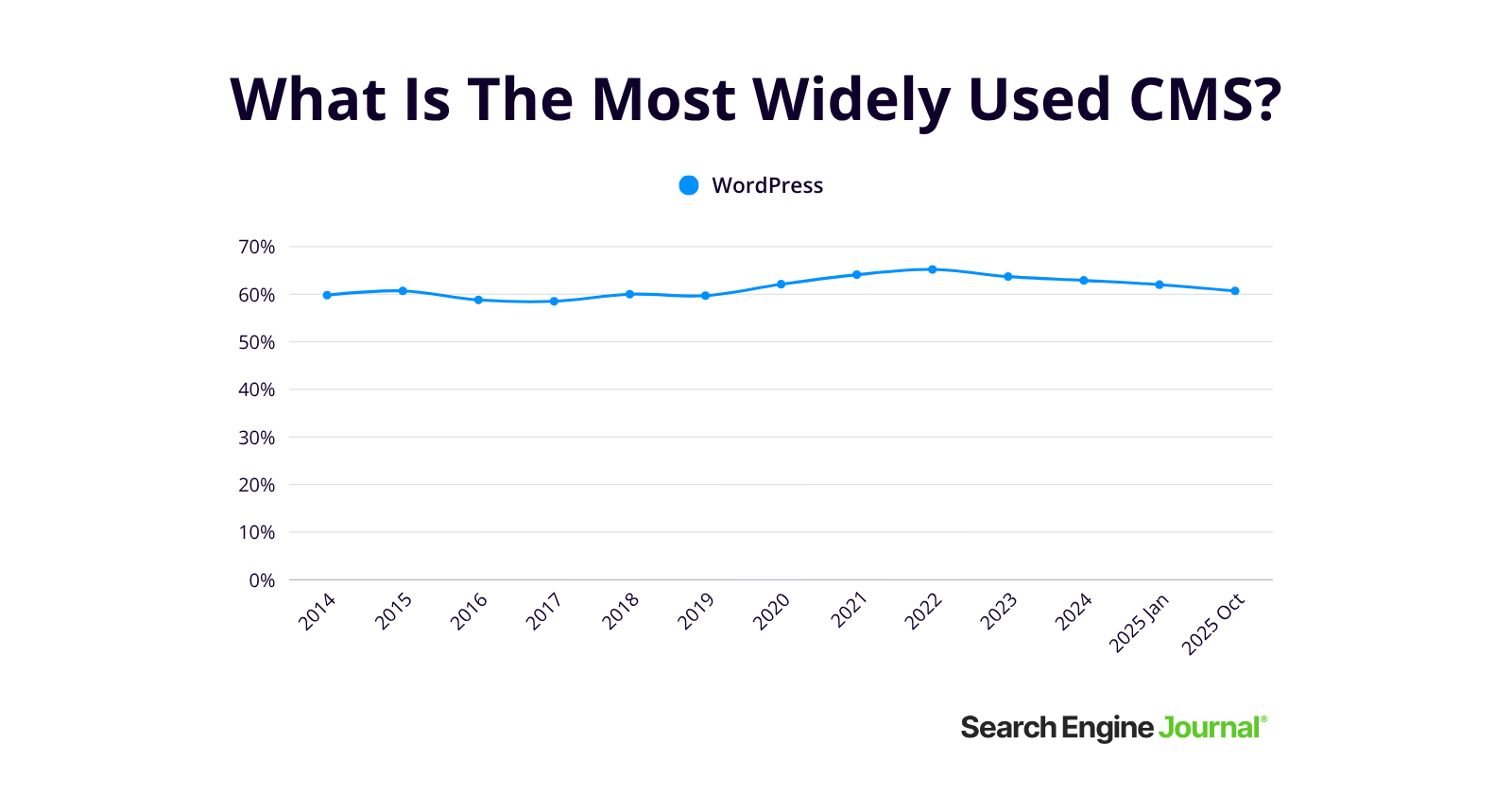
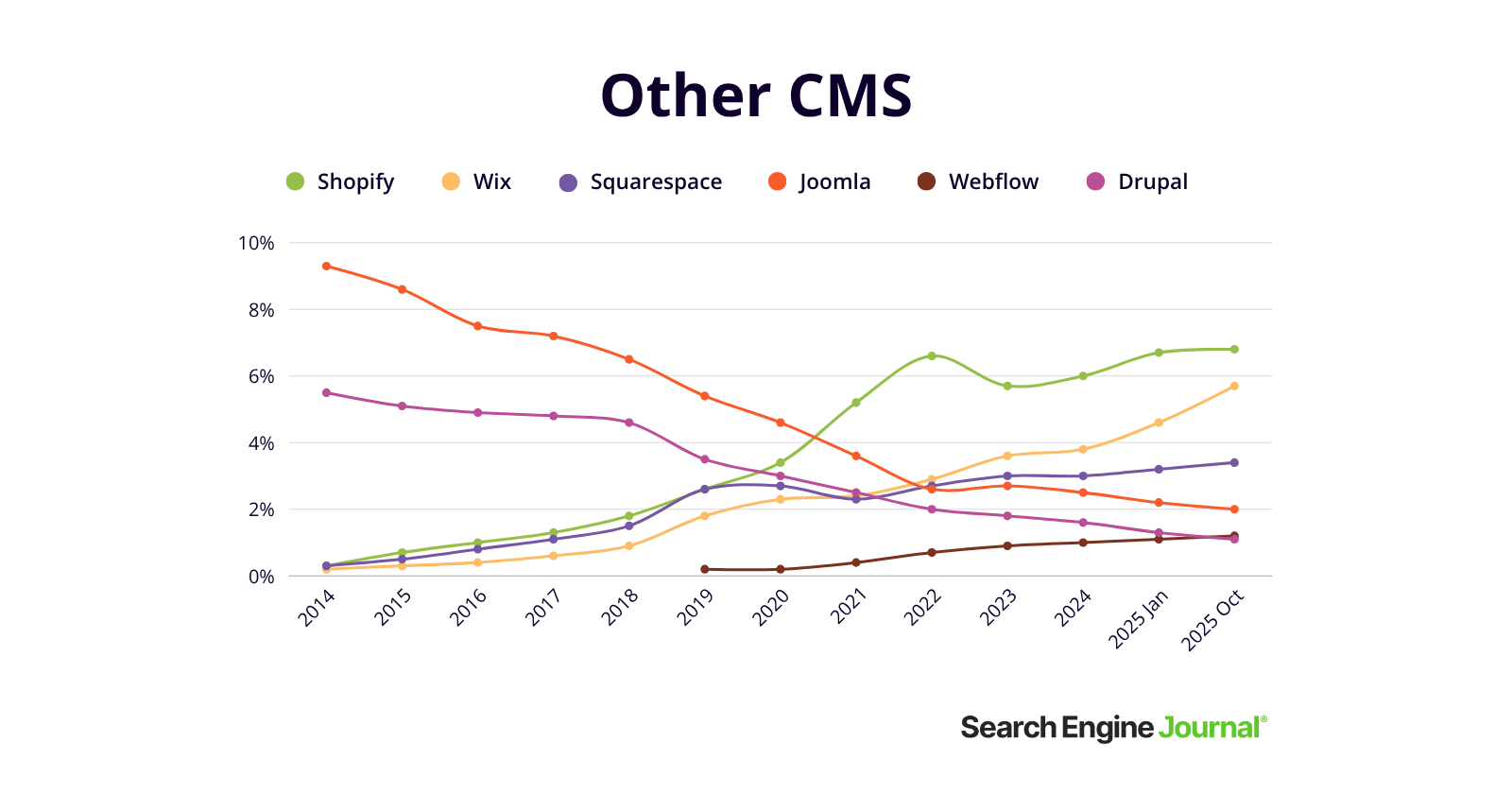
*Graphs are separated due to the dominance of the WordPress market share.
WordPress
WordPress remains the most widely used CMS, a position it has held since its launch in 2003. Its usage across all websites grew by 105% from 2014 to 2022, cementing its role as the default platform for much of the web.
But its long-standing growth curve is now in a downturn; we’re seeing a market share decline of nearly seven percentage points in the last three years. It’s a trend that could continue as easier-to-use platforms gain ground and some users report frustrations with plugin…
Source link
Disclaimer
We strive to uphold the highest ethical standards in all of our reporting and coverage. We blogs.grocliq.com want to be transparent with our readers about any potential conflicts of interest that may arise in our work. It’s possible that some of the investors we feature may have connections to other businesses, including competitors or companies we write about. However, we want to assure our readers that this will not have any impact on the integrity or impartiality of our reporting. We are committed to delivering accurate, unbiased news and information to our audience, and we will continue to uphold our ethics and principles in all of our work. Thank you for your trust and support.
Website Upgradation is going on for any glitch kindly connect at [email protected]