

Marketing leaders are still budgeting to grow clicks in 2026, even though AI Overviews cut organic traffic in half and AI Mode kills it almost entirely.
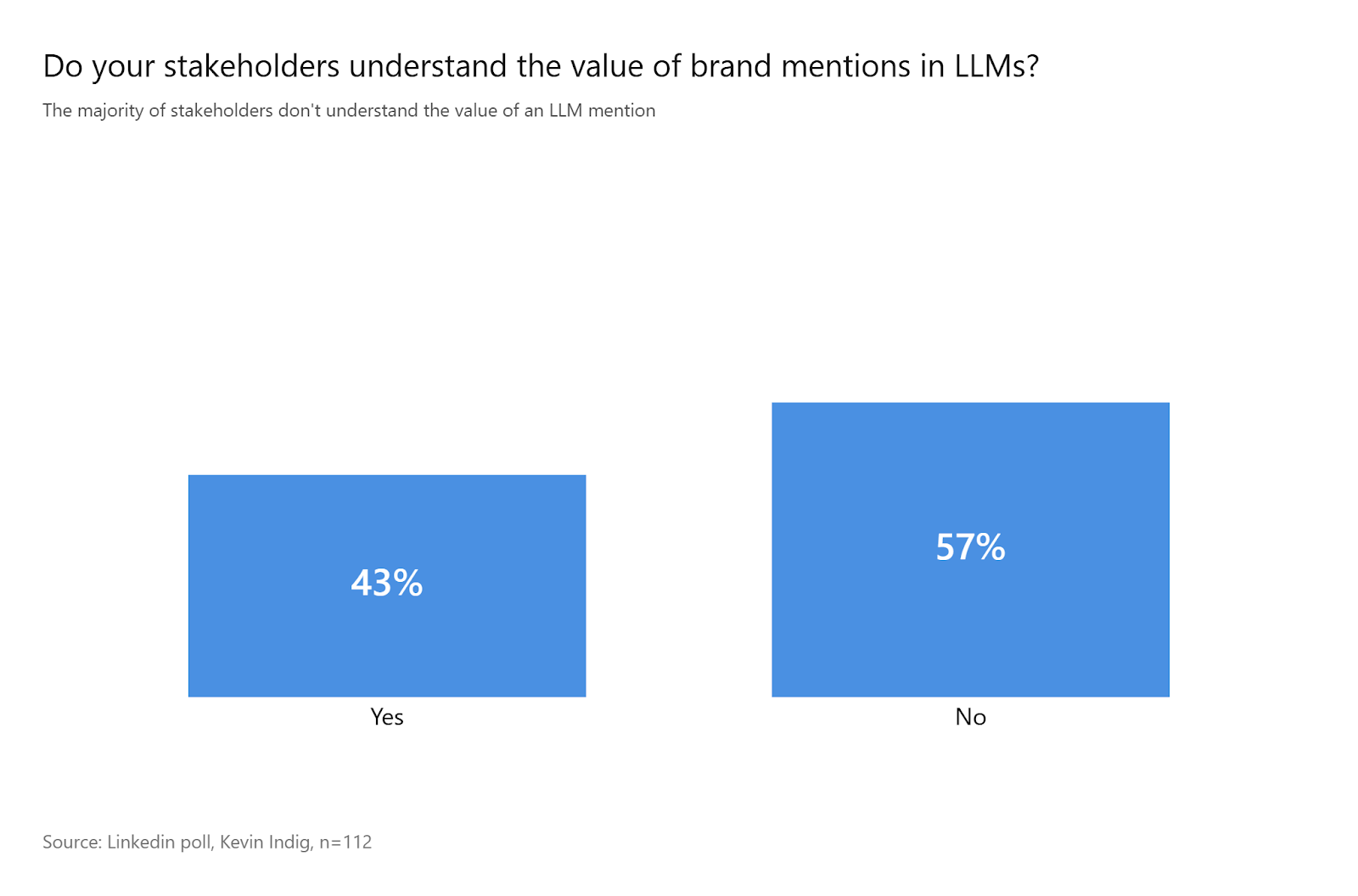 Image Credit: Kevin Indig
Meanwhile, close to 60% of those who responded to my recent poll report their stakeholders don’t understand the value of brand mentions in LLMs.
The SEO budget conversation has to move from “Why isn’t SEO driving more clicks?/What can we do to drive more traffic?” to “What capabilities do we need to build authority in new discovery channels?”
In 2026, the best marketing teams will stop measuring SEO success by clicks and start treating it as what it really is: a capacity and influence system.
1. Traffic-Based ROI Is A Decayed Model
Marketing budgets, on average, rose modestly in the last 12 months. Overall, marketing budgets are up 3.31%. And digital marketing spending specifically is up 7.25%.
SEO gets less than 10% of the marketing budget despite being one of the most efficient channels.
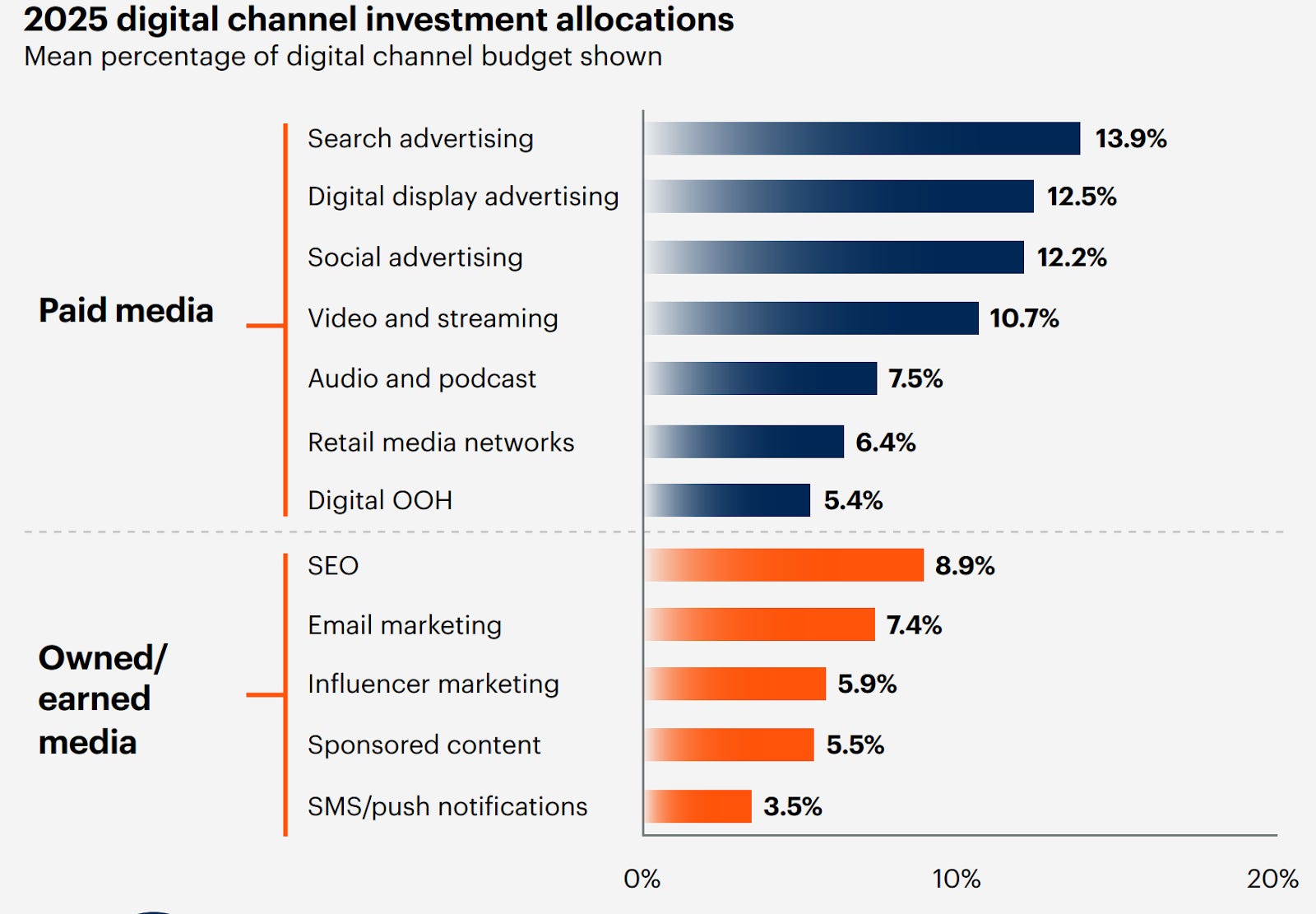 Image Credit: Kevin Indig
And for years, marketers invested this sliver of SEO budget like paid media – spend more, get more clicks. It’s time to let this go. There’s discomfort here, of course: We’re losing a significant leading indicator with traffic stagnation. In theory, SEO now appears to take “longer” to show results.
As Google dials AI in the search results up, organic clicks are destined to shrink. AI surfaces decouple visibility from clicks. Your brand can appear in every AI output response and get zero measurable traffic. In Semrush’s AI Mode study, 92-94% of AI Mode sessions produced no external clicks. (But that doesn’t mean people buy less. The opposite could be true.) Slowed growth in clicks is not a performance issue of an SEO team – it’s a system feature, and it’s the future of search. Platforms want users to stay within their ecosystems.
The implication: Traffic no longer equals demand. Brand visibility happens upstream inside AI responses, UGC threads, and recommendation loops that don’t often show in your analytics.
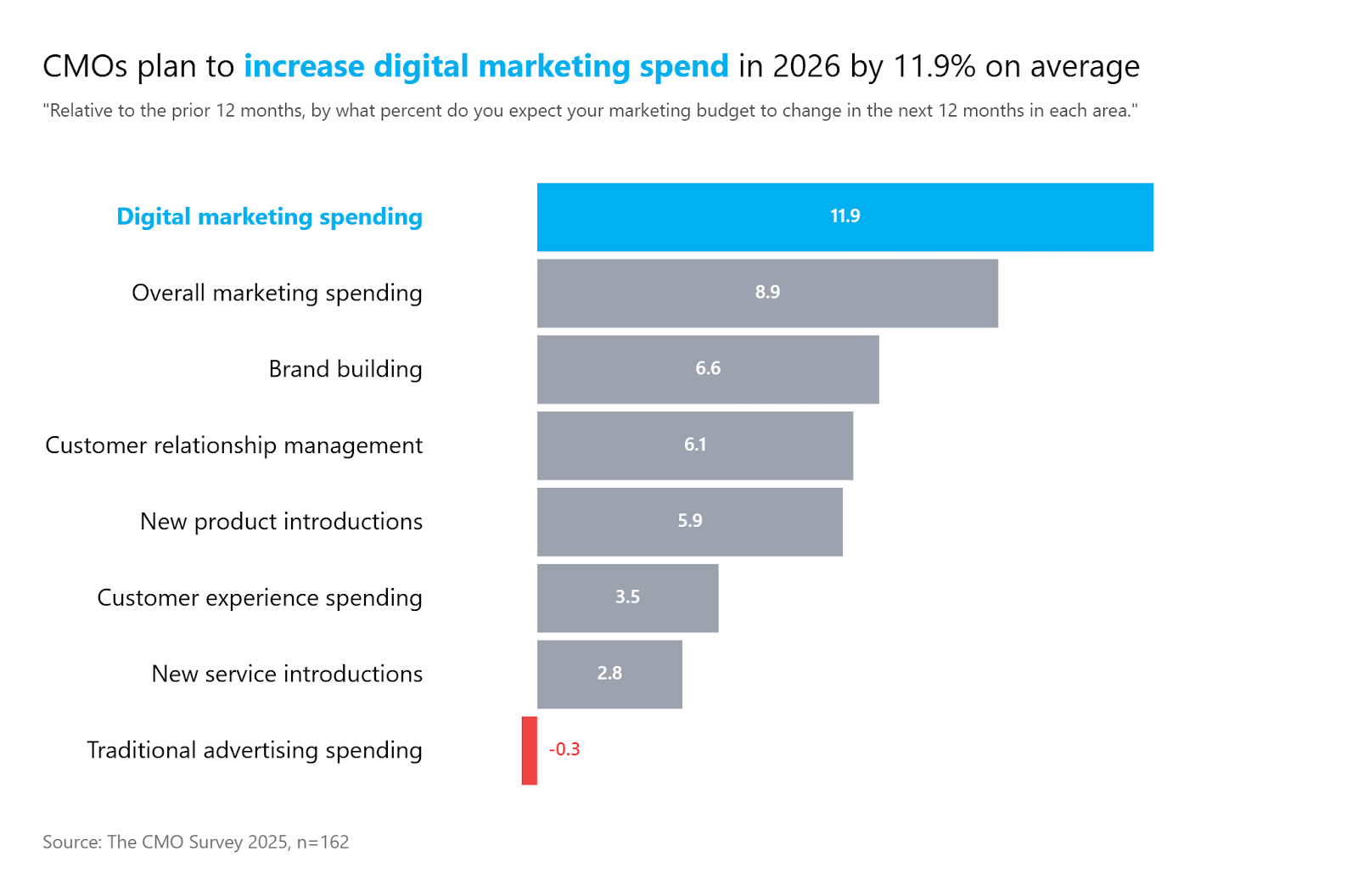 Image Credit: Kevin Indig
2. SEO Budgets Are Capacity Allocation, Not Spend-To-Output Trading
With paid ads, you’re buying impressions. Double your spend, you roughly double your impressions (with diminishing returns). There’s a direct, measurable relationship.
But most SEO costs are fixed: salaries, tool subscriptions, infrastructure. You pay for capacity regardless of whether your team delivers a 10% or 50% lift.
65% of those surveyed by Search Engine Journal don’t expect a reduction in SEO budget for 2026.
When deciding on next year’s budget, the question “What ROI do we expect from this spend?” is an outdated one. Instead, you need to answer this query: “What capabilities do we need to earn visibility?”
The variable isn’t spend; it’s prioritization and execution quality:
- Paid media is transactional: Spend → user impression → user click.
- SEO is compounding: Optimization → brand…
Source link
Disclaimer
We strive to uphold the highest ethical standards in all of our reporting and coverage. We blogs.grocliq.com want to be transparent with our readers about any potential conflicts of interest that may arise in our work. It’s possible that some of the investors we feature may have connections to other businesses, including competitors or companies we write about. However, we want to assure our readers that this will not have any impact on the integrity or impartiality of our reporting. We are committed to delivering accurate, unbiased news and information to our audience, and we will continue to uphold our ethics and principles in all of our work. Thank you for your trust and support.
Website Upgradation is going on for any glitch kindly connect at [email protected]