

At a recent conference, I was asked if llms.txt mattered. I’m personally not a fan, and we’ll get into why below. I listened to a friend who told me I needed to learn more about it as she believed I didn’t fully understand the proposal, and I have to admit that she was right. After doing a deep dive on it, I now understand it much better. Unfortunately, that only served to crystallize my initial misgivings. And while this may sound like a single person disliking an idea, I’m actually trying to view this from the perspective of the search engine or the AI platform. Why would they, or why wouldn’t they, adopt this protocol? And that POV led me to some, I think, interesting insights.
We all know that search is not the only discovery layer anymore. Large-language-model (LLM)-driven tools are rewriting how web content is found, consumed, and represented. The proposed protocol, called llms.txt, attempts to help websites guide those tools. But the idea carries the same trust challenges that killed earlier “help the machine understand me” signals. This article explores what llms.txt is meant to do (as I understand it), why platforms would be reluctant, how it can be abused, and what must change before it becomes meaningful.
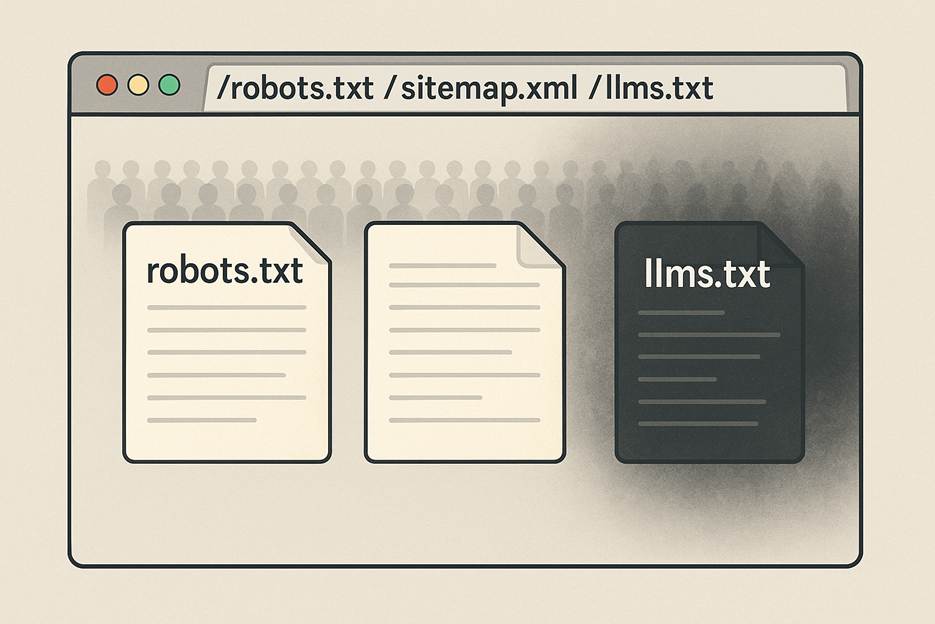 Image Credit: Duane Forrester
What llms.txt Hoped To Fix
Modern websites are built for human browsers: heavy JavaScript, complex navigation, interstitials, ads, dynamic templates. But most LLMs, especially at inference time, operate in constrained environments: limited context windows, single-pass document reads, and simpler retrieval than traditional search indexers. The original proposal from Answer.AI suggests adding an llms.txt markdown file at the root of a site, which lists the most important pages, optionally with flattened content so AI systems don’t have to scramble through noise.
Supporters describe the file as “a hand-crafted sitemap for AI tools” rather than a crawl-block file. In short, the theory: Give your site’s most valuable content in a cleaner, more accessible format so tools don’t skip it or misinterpret it.
The Trust Problem That Never Dies
If you step back, you discover this is a familiar pattern. Early in the web’s history, something like the meta keywords tag let a site declare what it was about; it was widely abused and ultimately ignored. Similarly, authorship markup (rel=author, etc) tried to help machines understand authority, and again, manipulation followed. Structured data (schema.org) succeeded only after years of governance and shared adoption across search engines. llms.txt sits squarely inside this lineage: a self-declared signal that promises clarity but trusts the publisher to tell the truth. Without verification, every little root-file standard becomes a vector for manipulation.
The Abuse Playbook (What Spam Teams See Immediately)
What concerns platform policy teams is plain: If a website publishes a file called llms.txt and claims whatever it likes, how does the…
Source link
Disclaimer
We strive to uphold the highest ethical standards in all of our reporting and coverage. We blogs.grocliq.com want to be transparent with our readers about any potential conflicts of interest that may arise in our work. It’s possible that some of the investors we feature may have connections to other businesses, including competitors or companies we write about. However, we want to assure our readers that this will not have any impact on the integrity or impartiality of our reporting. We are committed to delivering accurate, unbiased news and information to our audience, and we will continue to uphold our ethics and principles in all of our work. Thank you for your trust and support.
Website Upgradation is going on for any glitch kindly connect at [email protected]