

People are already turning to AI to answer questions, compare products, and make decisions in seconds.
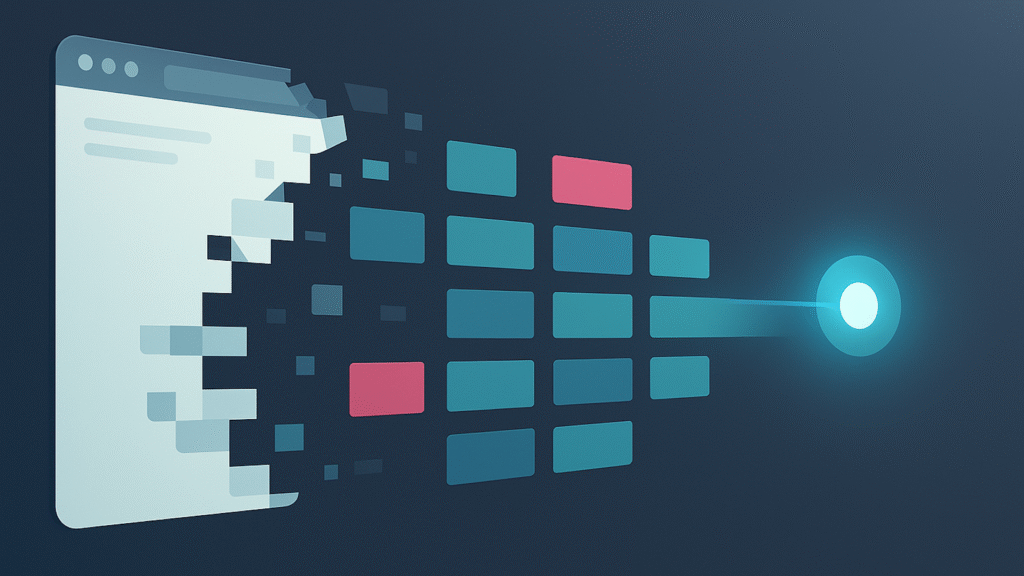
That shift exposes a fundamental problem: the web’s underlying structure was never built for machines.
As AI agents mature, the way information is delivered – and the need for traditional webpages – could change dramatically.
Disruption is normal – even when we don’t see it coming
The idea that the web as we know it could end, which I mentioned during a live OXD podcast in Salzburg, drew reactions ranging from thoughtful to angry.
Someone even insisted, “The web will always be there.”
But anyone paying attention knows that “always” and “never” rarely hold up in technology.
History shows that nothing technological is permanent.
When fundamental shifts happen, we call them disruptions because the impact becomes undeniable only in hindsight.
Back on Aug. 6, 1991, who could have imagined that Tim Berners-Lee’s World Wide Web would upend the world?
The same pattern has repeated for centuries.
The steam engine, the loom, the printing press, the car, smartphones, and the move from analog to digital were all dismissed at first as too expensive, too slow, or too complicated.
People pointed to existing solutions and assumed they would endure.
We also tend to judge new technologies too early. We compare immature, unoptimized versions to mature systems we’ve relied on for years.
What we rarely do is imagine the new technology in its fully developed state – and only then make a fair comparison.
That habit clouds our view of the future.
What buying a smartwatch reveals about the web’s limits
Where do you go for information when you want to buy a smartwatch?
Often, it’s the manufacturers, retailers, or websites Google returns for your search terms.
I want to know the exact differences between the Samsung Galaxy Watch8, Classic, and Ultra, and whether the price gap is justified for what I need.
Can I find that at Samsung? Probably not.
Each product has its own page and is described as “super.”
I end up taking notes by hand just to compare basic details.
I wonder what distinguishes a fabric band from an athleisure band, what a 3nm processor does for me, or what One UI even is.
To understand the sleep-monitoring features, I have to copy the text and translate it into German by a tool because Samsung used an English explanation.

There is a “compare” function in the shop, but it doesn’t help much. It often raises more questions than it answers.
For example, doesn’t the more expensive model have a running coach?
Yes, but the marketing team highlighted other differences, and “quick release” or “timeless design” seemed more important to list.
And what do “A2DP, AVRCP, HFP, HSP” or “16M” mean in terms of color depth?…
Source link
Disclaimer
We strive to uphold the highest ethical standards in all of our reporting and coverage. We blogs.grocliq.com want to be transparent with our readers about any potential conflicts of interest that may arise in our work. It’s possible that some of the investors we feature may have connections to other businesses, including competitors or companies we write about. However, we want to assure our readers that this will not have any impact on the integrity or impartiality of our reporting. We are committed to delivering accurate, unbiased news and information to our audience, and we will continue to uphold our ethics and principles in all of our work. Thank you for your trust and support.
Website Upgradation is going on for any glitch kindly connect at [email protected]