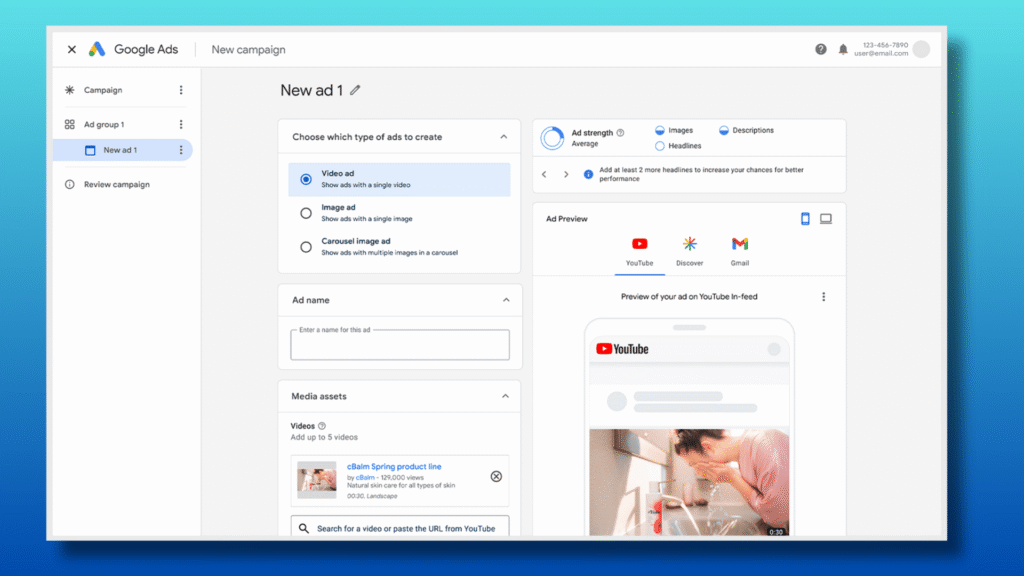

Demand Gen campaigns may be the newest addition to the Google Ads toolbox, but they haven’t received the same attention or hype as Performance Max.
At the core is their divergence from Google’s long-standing focus on capturing existing demand – a model that makes attribution and ROI measurement straightforward.
Two years after the public launch, we’ve transitioned from the campaign being in beta to testing additional controls, including inventory selection.
Here’s what I’ve learned from being part of the initial release and using Demand Gen regularly over the past couple of years.
How Google Ads Demand Gen campaigns work
Like Performance Max, Demand Gen relies heavily on automation and machine learning to handle most of the heavy lifting.
Both campaigns use algorithmic targeting, whereas previous campaigns, such as Search and Shopping were built around more specific targeting options.
But where Performance Max is a full-funnel campaign, Demand Gen (as the name implies) focuses largely on driving awareness and filling the top end of your funnel.
- Sidebar: When Demand Gen became available in October 2023, we gave up the ability to create Discovery campaigns. Since then, other inventories and campaign types have been absorbed into this new offering – most notably, video action campaigns from YouTube.
Using Performance Max without a data feed, and only creative assets with audience signals, is somewhat similar to what Demand Gen tries to do.
The key difference is that Performance Max tends to over-index on mid-to-bottom funnel traffic.
That setup pushes out Image, Display, and Video ads across all the different networks (except for Shopping).
It’s still more focused on bottom-of-funnel conversions than Demand Gen, whose primary goal is to create new demand.
With Demand Gen, you can still add your audiences, but also create lookalikes, which is something new to Google that anyone familiar with Meta Ads will recognize.
This works by seeding the system with a list – customers, email subscribers, people who take pixel-based actions on your website – and targeting people who closely match it.
It’s a good way of finding new audiences, which is exactly what Google has said Demand Gen seeks to do.
If we compare Demand Gen with its predecessor, the biggest differentiator is creative.
Discovery only allowed creatives built using images, carousels of images, or your product data feed.
Demand Gen lets you add video (standard YouTube videos and Shorts).
Demand Gen is Google’s way of helping advertisers create demand, not just capture it – something Google Ads has traditionally done as people search for what they already want.
It seems that’s a reputation they want to shake, because the interface now looks and feels more like a paid social campaign, with clear similarities to how Meta Ads structures its product.
Source link
Disclaimer
We strive to uphold the highest ethical standards in all of our reporting and coverage. We blogs.grocliq.com want to be transparent with our readers about any potential conflicts of interest that may arise in our work. It’s possible that some of the investors we feature may have connections to other businesses, including competitors or companies we write about. However, we want to assure our readers that this will not have any impact on the integrity or impartiality of our reporting. We are committed to delivering accurate, unbiased news and information to our audience, and we will continue to uphold our ethics and principles in all of our work. Thank you for your trust and support.
Website Upgradation is going on for any glitch kindly connect at [email protected]