

The AI browser wars are coming to a desktop near you, and you need to start worrying about their security challenges.
For the last two decades, whether you used Chrome, Edge, or Firefox, the fundamental paradigm remained the same: a passive window through which a human user viewed and interacted with the internet.
That era is over. We are currently witnessing a shift that renders the old OS-centric browser debates irrelevant. The new battleground is agentic AI browsers, and for security professionals, it represents a terrifying inversion of the traditional threat landscape.
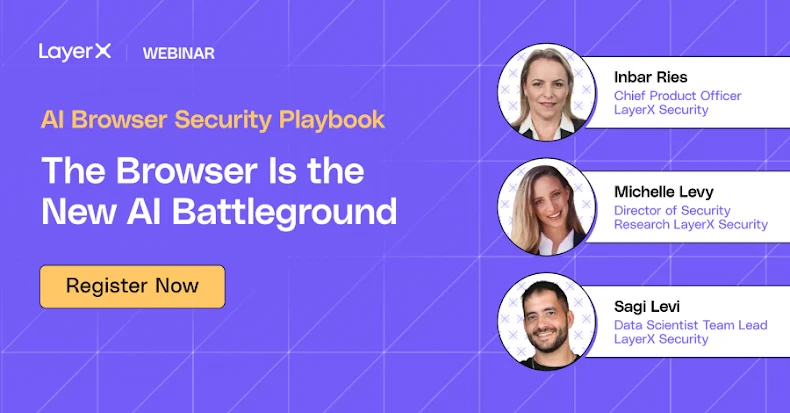
A new webinar dives into the issue of AI browsers, their risks, and how security teams can deal with them.
Even today, the browser is the main interface for AI consumption; it is where most users access AI assistants such as ChatGPT or Gemini, use AI-enabled SaaS applications, and engage AI agents.
AI providers were the first to recognize this, which is why we’ve seen a spate of new ‘agentic’ AI browsers being launched in recent months, and AI vendors such as OpenAI launching their own browsers. They are the first to understand that the browser is no longer a passive window through which the internet was viewed, but the active battleground on which the AI wars will be won or lost.
Whereas the previous generation of browsers were tools to funnel users into the vendors’ preferred search engine or productivity suite, the new generation of AI browsers will funnel users into their respective AI ecosystems. And this is where the browser is turning from a neutral, passive observer into an active and autonomous AI agent.
From Read-Only to Read-Write: The Agentic Leap
To understand the risk, we must understand the functional shift. Until now, even “AI-enhanced” browsers with built-in AI assistants or AI chat sidebars have been essentially read-only. They could summarize the page you were viewing or answer questions, but could not take action on behalf of the user. They were passive observers.
The new generation of browsers, exemplified by OpenAI’s ChatGPT Atlas, are not passive viewing tools; they are autonomous. They are designed to close the gap between thought and action. Instead of statically showing information for the user to manually book a flight, they can be given a command: “Book the cheapest flight to New York for next Tuesday.”
The browser then autonomously navigates the DOM (Document Object Model), interprets the UI, inputs data, and executes financial transactions. It is no longer a tool; it is a digital employee.
The Security Paradox: To Work, It Must Be Vulnerable
Here lies the counterintuitive reality that goes against conventional security wisdom. In traditional security models, we secure systems by limiting privilege (Least Privilege Principle). However, for an Agentic Browser to deliver on its value proposition, it requires maximum privileges.
For an AI agent to book a flight, navigate a paywall, or fill out a visa application on your behalf, it cannot be an…
Source link
Disclaimer
We strive to uphold the highest ethical standards in all of our reporting and coverage. We blogs.grocliq.com want to be transparent with our readers about any potential conflicts of interest that may arise in our work. It’s possible that some of the investors we feature may have connections to other businesses, including competitors or companies we write about. However, we want to assure our readers that this will not have any impact on the integrity or impartiality of our reporting. We are committed to delivering accurate, unbiased news and information to our audience, and we will continue to uphold our ethics and principles in all of our work. Thank you for your trust and support.
Website Upgradation is going on for any glitch kindly connect at [email protected]