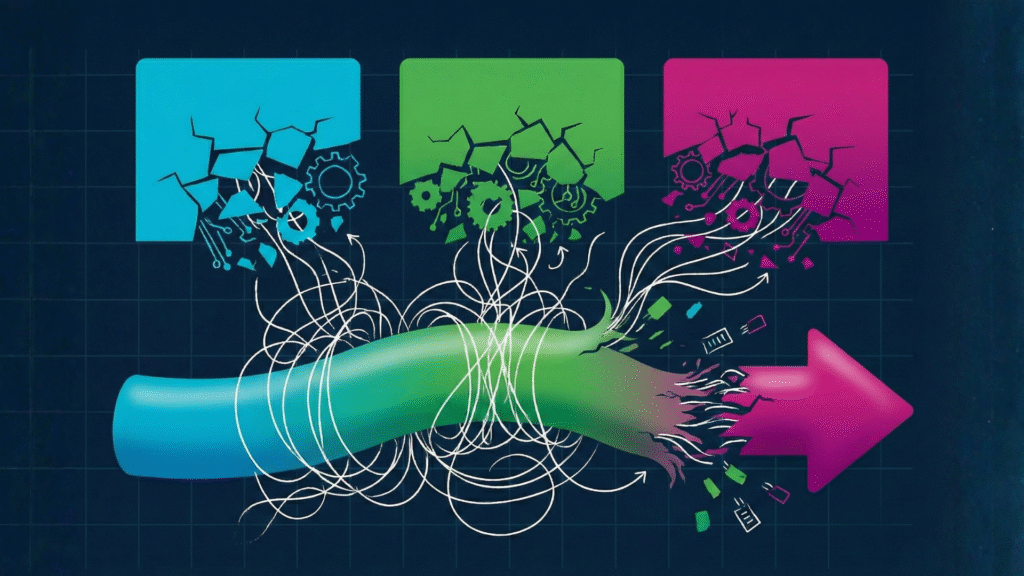

The latest benchmark results reveal a surprising drop in SEO accuracy from top AI models.
TL;DR:
- The latest flagship AI models (Claude Opus 4.5, Gemini 3 Pro) have statistically regressed in performance for standard SEO tasks, showing a ~9% drop in accuracy compared to previous versions.
- This isn’t a glitch – it’s a feature of how models are now optimized for deep reasoning and “agentic” workflows rather than “one-shot” answers.
- To survive this shift, organizations must stop relying on raw prompts and move to “contextual containers” (Custom GPTs, Gems, Projects).
The ‘newer = better’ myth is dead
Last year, the narrative was linear: wait for the next model drop, get better results. That trajectory has broken.
We just ran our AI SEO benchmark across the newest flagship releases – Claude Opus 4.5, Gemini 3 Pro, and ChatGPT-5.1 Thinking – and the results are alarming.
For the first time in the generative AI era, the newest models are significantly worse at SEO tasks than their predecessors.

We aren’t talking about a margin of error. We are seeing near-double-digit regressions:
- Claude Opus 4.5: Scored 76%, a drop from 84% in version 4.1.
- Gemini 3 Pro: Scored 73%, a massive 9% drop from the 2.5 Pro version we tested earlier this year.
- Chat GPT-5.1 Thinking: Scored 77% (down 6% from standard GPT-5). This confirms that adding reasoning layers creates latency and noise for straightforward SEO tasks.

Why it matters: If your team updated their API calls or prompts to “the latest model”, you are likely paying more for worse results.
The diagnosis: The agentic gap
Why is this happening? Why would Google and Anthropic release “dumber” models?
The answer lies in their new optimization goals.
We analyzed the failure points in our dataset, which is heavily weighted toward technical SEO and strategy (accounting for nearly 25% of our test set).
These new models are not optimized for the “one-shot” prompt (asking a question and getting an instant answer).
Instead, they are optimized for:
- Deep reasoning (System 2 thinking): They overthink simple instruction sets, often hallucinating complexity where none exists.
- Massive context: They expect to be fed entire codebases or libraries, not single URL snippets.
- Safety and guardrails: They are more likely to refuse a technical audit request because it “looks” like a cybersecurity attack or violates a vague safety policy. We observe this refusal pattern frequently in the new Claude and Gemini architectures.
We are in the agentic gap. The models are trying to be autonomous agents that “think” before they speak.
However, for direct, logical SEO tasks (like analyzing a canonical tag or mapping keyword intent), this extra “thinking” noise dilutes the accuracy.
Get the newsletter search marketers rely on.
The fix: Stop…
Source link
Disclaimer
We strive to uphold the highest ethical standards in all of our reporting and coverage. We blogs.grocliq.com want to be transparent with our readers about any potential conflicts of interest that may arise in our work. It’s possible that some of the investors we feature may have connections to other businesses, including competitors or companies we write about. However, we want to assure our readers that this will not have any impact on the integrity or impartiality of our reporting. We are committed to delivering accurate, unbiased news and information to our audience, and we will continue to uphold our ethics and principles in all of our work. Thank you for your trust and support.
Website Upgradation is going on for any glitch kindly connect at [email protected]