

Gartner® doesn’t create new categories lightly. Generally speaking, a new acronym only emerges when the industry’s collective “to-do list” has become mathematically impossible to complete. And so it seems that the introduction of the Exposure Assessment Platforms (EAP) category is a formal admission that traditional Vulnerability Management (VM) is no longer a viable way to secure a modern enterprise.
The shift from the traditional Market Guide for Vulnerability Assessment to the new Magic Quadrant for EAPs represents a move away from the “vulnerability hose”, i.e., the endless stream of CVEs, and toward a model of Continuous Threat Exposure Management (CTEM). To us, this is more than just a change in terminology; it is an attempt to solve the “Dead End” paradox that has plagued security teams for a decade.
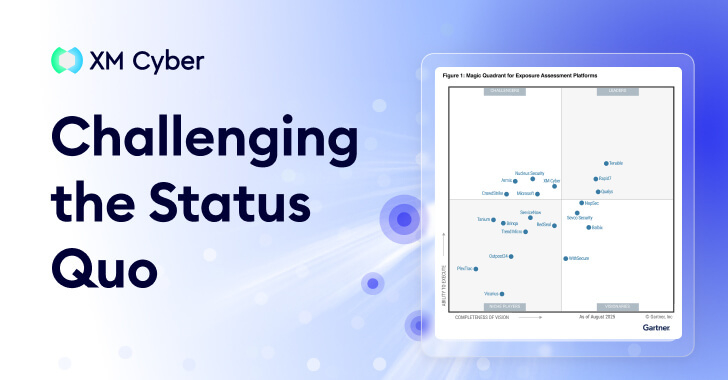
In the inaugural Magic Quadrant report of this category, Gartner evaluated 20 vendors for their ability to support continuous discovery, risk-informed prioritization, and integrated visibility across cloud, on-prem, and identity layers. In this article, we’ll take a deep dive into the key findings of the report, the drivers behind the new category, the features that define it, and what we see as the takeaways for security teams.
Why Exposure Assessment Is Gaining Ground
Security tools have always promised risk reduction, but they’ve mostly delivered noise. One product would reveal a misconfiguration. Another would log a privilege drift. A third would flag vulnerable external-facing assets. The result is a crisis of volume that has led to chronic alert fatigue in the SOC. Each tool provided a piece of the puzzle, yet none were able to put all the pieces together and explain how exposure forms…or what to fix first to avoid it.
The skepticism toward legacy VM tools is well-earned. Data from over 15,000 environments shows that 74% of identified exposures are “dead ends”, existing on assets that have no viable path to a critical system. In the old model, a security team might spend 90% of its remediation effort fixing these dead ends, yielding effectively zero reduction in risk to business processes.
This is what EAPs are designed to address. They pull all those pieces into a unified view that tracks how systems, identities, and vulnerabilities interact in real environments and show how an attacker could actually use it to move from a low-risk dev environment to critical assets.
This model is gaining traction because it reflects how attackers operate. Threat actors don’t limit themselves to a single flaw. They have weak controls, misaligned privileges, and blind spots in detection. The EAP model tracks how exposures accumulate across environments and lead attackers to reachable assets. Platforms in this category are built to show where risk originates, how it spreads, and which conditions support attacker movement.
Gartner projects that organizations using this approach will reduce unplanned downtime by 30% by 2027. That kind of dramatic…
Source link
Disclaimer
We strive to uphold the highest ethical standards in all of our reporting and coverage. We blogs.grocliq.com want to be transparent with our readers about any potential conflicts of interest that may arise in our work. It’s possible that some of the investors we feature may have connections to other businesses, including competitors or companies we write about. However, we want to assure our readers that this will not have any impact on the integrity or impartiality of our reporting. We are committed to delivering accurate, unbiased news and information to our audience, and we will continue to uphold our ethics and principles in all of our work. Thank you for your trust and support.
Website Upgradation is going on for any glitch kindly connect at [email protected]