
Netflix used its earnings interview for the three months that ended in December 2025 (Q4FY25) to highlight strong financial performance and rising engagement, alongside an expanding focus on advertising, live programming, and cloud gaming.
In terms of the financials, Netflix reported Q4FY25 revenue of $12.05 billion, up 4.7% quarter-on-quarter (QoQ) from $11.51 billion. For the entire calendar year of 2025, revenue rose to $45.18 billion, up 16% year-on-year (YoY), while operating income grew by 28% to $13.32 billion.
Furthermore, engagement also increased, with total viewing hours rising 2% YoY in the second half of 2025, adding 1.5 billion hours, while viewing of Netflix originals grew 9% YoY and now accounts for roughly half of total consumption. In addition, the company said that viewer retention remains among the best in the industry, and customer satisfaction was at an all-time high.
At the same time, Netflix forecast a strong growth outlook for 2026, forecasting $51 billion in revenue, up 14% YoY, and targeting an operating margin of 31.5%. Advertising revenue is expected roughly double in 2026 to about $3 billion. Notably, it grew grew 2.5 times in the 2025 calendar year.
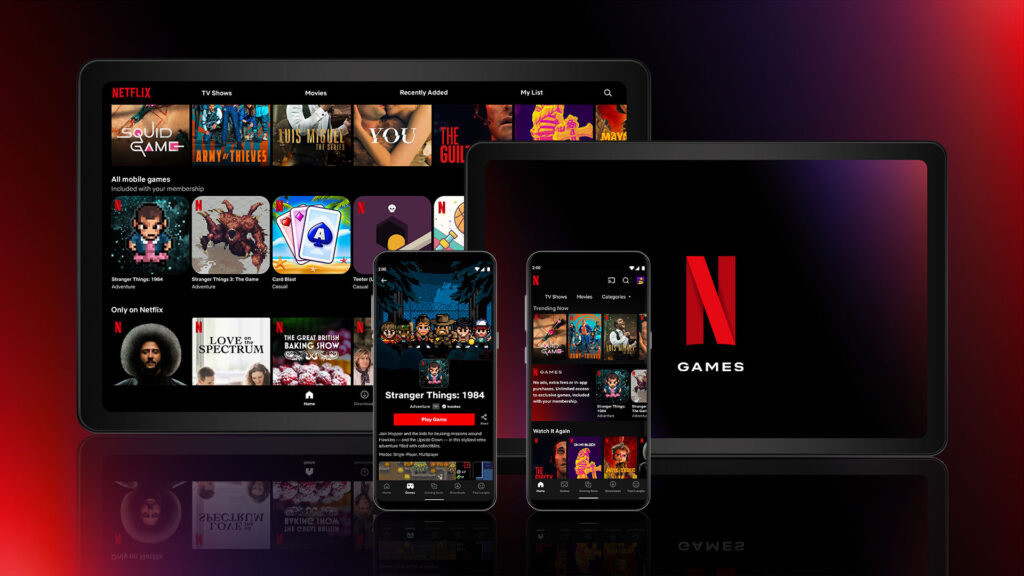
Meanwhile, the company is scaling its cloud-first gaming strategy, expanding TV-based cloud games to more markets, and accelerating its live programming slate.
Growth And Scaling Of Advertisements
Advertising has emerged as one of Netflix’s fastest-growing businesses, supported by strong momentum in 2025 and an aggressive expansion plan for 2026. The advertising business now operates across 12 global ad markets, with the company shifting from building scale to improving monetisation. Chief Financial Officer (CFO) Spencer Neumann explained that the ad-supported tier still trails ad-free plans on average revenue per membership (ARM), but that gap is narrowing as execution improves.
“There is still a gap between the ad-tier ARM and ARM for standard without ads, but that gap is narrowing”, Neumann said, adding that the gap reflects near-term under-realisation of revenue, but also a clear opportunity for growth.
Neumann said the company’s in-house ad tech stack is already improving buying efficiency and advertiser demand by making it easier for advertisers to access inventory, and increasing fill rates. To explain, fill rates are defined as the percentage amount of times an ad segment actually has an ad, instead of being blank.
Neumann said advertiser feedback and sales performance both point to stronger demand following the transition to Netflix’s own platform. And looking ahead, the company will expand its advertising toolkit in 2026. He said more first-party data will be made available to advertisers in a privacy-safe and data-secure way, alongside new ad formats and improved measurement tools.
“At the end of last year, we started testing modular capabilities with interactive video ads,” he said. “We’ve seen good…
Source link
Disclaimer
We strive to uphold the highest ethical standards in all of our reporting and coverage. We blogs.grocliq.com want to be transparent with our readers about any potential conflicts of interest that may arise in our work. It’s possible that some of the investors we feature may have connections to other businesses, including competitors or companies we write about. However, we want to assure our readers that this will not have any impact on the integrity or impartiality of our reporting. We are committed to delivering accurate, unbiased news and information to our audience, and we will continue to uphold our ethics and principles in all of our work. Thank you for your trust and support.
Website Upgradation is going on for any glitch kindly connect at [email protected]