
Most businesses don’t fail to rank in the local pack because they lack reviews, links, or proximity.
They fail long before that because Google never considers them eligible in the first place.
This is a recurring pattern in local search that almost everyone overlooks.
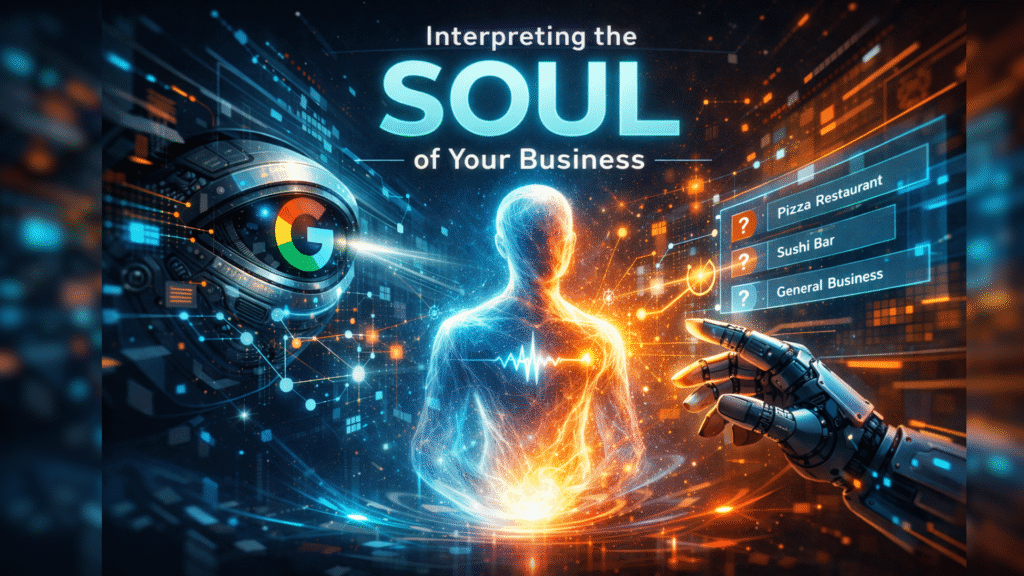
Google decides what you are before it decides how relevant you are.
From exact matches to broad intent: How eligibility shifts
In a niche query, Google is looking for a 1:1 match. They want high-confidence entities that leave zero room for interpretation.
However, once you zoom out to a broader search like “restaurants,” that lockdown disappears.
Suddenly, the Map Pack opens up to a variety of related categories.
This is where hidden ranking factors like clicks, NavBoost, reviews, and even real-time signals like openness are prioritized.
Your business name and category create a unified signal that defines your “entity boundary.”
For thousands of businesses, a name that is too specific acts as a technical anchor, preventing them from appearing in those high-value, broad-intent Map Packs.
Conversely, for those trying to dominate a niche, aligning your name and category perfectly is the ultimate “cheat code” for eligibility.
Dig deeper: How to pick the right Google Business Profile categories
The eligibility gatekeeper: Interpretation first, rankings second
The reality is that you aren’t just competing against other businesses; you are competing against Google’s own need for certainty.
Thanks to the Google Content Warehouse API Leak, we now have visibility into the engine driving this NlpSemanticParsingLocalBusinessType.

This is the upstream “brain” that decides whether your business is even eligible to show up for a query before traditional ranking factors like reviews, links, or proximity are ever considered.
Think of it as a machine learning classifier designed to minimize noise.
By filtering out businesses that are semantically unlikely to be a match for a query, Google ensures its Map Pack results are highly confident.
If you don’t pass this semantic filter, your 500 five-star reviews don’t even get looked at.
This is why, if Google’s parser identifies the combination of your business name and primary category as a narrow entity boundary, you are immediately limited in the queries you can compete for.
Your business name and primary category do more than describe you.
They dictate your eligibility for specific queries.
They are the fundamental building blocks of your digital territory, setting the invisible walls of where you are and aren’t allowed to rank.
Business name + category: A unified signal
The leaked documentation reveals that Google evaluates your business name and business category as part of a single locationElement.
These aren’t just two fields in a database. They are parsed through the same semantic model in…
Source link
Disclaimer
We strive to uphold the highest ethical standards in all of our reporting and coverage. We blogs.grocliq.com want to be transparent with our readers about any potential conflicts of interest that may arise in our work. It’s possible that some of the investors we feature may have connections to other businesses, including competitors or companies we write about. However, we want to assure our readers that this will not have any impact on the integrity or impartiality of our reporting. We are committed to delivering accurate, unbiased news and information to our audience, and we will continue to uphold our ethics and principles in all of our work. Thank you for your trust and support.
Website Upgradation is going on for any glitch kindly connect at [email protected]