

Microsoft has warned of a multi‑stage adversary‑in‑the‑middle (AitM) phishing and business email compromise (BEC) campaign targeting multiple organizations in the energy sector.
“The campaign abused SharePoint file‑sharing services to deliver phishing payloads and relied on inbox rule creation to maintain persistence and evade user awareness,” the Microsoft Defender Security Research Team said. “The attack transitioned into a series of AitM attacks and follow-on BEC activity spanning multiple organizations.”
As part of post-exploitation activity following initial compromise, the unknown attackers have been found to leverage trusted internal identities from the victim to carry out large‑scale intra‑organizational and external phishing in an effort to cast a wide net and widen the scope of the campaign.
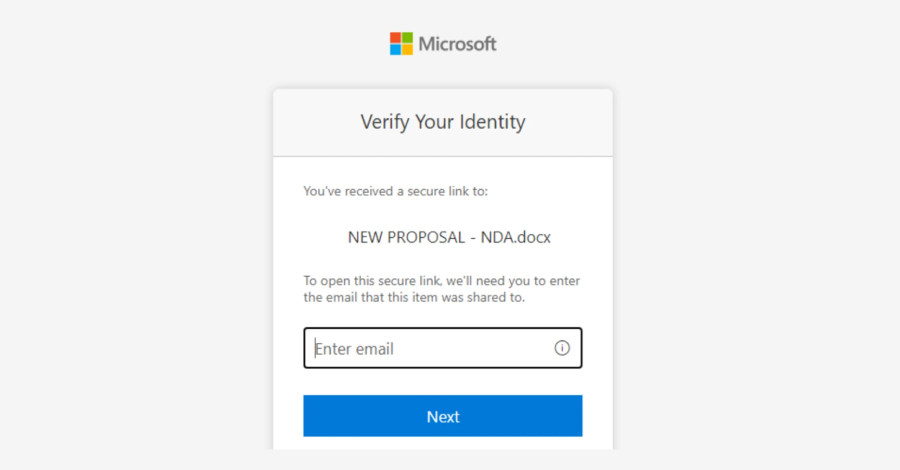
The starting point of the attack is a phishing email likely sent from an email address belonging to a trusted organization, which was compromised beforehand. Abusing this legitimate channel, the threat actors sent out messages masquerading as SharePoint document‑sharing workflows to give it a veneer of credibility and trick recipients into clicking on phishing URLs.

Because services like SharePoint and OneDrive are widely used in enterprise environments and the emails originate from a legitimate address, they are unlikely to raise suspicion, allowing adversaries to deliver phishing links or stage malicious payloads. This approach is also called living-off-trusted-sites (LOTS), as it weaponizes the familiarity and ubiquity of such platforms to subvert email‑centric detection mechanisms.
The URL, for its part, redirects users to a fake credential prompt to view the purported document. Armed with access to the account using the stolen credentials and the session cookie, the attackers create inbox rules to delete all incoming emails and mark all emails as read. With this foundation in place, the compromised inbox is used to send phishing messages containing a fake URL designed to conduct credential theft using an AitM attack.
In one case, Microsoft said the attacker initiated a large-scale phishing campaign involving more than 600 emails that were sent to the compromised user’s contacts, both within and outside of the organization. The threat actors have also been observed taking steps to delete undelivered and out of office emails, and assure message recipients of the email’s authenticity if they raised any concerns. The correspondence is then deleted from the mailbox.

“These techniques are common in any BEC attacks and are intended to keep the victim unaware of the attacker’s operations, thus helping in persistence,” the Windows maker noted.
Microsoft said the attack highlights the “operational complexity” of AitM, stating password resets alone cannot remediate the threat, as impacted organizations must ensure that they have revoked active session cookies and removed attacker-created inbox rules used to evade detection.
To…
Source link
Disclaimer
We strive to uphold the highest ethical standards in all of our reporting and coverage. We blogs.grocliq.com want to be transparent with our readers about any potential conflicts of interest that may arise in our work. It’s possible that some of the investors we feature may have connections to other businesses, including competitors or companies we write about. However, we want to assure our readers that this will not have any impact on the integrity or impartiality of our reporting. We are committed to delivering accurate, unbiased news and information to our audience, and we will continue to uphold our ethics and principles in all of our work. Thank you for your trust and support.
Website Upgradation is going on for any glitch kindly connect at [email protected]