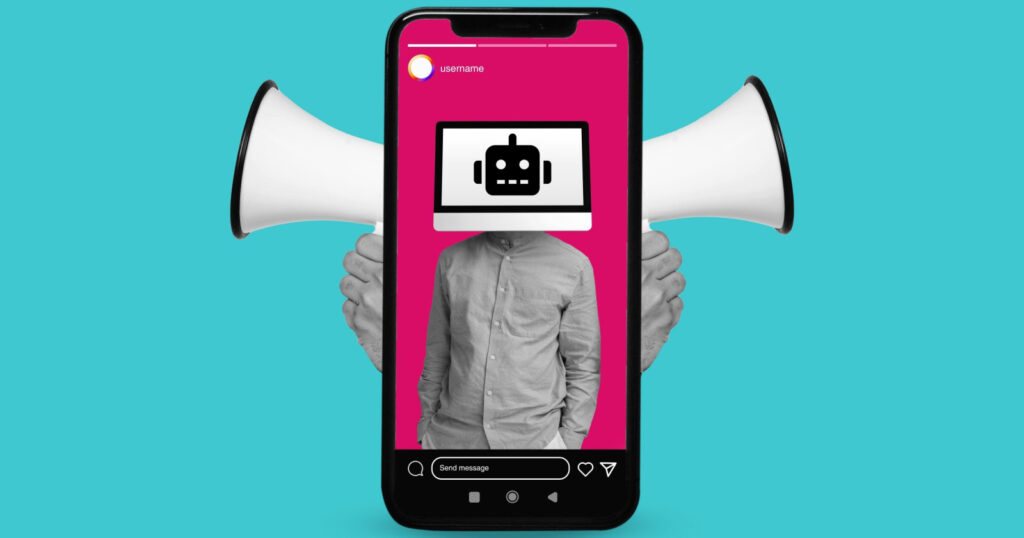

Today, trust in popular platforms is diminishing, organic reach is haphazard and hard to predict, and user behavior is growing more difficult to discern than ever before. At the same time, a steady stream of “new” social platforms are entering the game, promising to fix what’s broken and usher in the most qualified audience for your unique business.
Yet despite these claims, most of these new platforms won’t erase social media’s common challenges. The problem with social media isn’t that we need more platforms or a better one. The main issue lies in the underlying model, which was historically attention-driven and algorithmically mediated.
The future of social media won’t be a breakthrough app or a surprising new feature. Social media will develop around how, where, and why people connect, shaped by fragmentation and AI acting as an intermediary. In this post, we will dive deeper into why the current social media model is eroding and what the future of social might look like to help you address your strategy for 2026.
The Cracks In Today’s Social Media Model
User dissatisfaction is loud and real. Scrolling is faster. Attention is thinner. Comment sections are either dead quiet or strangely hostile. And a lot of users seem to be treating social less like a place to connect and more like something to get through.
For brands, the frustration is different but just as real. Platforms still push the same headline numbers (views, likes, engagement rate) because they’re easy to show and easy to celebrate. But those numbers don’t always line up with what your business actually needs.
If you can’t tie social activity to outcomes that matter (leads, purchases, appointments, store visits, whatever “success” is for you), you end up in a familiar loop: posting, boosting, reporting, and still not being able to answer the hard question, did this do anything?
Creators and social teams are stuck in the churn, too. The expectation now is constant output, and audiences are feeling inundated and overwhelmed by the sheer volume of content out there, potentially tuning out messages that would resonate with them otherwise.
Then, there’s trust. A lot of users simply don’t believe what they see on social media anymore. Moderation feels inconsistent. Rule changes are vague. Algorithms shift without warning. Misinformation spreads fast, and platform responses often look like cleanup crews arriving after the fire’s already moved on. That wears people down. And once that skepticism sets in, it’s hard to win back. A recent study found that 41% of U.S. adults do not trust information posted on social media very often, and 16% don’t trust it at all. Moderation policies aren’t perceived as strong or transparent.
From a business perspective, the aforementioned challenges compound:
Solving these problems is going to take more than introducing a new social media platform. A new user interface wouldn’t suffice either, nor would ramping up…
Source link
Disclaimer
We strive to uphold the highest ethical standards in all of our reporting and coverage. We blogs.grocliq.com want to be transparent with our readers about any potential conflicts of interest that may arise in our work. It’s possible that some of the investors we feature may have connections to other businesses, including competitors or companies we write about. However, we want to assure our readers that this will not have any impact on the integrity or impartiality of our reporting. We are committed to delivering accurate, unbiased news and information to our audience, and we will continue to uphold our ethics and principles in all of our work. Thank you for your trust and support.
Website Upgradation is going on for any glitch kindly connect at [email protected]