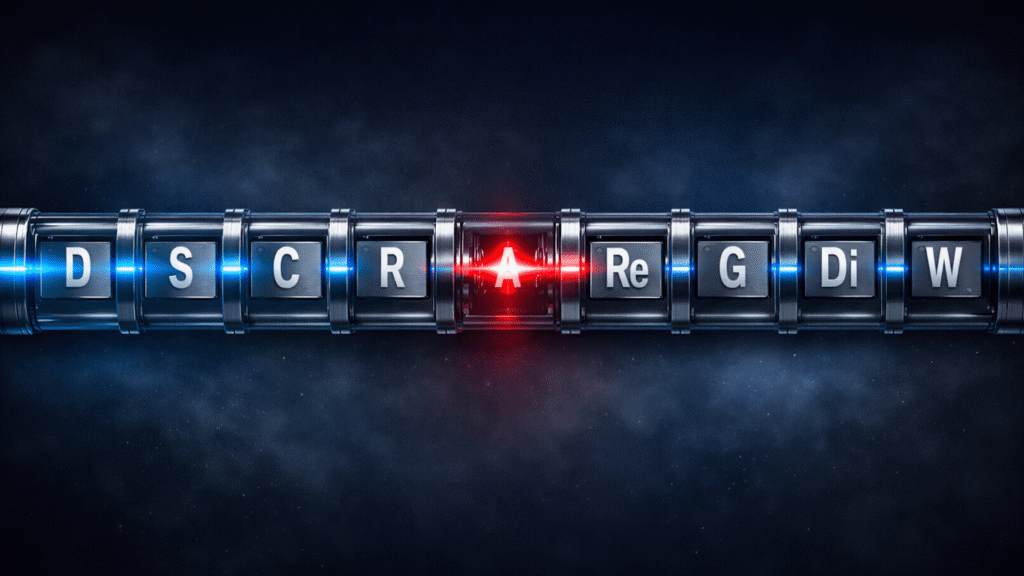

AI recommendations are inconsistent for some brands and reliable for others because of cascading confidence: entity trust that accumulates or decays at every stage of an algorithmic pipeline.
Addressing that reality requires a discipline that spans the full algorithmic trinity through assistive agent optimization (AAO). It also demands three structural shifts: the funnel moves inside the agent, the push layer returns, and the web index loses its monopoly.
The mechanics behind that shift sit inside the AI engine pipeline. Here’s how it works.
The AI engine pipeline: 10 gates and a feedback loop
Every piece of digital content passes through 10 gates before it becomes an AI recommendation. I call this the AI engine pipeline, DSCRI-ARGDW, which stands for:
- Discovered: The bot finds you exist.
- Selected: The bot decides you’re worth fetching.
- Crawled: The bot retrieves your content.
- Rendered: The bot translates what it fetched into what it can read.
- Indexed: The algorithm commits your content to memory.
- Annotated: The algorithm classifies what your content means across dozens of dimensions.
- Recruited: The algorithm pulls your content to use.
- Grounded: The engine verifies your content against other sources.
- Displayed: The engine presents you to the user.
- Won: The engine gives you the perfect click at the zero-sum moment in AI.
After “won” comes an 11th gate that belongs to the brand, not the engine: served. What happens after the decision feeds back into the AI engine pipeline as entity confidence, making the next cycle stronger or weaker.
DSCRI is absolute. Are you creating a friction-free path for the bots?
ARGDW is relative. How do you compare to your competition? Are you creating a situation in which you’re relatively more “tasty” to the algorithms?

Both sides of the AI engine pipeline are sequential. Each gate feeds the next.
Content entering DSCRI through the traditional pull path passes through every gate. Content entering through structured feeds or direct data push can skip some or all of the infrastructure gates entirely, arriving at the competitive phase with minimal attenuation.
Skipped gates are a huge win, so take that option wherever and whenever you can. You “jump the queue” and start at a later stage without the degraded confidence of the previous ones. That changes the economics of the entire pipeline, and I’ll come back to why.
Why the four-step model falls short
The four-step model the SEO industry inherited from 1998 — crawl, index, rank, display — collapses five distinct infrastructure processes into “crawl and index” and five distinct competitive processes into “rank and display.”
It might feel like I’m overcomplicating this, but I’m not. Each gate has nuance that merits its standalone position. If you have empathy for the bots, algorithms, and engines, remove friction, and make the content digestible, they’ll…
Source link
Disclaimer
We strive to uphold the highest ethical standards in all of our reporting and coverage. We blogs.grocliq.com want to be transparent with our readers about any potential conflicts of interest that may arise in our work. It’s possible that some of the investors we feature may have connections to other businesses, including competitors or companies we write about. However, we want to assure our readers that this will not have any impact on the integrity or impartiality of our reporting. We are committed to delivering accurate, unbiased news and information to our audience, and we will continue to uphold our ethics and principles in all of our work. Thank you for your trust and support.
Website Upgradation is going on for any glitch kindly connect at [email protected]