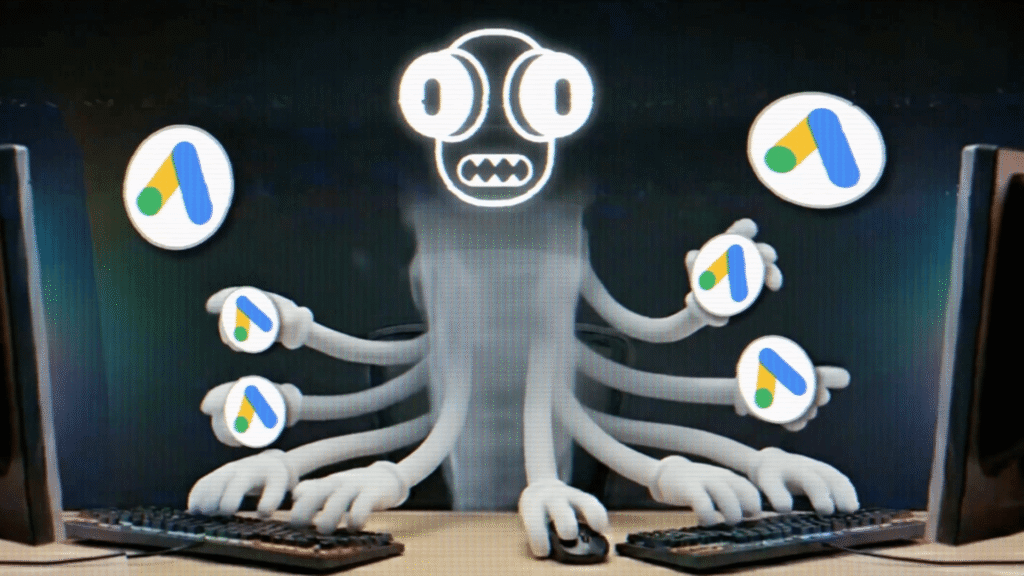


For 20 years, Google Ads management has followed the same basic model: you log in, review performance, make changes, and hope they work before the next check-in.
Agencies, freelancers, and in-house teams all work this way, even as the tools have changed. Spreadsheets gave way to scripts, and scripts gave way to automated bidding, but the core loop never changed — someone still had to sit in the account.
groas aims to change that model by introducing a system designed to automate campaign execution end-to-end.
Our company announced today it has developed a fully end-to-end autonomous system that’s designed to match or exceed PPC performance benchmarks observed in internal testing. It’s designed to operate without routine manual approvals or constant dashboard monitoring.
From campaign creation through bid management, ad copy generation, keyword expansion, negative keyword pruning, budget allocation, and dynamic landing page deployment — along with everything else you can do in the Google Ads console and beyond — the entire workflow now runs autonomously, 24/7.
The system runs on a distributed network of specialized AI agents that handle different parts of campaign management and communicate in real time.
We didn’t start here.
A year ago, groas launched as a lightweight product that surfaced optimization recommendations for you to review and implement. The same model most PPC products still follow.
By the founder’s own admission, it was a fairly unremarkable v1. But what it lacked in sophistication, it made up for in something more valuable: real data from large volumes of real campaigns at scale.
Hundreds of early customers across the world signed up and connected their Google Ads accounts, representing a wide range of ad spend levels, campaign structures, and conversion goals.
These weren’t a narrow slice of one vertical. They spanned dozens of industries and niches — from local service businesses spending a few thousand a month to large agencies managing seven-figure monthly budgets across full client portfolios.
That diversity became the most important asset groas built.
The custom-trained, fine-tuned models that now power the system were shaped by this breadth — not a static dataset or simulation, but live campaigns with real money on the line across every industry and budget tier.
Without that base of early adopters, what groas is today couldn’t exist. The training data that enables autonomous management came from actively managing real dollars across real campaigns, learning what worked and what didn’t in conditions no synthetic environment could replicate.
David Pourquery, founder and CEO of groas, said:
“We kept seeing the same pattern. We’d surface a recommendation that would clearly improve performance, and it would sit there for days or weeks because the account manager was busy, or the client needed to approve it, or someone was on vacation….
Source link
Disclaimer
We strive to uphold the highest ethical standards in all of our reporting and coverage. We blogs.grocliq.com want to be transparent with our readers about any potential conflicts of interest that may arise in our work. It’s possible that some of the investors we feature may have connections to other businesses, including competitors or companies we write about. However, we want to assure our readers that this will not have any impact on the integrity or impartiality of our reporting. We are committed to delivering accurate, unbiased news and information to our audience, and we will continue to uphold our ethics and principles in all of our work. Thank you for your trust and support.
Website Upgradation is going on for any glitch kindly connect at [email protected]