
Search has changed, and brands need to catch up fast, according to IBM’s Alexis Zamkow (global lead of Marketing Transformation solutions) and Sandhya Ranganathan Iyer (associate partner – AI), speaking yesterday at Adobe Summit.
AI tools don’t just help people search. They answer questions, compare products, and recommend brands. In many cases, users never even visit a website.
That means if your brand isn’t part of the AI-generated answer, you may not be part of the decision.
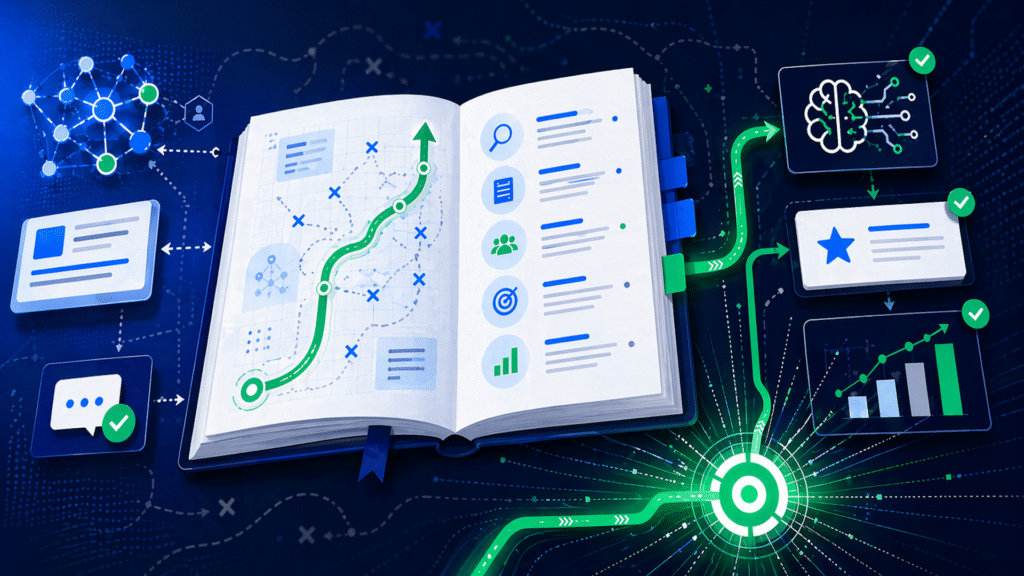
To keep up, brands need more than new tactics. They need a system — a GEO (Generative Engine Optimization) playbook. Here’s a recap of their presentation, Adapt or Disappear: How Brands Win with AI-Powered Search.
The AI shift: You’re marketing to machines
AI agents now sit between you and your customer.
They take a complex market and simplify it. They decide what information to show. And they often speak on your behalf.
- “These machines are disintermediating the brand experience,” Zamkow said.
At the same time:
- Consumers are using AI for research and decisions
- Businesses are adopting it even faster
- Many searches now end without a click
Zamkow said an estimated 75% of search visibility could shift to AI agents in the next two years.
That’s why visibility today depends on being part of the answer itself.
The GEO playbook: 12 components every brand needs
To respond, the speakers outlined a 12-part playbook. It spans content, technology, and operations.
1. Strategic content foundations
Your content must tell one clear story — everywhere.
That includes your website, PR, social, and third-party mentions. If each channel says something different, AI won’t trust your brand.
For example, if your site highlights premium quality, but reviews focus on low price, that mixed message weakens your authority.
Consistency builds trust for people and machines.
2. Retrieval-grade passage standards
AI doesn’t rank webpages. It extracts answers. So your content must be easy to extract.
Good content looks like:
- Clear questions and answers.
- Short, focused sections.
- Direct language.
For example, instead of a long paragraph, write:
- Question: What are the best running shoes for beginners?
- Answer: A short, clear response
This makes it easier for AI to reuse your content in answers.
3. Technical foundations
Even great content won’t work if AI can’t read it.
Machines rely on:
- Clean HTML (not just visual design)
- Structured data (schema, metadata)
- Pages that load content directly
One example from the session: a beautiful website appeared to AI as “a headline and a blank page.”
If your content isn’t readable, it won’t be used.
4. On-site search + genAI search alignment
Start with your own site.
If your internal search — especially AI-powered search — works well, you’re already ahead.
Think of it this way: If your own system…
Source link
Disclaimer
We strive to uphold the highest ethical standards in all of our reporting and coverage. We blogs.grocliq.com want to be transparent with our readers about any potential conflicts of interest that may arise in our work. It’s possible that some of the investors we feature may have connections to other businesses, including competitors or companies we write about. However, we want to assure our readers that this will not have any impact on the integrity or impartiality of our reporting. We are committed to delivering accurate, unbiased news and information to our audience, and we will continue to uphold our ethics and principles in all of our work. Thank you for your trust and support.
Website Upgradation is going on for any glitch kindly connect at [email protected]