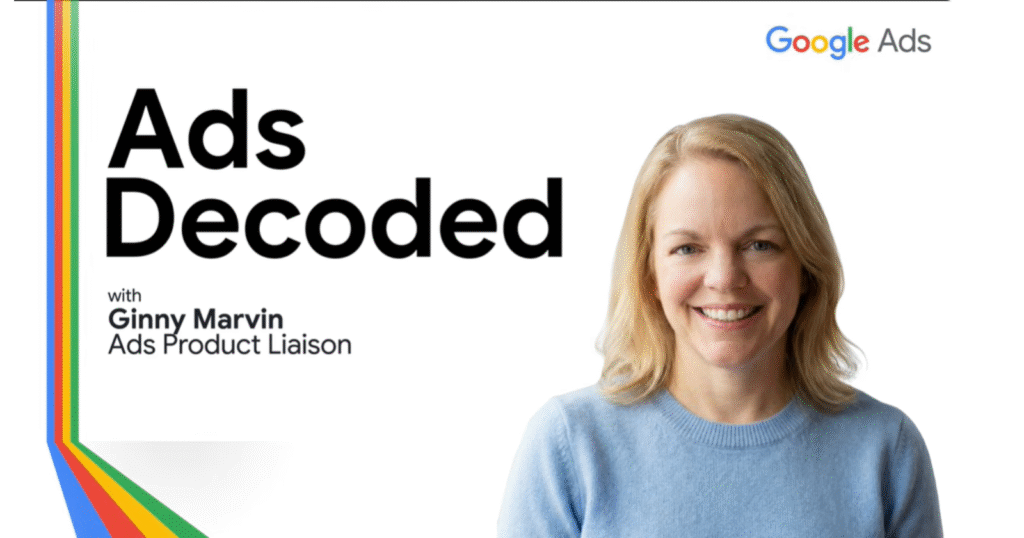

One of the more interesting moments in Google’s latest Ads Decoded podcast centered around a growing advertiser concern about AI-generated creative.
As more brands gain access to the same AI tools, will advertising eventually start feeling repetitive?
Ginny Marvin, Ads Liaison at Google, raised that question directly during the discussion, asking whether the industry was heading toward a “sea of sameness.”
The response from Charles Boyd, Groupe Product Manager for Creative at Google, offered a clearer look on how Google is positioning AI creative tools inside Google Ads and where the company believes advertiser differentiation still comes from.
Google Says AI Creative Should Expand Creative Variation
Throughout the episode, Google repeatedly framed AI creative tools as systems designed to expand variation, accelerate testing, and adapt messaging across different audiences and placements.
Google repeatedly positioned these tools as dependent on advertiser strategy and direction.
Boyd described the value of generative tools as “the ability to quickly create different creative styles and iterations at scale.”
A large part of the industry conversation around AI advertising has focused on concerns about generic outputs and loss of differentiation.
Google appears to be taking the opposite position.
The company seems to believe advertisers with a strong understanding of their audience, messaging, and brand voice will be able to scale those strengths more efficiently through AI-assisted creative workflows.
Instead, Google appears to be positioning AI as infrastructure that helps advertisers produce more combinations, more testing opportunities, and more audience-specific variations.
That distinction gives more context to how Google is approaching AI creative tools.
Google Wants Advertisers Steering AI Creative
Another phrase Google returned to multiple times during the episode was “advertiser-in-the-loop.”
The broader point was that automation should still include advertiser guidance and oversight.
Google highlighted several tools designed to give advertisers more control over how AI-generated assets are created:
- Text guidelines
- Brand guidance
- AI briefs
- Asset Studio
- Video enhancement previews
- Text disclaimers
- Final URL expansion controls
Boyd explained that advertisers can now provide specific text instructions directly inside campaigns.
For example, a brand could tell Google not to describe products using certain language or positioning:
Google literally will check every asset that gets created against each one of the guidelines that you provide.
According to Google, advertisers can specify up to 40 text guidelines within a campaign.
That is a noticeable shift from earlier automation features, which often felt far more rigid from a brand and messaging perspective.
The addition of text guidelines, AI briefs, and expanded creative controls suggests Google is trying to give advertisers more influence over how AI-generated assets are…
Source link
Disclaimer
We strive to uphold the highest ethical standards in all of our reporting and coverage. We blogs.grocliq.com want to be transparent with our readers about any potential conflicts of interest that may arise in our work. It’s possible that some of the investors we feature may have connections to other businesses, including competitors or companies we write about. However, we want to assure our readers that this will not have any impact on the integrity or impartiality of our reporting. We are committed to delivering accurate, unbiased news and information to our audience, and we will continue to uphold our ethics and principles in all of our work. Thank you for your trust and support.
Website Upgradation is going on for any glitch kindly connect at [email protected]