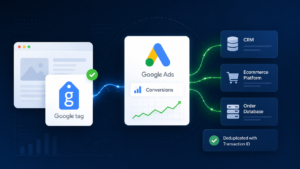

PPC budgeting in 2026 isn’t just about setting spend levels. It’s about knowing when to adjust budgets, when to scale campaigns, and how the data feeding Google’s automation influences those decisions.
Google’s automation systems have always followed the signals you give them. In 2026, they follow them faster and with more confidence than before, which means clean signal architecture matters more than ever.
The fundamentals of budget management haven’t changed. What has changed is how quickly a poorly architected account can waste budget.
Two budget mechanics you need to understand right now
Before you adjust targets, audiences, or bid strategies, make sure you understand how these two budget controls work.
The ad scheduling pacing change
Google now paces all campaigns with ad scheduling toward the full 30.4x monthly billing cap, regardless of how many days your ads actually run. Before this change, a $100 daily budget on a weekday-only campaign targeted roughly $2,200 in monthly spend across 22 active days.
Now it targets $3,040, compressed into those same weekdays. The billing ceiling hasn’t changed. The system pursues it more aggressively within your active windows.
If your campaigns use ad scheduling, recalculate your daily budget based on your intended monthly spend rather than active days: divide your monthly target by 30.4 and set that as your daily limit. A $2,200 monthly target becomes a $72 daily budget. Campaigns running 24/7 aren’t affected.
See exactly how your competitors win.
Uncover the keywords, ads, landing pages, and strategies driving your competitors’ paid search success—and find your next opportunity to outperform them.
Analyze your competitors
Campaign total budgets
Available for Demand Gen, Search, Standard Shopping, Performance Max, and YouTube campaigns, campaign total budgets let you set a fixed spend ceiling for a defined period rather than managing a daily limit.
For Search, Standard Shopping, and PMax, the window is three to 90 days. For Demand Gen and YouTube, it can run up to a year.
Unlike daily budgets, there’s no daily spending cap. The system can front-load or back-load spend within the flight to hit the total, which makes these useful for promotions and product launches, but worth monitoring closely when run alongside always-on campaigns.
Budget type can’t be changed after campaign creation, so the decision is final at setup.
What actually controls how Google Ads spends your budget
Efficiency targets usually constrain spend before budgets do
Smart Bidding treats your efficiency target as the primary constraint and your daily budget as the secondary one.
If you set a $50 tCPA and market conditions are returning leads at $80,the system restricts bids rather than generating conversions above your target. The daily budget cap…
Source link
Disclaimer
We strive to uphold the highest ethical standards in all of our reporting and coverage. We blogs.grocliq.com want to be transparent with our readers about any potential conflicts of interest that may arise in our work. It’s possible that some of the investors we feature may have connections to other businesses, including competitors or companies we write about. However, we want to assure our readers that this will not have any impact on the integrity or impartiality of our reporting. We are committed to delivering accurate, unbiased news and information to our audience, and we will continue to uphold our ethics and principles in all of our work. Thank you for your trust and support.
Website Upgradation is going on for any glitch kindly connect at [email protected]