

We are standing at the end of an era we never thought to mourn: the era of human-speed threats.
For years, cybersecurity moved to a rhythm organizations could follow. A researcher found a bug, a CVE was cataloged, a vendor navigated a patch cycle, and weeks or even months later, a fix was deployed. In this era, dwell time was measured in days, sometimes weeks. We are now approaching an inflection point in the threat timeline unlike any that came before it.
The trigger was the emergence of frontier agentic models in early 2026: AI entities that no longer just suggested code, but actively tested it. These models don’t merely accelerate the offensive lifecycle; they radically compress the time between discovery and weaponization.
The predator wearing a productivity badge
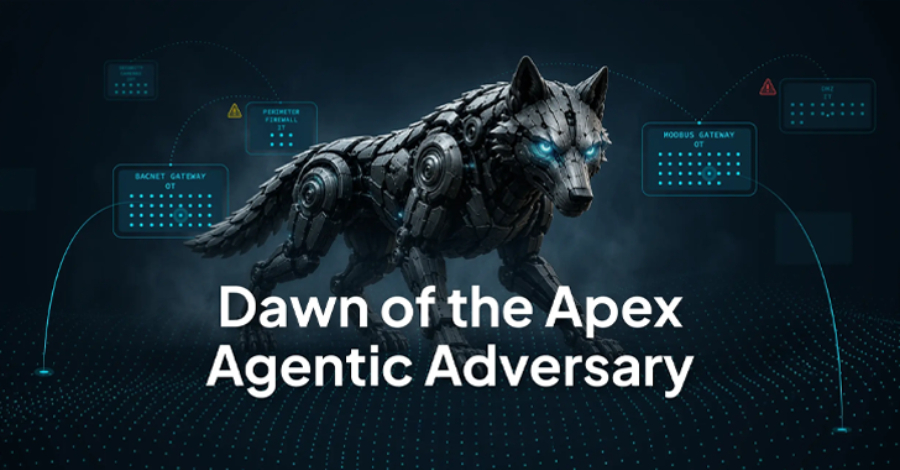
There is a reason the old saying warns about the wolf in sheep’s clothing. In the scramble to stay competitive, organizations have handed AI the keys to the deepest layers of their infrastructure: granting LLM agents write access to repos and allowing third-party AI wrappers to plug into internal APIs. These are the sheep: the helpful, fluffy productivity boosters sitting in our software ribbons.
But there lie wolves in the fabric. The same technology that allows a developer to refactor code in seconds gives agentic offensive models the power to hunt for logic flaws at the same speed. These tools are capable of finding an exposure, weaponizing it, and executing a breach before a human defender has even finished their first cup of coffee. The operational agility that modernized our workflows is now the same agility an adversary can turn against them.
The death of the Catalog
The most unsettling part of this cusp is not just the speed, but the increasing anonymity. In the pre-AI era, we relied on public exploitation accounting like CISA’s KEV Catalog and EPSS. We looked for known signatures and documented behaviors. But as AI-driven breaches become autogenous and self-generating, they become ephemeral. Attacks will soon be so fast, so targeted, and so mutated that they will not even stay in the room long enough to be cataloged.
If attack design, creation, and execution happen at machine speed and there is no signature to find, did it even happen? By the time your SIEM triggers an alert, the AI agent has already pivoted, exfiltrated, and potentially left no trace.
The illusion of separation in a converged world
The risk compounds because our fabric is no longer just digital; it is physical. The continuing convergence of IT and OT has created a unified playground for AI attackers. We used to rely on the segmentation illusion: the comfortable assumption that our critical industrial assets were air-gapped or safely tucked away behind firewalls.
In a converged world, that air gap or segmentation is a design flaw. An AI agent does not see a firewall; it sees an exploitable asset. In this evolving…
Source link
Disclaimer
We strive to uphold the highest ethical standards in all of our reporting and coverage. We blogs.grocliq.com want to be transparent with our readers about any potential conflicts of interest that may arise in our work. It’s possible that some of the investors we feature may have connections to other businesses, including competitors or companies we write about. However, we want to assure our readers that this will not have any impact on the integrity or impartiality of our reporting. We are committed to delivering accurate, unbiased news and information to our audience, and we will continue to uphold our ethics and principles in all of our work. Thank you for your trust and support.
Website Upgradation is going on for any glitch kindly connect at [email protected]