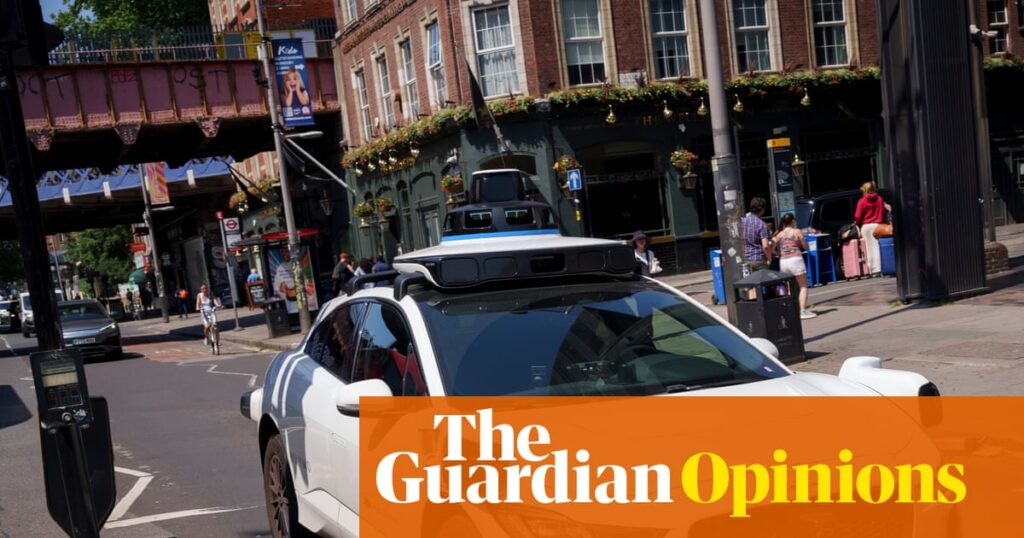

The robotaxis are coming! The robotaxis are coming! Well, actually, they’re already here. Until now they’ve been the stuff of science fiction, but this summer London’s streets have seen Silicon Valley-based company Waymo testing out self-driving cars. It hasn’t been the smoothest of introductions – from cars getting stuck in a cul-de-sac and repeatedly waking up the residents of Shoreditch to one driving into a crime scene, after a double stabbing in Harlesden.
The automated vehicles (AVs) have so far had trained drivers waiting behind the wheel to take control if needed, but will soon be shedding their human minders. Waymo and British rival Wayve are hoping to launch driverless minicabs in the capital this year, subject to approval from the British government and Transport for London, among others. A subsidiary of Google parent Alphabet, Waymo currently operates ride-hailing services in 10 US cities, but London, with its narrow streets and densely populated centre, will serve as one of its biggest challenges yet.
Is this a good thing? I have to admit I was initially suspicious, being naturally resistant to all forms of modernity and any “solution” proposed by the tech industry. Plus, the clunky camera-laden Jaguar SUVs hardly scream sex appeal.
But there is an aspect to this too little considered: for me, and others with accessibility needs, AVs offer a different future, a possibility of independence that feels otherwise unattainable. I will never be able to drive due to my poor vision, a reality that has left me unable to apply for many jobs and made me reliant on others to get around – especially when outside of cities. Many rural areas simply don’t have trains or taxis, causing an accessibility minefield for anyone living there or visiting. Driverless taxis may not solve that but they offer a roadmap towards the wider rollout of self-driving cars that could.
It’s no small matter. Transportation barriers limit the ability of disabled people to get jobs, access health care and socialise, with only 42% of those with difficulty seeing, and 54% of those with other disabilities, being in employment in the UK, according to 2022 analysis by the Royal National Institute of Blind People (RNIB). With about one in four people in the UK living with a disability, this technology could be an important vehicle for social inclusion and participation.
None of this is to wash away the consequences of inviting the tech lords to dominate our streets, especially by using disabled people as pawns in their arguments to do so. There are questions to be answered around surveillance – sensors within the cars will record information about our journeys and interactions with other vehicles or humans en route. It is possible the tech firms involved could use this to sell products and services to users. Proper regulation, rather than an aversion to the life-changing technology, is needed.
The cost of job losses for taxi and delivery drivers as the…
Source link
Disclaimer
We strive to uphold the highest ethical standards in all of our reporting and coverage. We blogs.grocliq.com want to be transparent with our readers about any potential conflicts of interest that may arise in our work. It’s possible that some of the investors we feature may have connections to other businesses, including competitors or companies we write about. However, we want to assure our readers that this will not have any impact on the integrity or impartiality of our reporting. We are committed to delivering accurate, unbiased news and information to our audience, and we will continue to uphold our ethics and principles in all of our work. Thank you for your trust and support.
Website Upgradation is going on for any glitch kindly connect at [email protected]