
Competitive brand bidding has become a staple PPC strategy. Many brands assume there’s little they can do about it beyond running their own branded campaigns.
Industry case studies show that advertisers who gain visibility into competitor, affiliate, and trademark bidding activity often uncover substantial CPC inflation. In documented cases, brands reduced branded CPCs by 25% to 75% after identifying infringing advertisers and enforcing their policies.
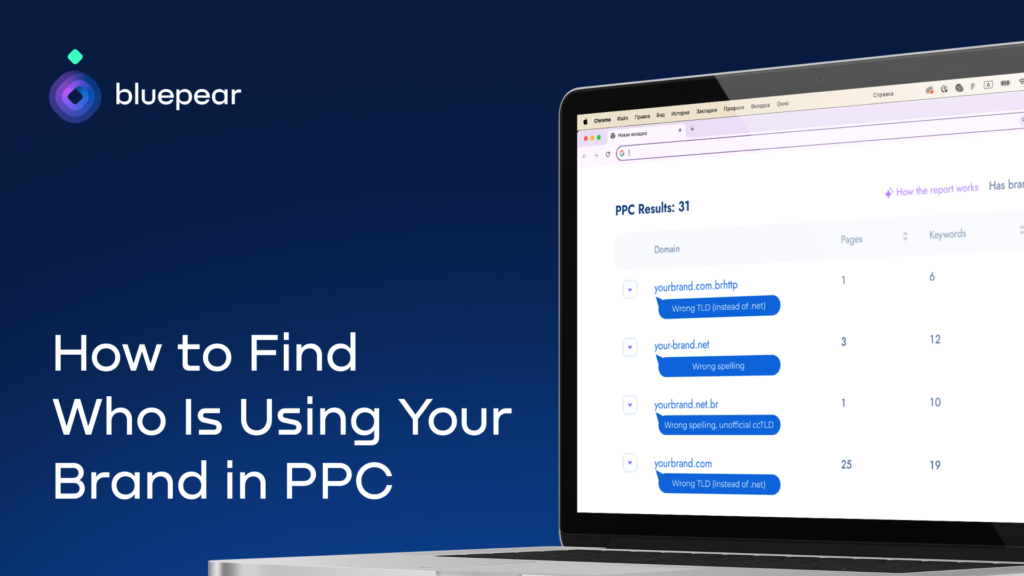
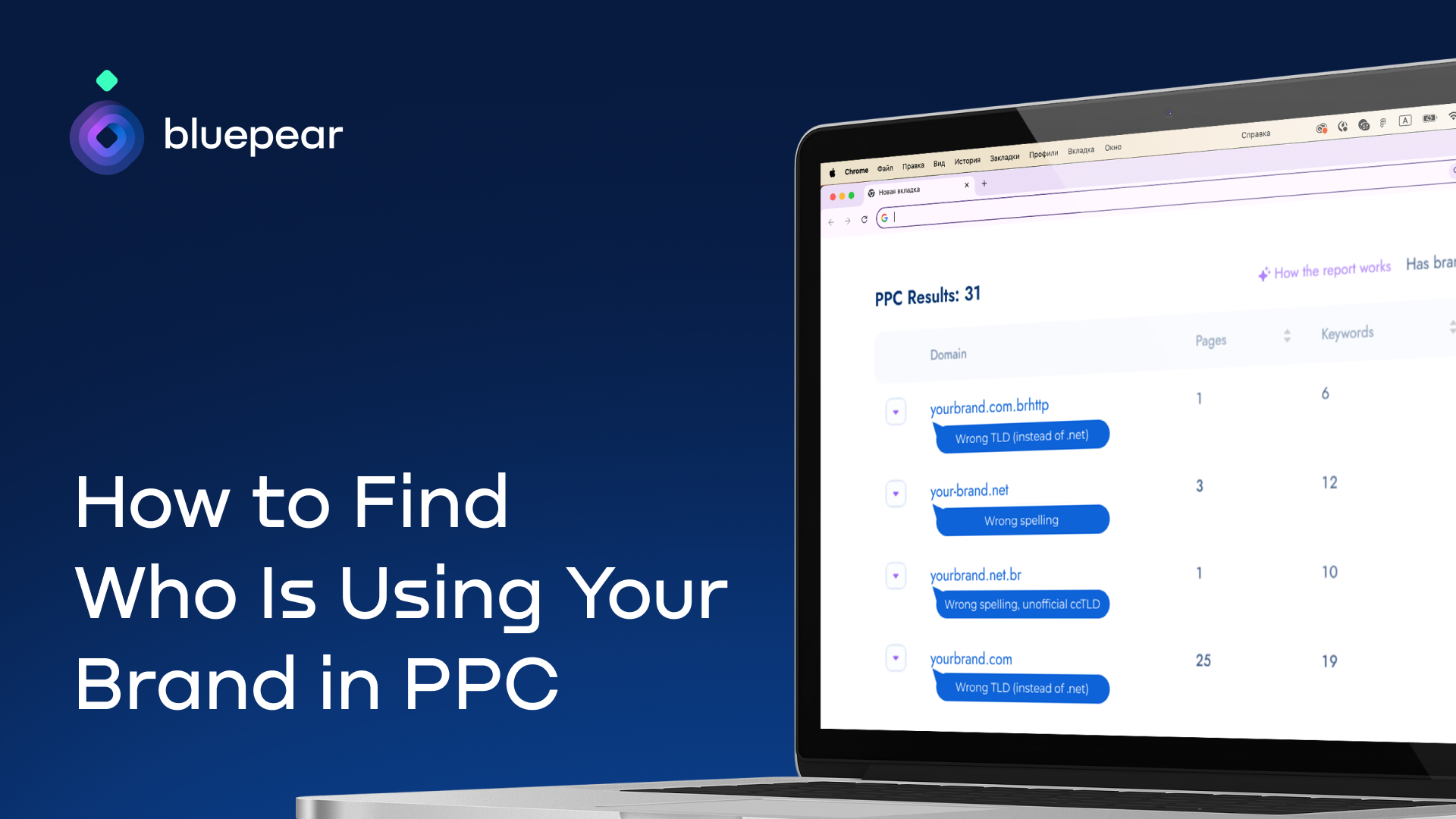
In this guide, Bluepear’s brand protection experts show you how to monitor branded keywords, identify who’s advertising on them, and determine what actions may be available based on what you find.
Choosing keywords to avoid gaps in your monitoring setup
To identify who’s using your brand in search ads, start by deciding which keywords to monitor.
One of the most common mistakes is monitoring only your exact brand name. While it’s a valid starting point, it rarely shows the full picture. Some advertisers deliberately target brand-related coupon, discount, review, or alternative queries because they attract high-intent users while drawing less scrutiny.
For example, someone searching for “Brand coupon” or “Brand discount code” may be much closer to making a purchase than someone searching for the brand alone. These queries also tend to attract coupon affiliates, loyalty sites, and unauthorized advertisers seeking to intercept branded traffic.
Similarly, searches containing terms like “reviews” or “alternatives” often attract competitors and comparison sites that position themselves alongside your brand.
Misspellings deserve special attention. Some advertisers deliberately target spelling variations because they’re less likely to be monitored and often face less competition.
Your brand monitoring setup should be based on these types of keywords:
- Your core brand name
- Brand + “official page” / “login”
- Brand + “coupon” / “discount” / “promo code”
- Brand + “reviews”
- Brand + “alternatives”
- Commercial keyword variations (“buy”, “order”, “sign up”)
- Common misspellings
- Localized versions of your brand name
Bluepear’s built-in AI assistant generates keyword suggestions using this list as a starting point.

The number of terms you need to monitor depends on the size of your brand portfolio, including trademarks, local branches, and product names. Most small to medium-sized brands start with about 20 keywords and expand coverage over time as new risks and opportunities emerge.
Choosing locations and monitoring frequency
A search from your office, on your device, at a single point in time rarely reflects what real customers see. Search results are highly dynamic, so two users searching for the same keyword may see entirely different ads and organic listings.
Another factor to consider: Some advertisers deliberately try to hide their activity.
For example, a…
Source link
Disclaimer
We strive to uphold the highest ethical standards in all of our reporting and coverage. We blogs.grocliq.com want to be transparent with our readers about any potential conflicts of interest that may arise in our work. It’s possible that some of the investors we feature may have connections to other businesses, including competitors or companies we write about. However, we want to assure our readers that this will not have any impact on the integrity or impartiality of our reporting. We are committed to delivering accurate, unbiased news and information to our audience, and we will continue to uphold our ethics and principles in all of our work. Thank you for your trust and support.
Website Upgradation is going on for any glitch kindly connect at [email protected]