

Security firm runZero has disclosed seven vulnerabilities in FatFs, a small filesystem library that lets a device read and write the FAT and exFAT formats used on USB drives and SD cards.
The flaws matter because FatFs is nearly everywhere. It ships inside the firmware that runs security cameras, drones, industrial controllers, hardware crypto wallets, and other devices built on real-time operating systems.
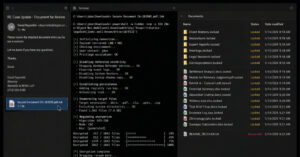
On the worst-affected systems, an attacker who gets a booby-trapped USB drive, SD card, or update file onto a device can corrupt its memory and run their own code.
Many embedded devices lack the memory protections found on phones and desktops, which is why runZero says “any physical access leads to a jailbreak.” A public kiosk, a camera with an SD slot, an ATM, or a voting machine with a USB port should not hand over full control after a moment of physical access, but here it can.
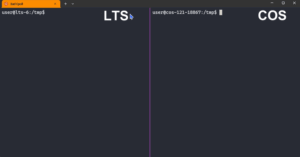
All seven bugs work the same basic way. The device tries to read a storage volume or firmware image that has been deliberately malformed, and FatFs mishandles the bad data. runZero rated the set CVSS Medium to High, with no Criticals.
The headline bug is CVE-2026-6682 (CVSS 7.6), an integer overflow in the code that mounts a FAT32 volume. Bad math can produce a false file size, which later code treats as a real read length. On real hardware, that can become memory corruption and code execution.
Here are all seven, worst first by runZero’s ranking:
- CVE-2026-6682 (7.6, High): FAT32 mount integer overflow leading to memory corruption and possible code execution. Reachable through some firmware updates, not just physical media.
- CVE-2026-6687 (7.6, High): an exFAT volume-label field overflows a small buffer, giving an attacker a clean memory-corruption foothold.
- CVE-2026-6688 (7.6, High): long filenames overflow the wrapper code many projects put around FatFs, such as a strcpy of fno.fname into a fixed buffer. Hard to fix inside FatFs alone.
- CVE-2026-6685 (6.1, Medium): a math wrap in cache handling on fragmented volumes that can silently corrupt data.
- CVE-2026-6683 (4.6, Medium): an exFAT divide-by-zero that crashes the device. In an update flow, it can brick hardware. Also reachable through some firmware updates.
- CVE-2026-6686 (4.6, Medium): a file extended past its end can leak leftover data from previously deleted files.
- CVE-2026-6684 (4.6, Medium): a malformed GPT partition table (the disk’s map) can hang the device during mount. It is the only one of the seven fixed upstream, in FatFs R0.16.
Here is the hard part. FatFs is maintained by one developer in a small corner of the internet, and runZero says it tried repeatedly to reach the maintainer and looped in Japan’s JPCERT/CC coordination center, with no response.
By runZero’s account, there is no upstream fix for the memory-corruption bugs, no security mailing list, and no way for the many products that bundle FatFs to learn they are affected. Updating helps with the GPT…
Source link
Disclaimer
We strive to uphold the highest ethical standards in all of our reporting and coverage. We blogs.grocliq.com want to be transparent with our readers about any potential conflicts of interest that may arise in our work. It’s possible that some of the investors we feature may have connections to other businesses, including competitors or companies we write about. However, we want to assure our readers that this will not have any impact on the integrity or impartiality of our reporting. We are committed to delivering accurate, unbiased news and information to our audience, and we will continue to uphold our ethics and principles in all of our work. Thank you for your trust and support.
Website Upgradation is going on for any glitch kindly connect at [email protected]