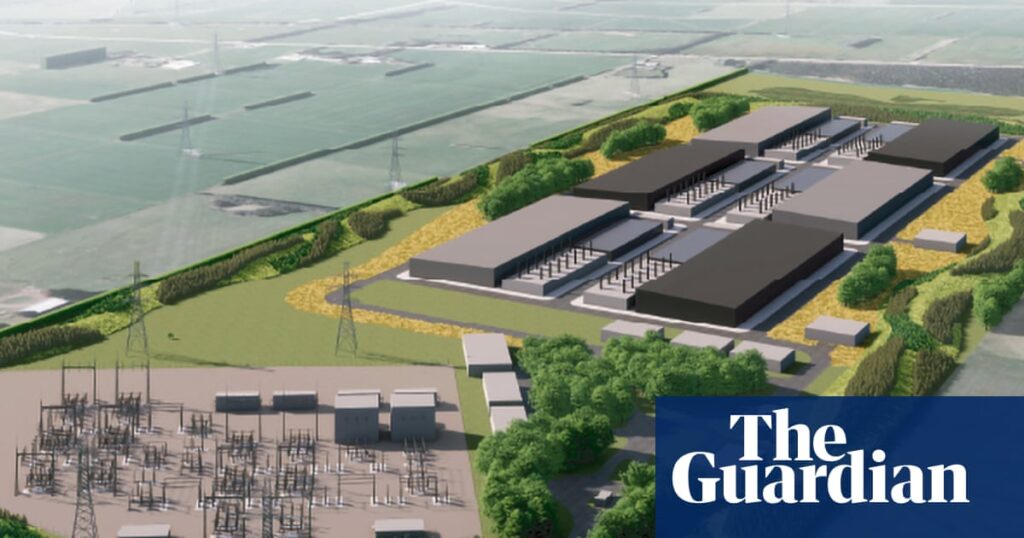

People living near the site of New Zealand’s first planned AI datacentre are calling for more transparency about the project, especially about how the centre’s huge electricity and water use and potential noise pollution could affect them.
Singapore-based company Datagrid has secured approval to build a NZ$3.5bn (US$2bn) AI datacentre on a 49-hectare site in Makarewa, just north of New Zealand’s southern-most city, Invercargill. Construction is due to begin this year, with the centre becoming operational by 2028.
The facility will be used for AI training, processing and data storage and will serve global AI and cloud providers, says the company’s website. Datagrid also plans to build a high-speed internet cable between Invercargill and Australia.
Datacentres require large amounts of electricity, water and land, and their rapid growth is igniting debate and protest around the world, as communities grapple with the associated environmental issues, increasing power bills and claims that they are not seeing local economic benefits, despite data company promises.
The centre in Makarewa will become New Zealand’s second largest user of electricity, after the nearby Tiwai Point aluminium smelter, using 280MW of electricity.
Local authorities have hailed the project as a win for the region, saying it will create jobs and sped up the internet. The company says about 1,200 jobs will be created during the construction phase, and about 50 permanent positions on completion.
But Angus Dowell, an economic geographer whose PhD project looks at the construction of datacentres said there were “a lot of red flags,” about the project, and about New Zealand’s push to become an AI hub.
“[The centres] provide short term economic benefits in the form of construction, but they’re very, very low employers long term, and so the long term benefits to local economic development are just not there, they don’t stack up,” he said.
Residents in the neighbouring community are worried about the development.
“Locals down here kind of feel like we’ve had our region sold out from underneath us,” said Kelly Blomfield, the chair of the Southland Sustainable Resource coalition, an advocacy group that monitors regional infrastructure projects.
“I think that most people’s actual concern is that we don’t find out anything until its done,” she said, adding that attempts to gather more information from Datagrid have been unsuccessful.
The centre is part of the New Zealand government’s attempts to attract foreign investment and build datacentres. Government agency Invest New Zealand wants to secure NZ$25-30bn in foreign investment to build datacentres and AI infrastructure, the agency said.
New Zealand “offers a compelling opportunity” and “a safe harbour” for investment because of its access to renewable energy, available land and cool climate, the agency says on…
Source link
Disclaimer
We strive to uphold the highest ethical standards in all of our reporting and coverage. We blogs.grocliq.com want to be transparent with our readers about any potential conflicts of interest that may arise in our work. It’s possible that some of the investors we feature may have connections to other businesses, including competitors or companies we write about. However, we want to assure our readers that this will not have any impact on the integrity or impartiality of our reporting. We are committed to delivering accurate, unbiased news and information to our audience, and we will continue to uphold our ethics and principles in all of our work. Thank you for your trust and support.
Website Upgradation is going on for any glitch kindly connect at [email protected]