

Paid search has changed. Auction dynamics shift by the hour, competitor bids adjust in real time, and search behavior varies across devices, times of day, and audience segments in ways monthly reporting cycles weren’t built to capture.
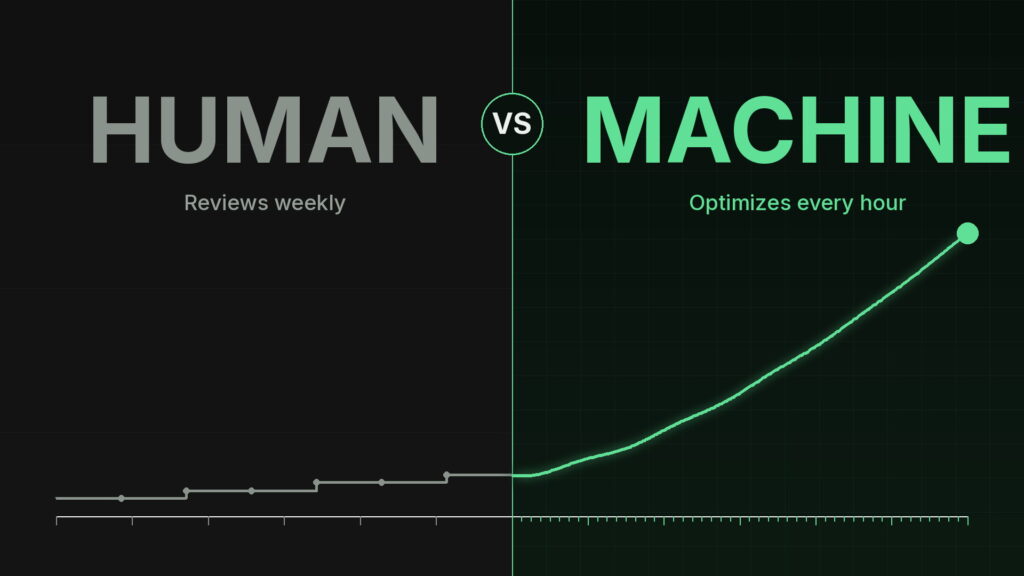
The gap between a performance signal and a human response has always carried a cost. groas closes that gap every hour of every day. Here’s what the data showed when it did.
When you sign up with groas, the process starts with a human account manager conducting a full audit of your existing Google Ads account. This isn’t a surface-level review — campaign structure, keyword strategy, bidding logic, budget allocation, conversion tracking, quality scores, search term reports, and auction insights all come under scrutiny.
The quality of that audit shapes everything that follows. groas’s system optimizes toward the goals and structure defined in the roadmap, so a well-structured account with a clear conversion hierarchy and accurate tracking gives it stronger signals to work with. That’s why the human work at the start matters so much: it forms the foundation for everything that follows.
From there, the rollout is paced over the first 60 days, so nothing moves before the system understands the account it’s working in.
- Weeks 1 to 2 — Observation: groas ingests historical performance data, establishes baselines, and maps patterns across search terms, device performance, time-of-day variance, and audience behavior. No changes are made while the system learns the account.
- Weeks 3 to 4 — Calibration: The system begins targeted optimizations: bid adjustments, negative keyword additions, match type refinements, and budget reallocation between campaigns. These are deliberate interventions, working campaign by campaign so each change builds on the last.
- Weeks 5 to 6 — Traction: Early changes start to show. Performance shifts become visible across ROAS, conversion value, and wasted spend as the optimizations compound.
- Weeks 7 to 8 — Scaling: Around the 60-day mark, the account has stabilized, and groas begins scaling: pushing more budget into the campaigns and keywords with the strongest conversion history and expanding from a proven base.
Once running, groas works across the full account the way a skilled team would, except it never stops. It writes and tests ad copy, deploys dynamic landing pages that reshape around each search, turns ad groups on and off as performance dictates, moves budget where it earns the most, and adjusts bidding strategies in response to live signals.
Anything a person can do inside Google Ads, groas can do, too — around the clock.
Capability is one thing; results are another.
The clearest way to show what continuous, full-surface management is worth is to follow one real account groas took over: a high-spend search account in a notoriously unforgiving corner of paid search. Specifically, it was a U.S.-based online mobile…
Source link
Disclaimer
We strive to uphold the highest ethical standards in all of our reporting and coverage. We blogs.grocliq.com want to be transparent with our readers about any potential conflicts of interest that may arise in our work. It’s possible that some of the investors we feature may have connections to other businesses, including competitors or companies we write about. However, we want to assure our readers that this will not have any impact on the integrity or impartiality of our reporting. We are committed to delivering accurate, unbiased news and information to our audience, and we will continue to uphold our ethics and principles in all of our work. Thank you for your trust and support.
Website Upgradation is going on for any glitch kindly connect at [email protected]