

Cybersecurity researchers have flagged a new macOS information stealer called CrashStealer that’s capable of harvesting sensitive data from compromised systems.
Unlike other information stealers that are built on AppleScript droppers or Objective-C-based wrappers, CrashStealer is implemented in native C++, according to Jamf Threat Labs.
“It validates the victim’s login password locally before harvesting, collects broadly across browsers, cryptocurrency wallets, password managers, and the keychain, encrypts what it collects with AES-GCM before exfiltrating over libcurl, and persists by copying and re-signing itself,” security researcher Thijs Xhaflaire said in a report shared with The Hacker News.
CrashStealer is said to be distributed by means of a signed and Apple-notarized dropper that’s distributed as a disk image file named “Werkbit.app.” Because both the disk image and binary are notarized and carry a valid developer ID (“Emil Grigorov (WWB7JA7AQV)”), it passes Gatekeeper checks.
The disk image itself originates from the domain “werkbit[.]io,” which was registered in June 2026. In an interesting twist, the download is gated behind a meeting PIN, meaning the installer is served only to those site visitors who arrive with the right code rather than everyone.
The discovery of additional domains and shared backend infrastructure tied to the same operation points to CrashStealer being part of a larger, multi-platform campaign.
Once mounted, the disk image presents the user with an installation setup screen that instructs them to right-click the app and choose “Open” to get them to run it. Once launched, the “veltod” executable contacts a GitHub repository (“github.com/mgothiclove”) to retrieve a file named “sys.cache.”
The file is then used to extract a curl command and pull a shell script, which acts as a downloader to fetch and stage the next payload (“CrashReporter.dmg”) and saves it to the “/tmp” directory.
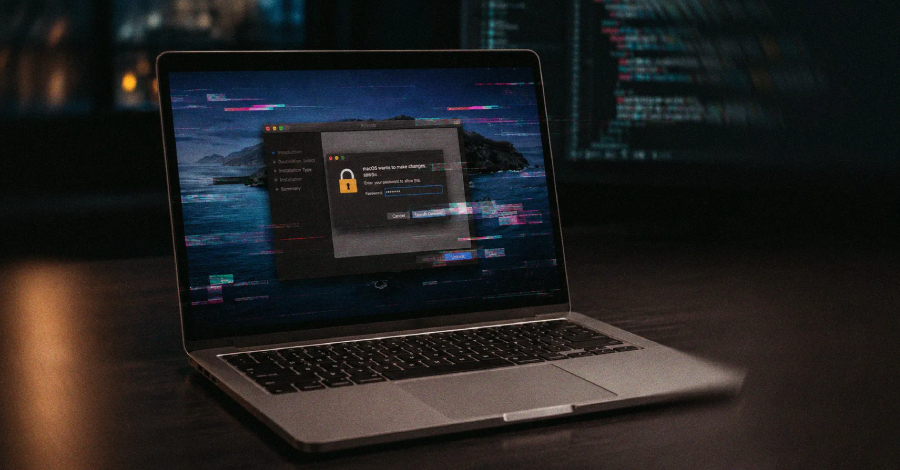
The malware, upon execution, establishes persistence as a LaunchAgent, resists analysis, presents a password prompt and validates the entered credential locally, unlocks the login keychain using the validated password, lists installed security and analysis tooling, before proceeding to collect browser data, cryptocurrency wallet extensions, password manager data, and keychain material.
The complete list of data harvested is below –
- Credentials from Chromium-family browsers, including Google Chrome, Brave, Microsoft Edge, Opera and Opera GX, Vivaldi, Chromium, and Naver Whale
- Roughly 80 cryptocurrency wallet extensions, including MetaMask, Phantom, Coinbase, Trust Wallet, Rabby, OKX Wallet, Exodus, Keplr, Solflare, and Backpack
- 14 password managers, including 1Password, Bitwarden, LastPass, Dashlane, Keeper, KeePassXC, NordPass, Enpass and RoboForm
- File from ~/Documents and ~/Downloads directories
The harvested data is then packaged into a ZIP archive…
Source link
Disclaimer
We strive to uphold the highest ethical standards in all of our reporting and coverage. We blogs.grocliq.com want to be transparent with our readers about any potential conflicts of interest that may arise in our work. It’s possible that some of the investors we feature may have connections to other businesses, including competitors or companies we write about. However, we want to assure our readers that this will not have any impact on the integrity or impartiality of our reporting. We are committed to delivering accurate, unbiased news and information to our audience, and we will continue to uphold our ethics and principles in all of our work. Thank you for your trust and support.
Website Upgradation is going on for any glitch kindly connect at [email protected]