
For years, I told bloggers through audits, podcasts, and live trainings to write their content for “toddlers and drunk adults.”
That was simple advice, and it worked. If a 5-year-old and someone half-paying attention could follow the page content and still find what they needed, the content was probably clear enough for users and Google alike.
But in 2026, that rule needs an update.
Bloggers are no longer writing just for readers skimming on phones, distracted parents trying to make dinner, or travelers planning from an airport terminal.
They’re also writing for large language models, AI Overviews, AI Mode, and search systems that are scanning, summarizing, and deciding whether their content is clear enough to retrieve, cite, or ignore.
That’s the real shift. And as such, my advice to bloggers has evolved to “write for toddlers, drunk adults, and LLMs.”
Google is no longer just asking, “What is the best page to rank for this query?”
Increasingly, it’s asking, “What answer can we construct, what sources support that answer, and what might the user want to do next?”
That changes the job for bloggers.
The old SEO playbook was built around keywords, titles, H2s, and rankings. Those things still matter, but they’re no longer enough by themselves.
The new SEO playbook is built around clarity.
- Can Google understand who you are?
- Can users understand what your site is about?
- Can AI systems understand how your articles connect?
- Can your content answer the question quickly without making readers dig through clutter, filler, popups, and five nearly identical photos of the same finished dish?
For food, lifestyle, and travel bloggers, this isn’t a small adjustment. It’s a business survival issue.
The bloggers who continue to win won’t be the ones chasing every new acronym, every plugin score, or every AI optimization gimmick.
They’ll be the ones building clearer sites, stronger brands, better internal connections, and more useful content experiences for real people.
In 2026, clarity isn’t just good UX. It’s your SEO strategy.
Be the brand AI recommends.
See where your brand appears in AI search, where competitors are winning, and what it takes to become the answer AI recommends.
See your AI visibility
Why search changed (and why it matters)
For years, most bloggers understood SEO through a pretty simple model.
A user searched for something. Google returned a list of blue links. The blogger’s job was to create the best page for that query and earn the click.
That model still exists. But it’s no longer the only model that matters.
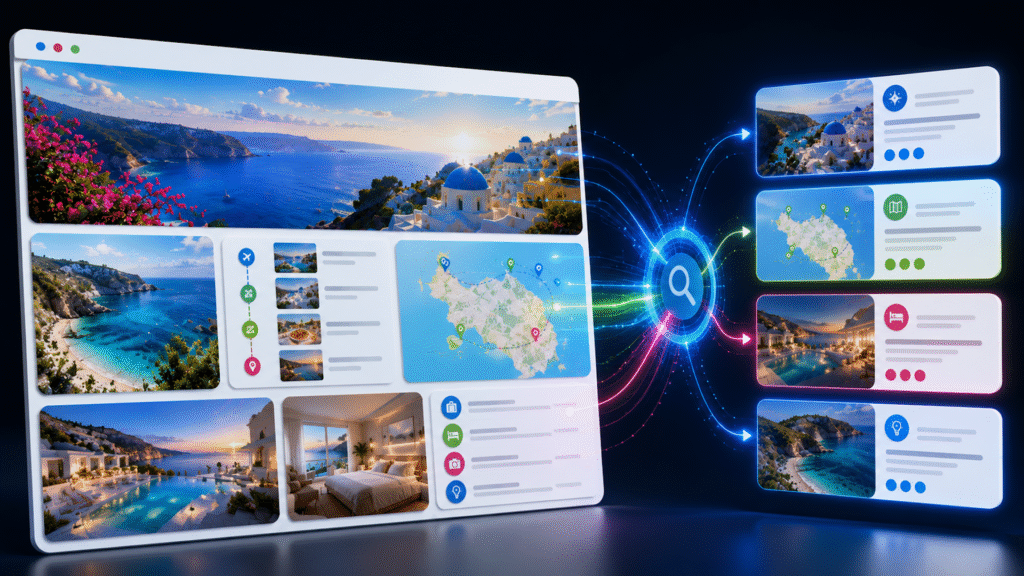
Traditional search mostly asked: “What are the best documents to rank for this query?”
AI search increasingly asks: “What answer can we construct, what sources support that answer, what else might the user need, and…
Source link
Disclaimer
We strive to uphold the highest ethical standards in all of our reporting and coverage. We blogs.grocliq.com want to be transparent with our readers about any potential conflicts of interest that may arise in our work. It’s possible that some of the investors we feature may have connections to other businesses, including competitors or companies we write about. However, we want to assure our readers that this will not have any impact on the integrity or impartiality of our reporting. We are committed to delivering accurate, unbiased news and information to our audience, and we will continue to uphold our ethics and principles in all of our work. Thank you for your trust and support.
Website Upgradation is going on for any glitch kindly connect at [email protected]