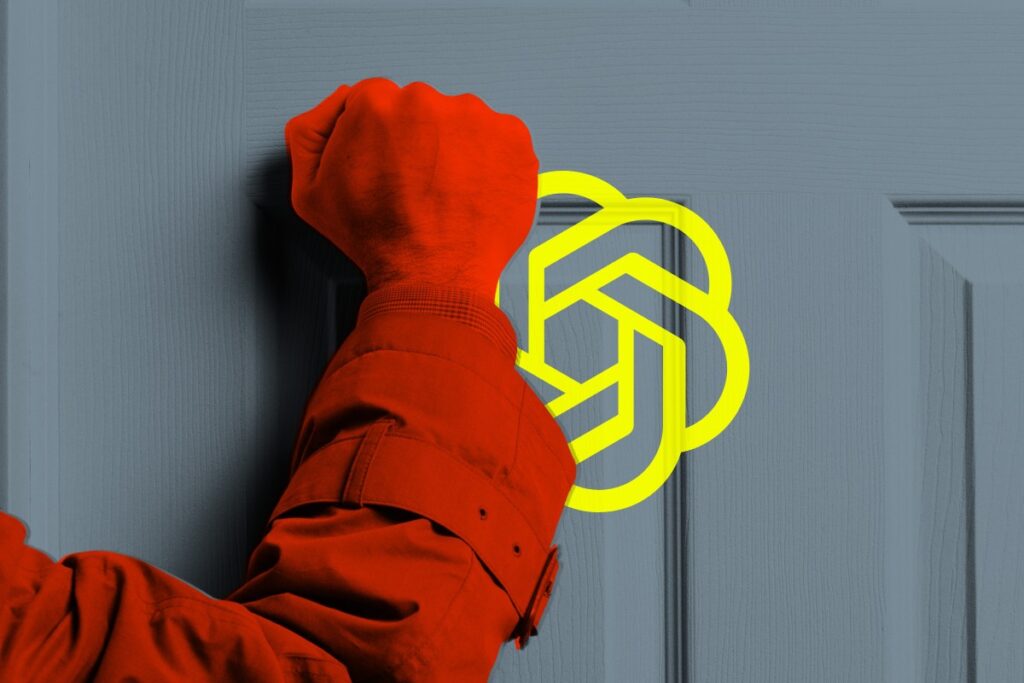

A man who works at an AI watchdog group was alarmed when OpenAI suddenly showed up at his doorstep last fall, demanding he turn over documents. To his utter disbelief, he was being subpoenaed.
“It’s a bit scary to know that the most valuable private company in the world has your address and has shown up and has questions for you,” the man, Tyler Johnston, who founded the nonprofit advocacy group The Midas Project, said in a new interview with A More Perfect Union.
“They were asking for every former employee we had spoken to and what we said to them,” he added. “Every congressional office that we spoke to, every potential investor that we spoke to.”
Johnston wasn’t alone. In all, NBC News reported last October that at least seven nonprofits that had been critical of OpenAI were served with subpoenas around the time of reporting, as part of a lawsuit between OpenAI and Elon Musk.
Later the same October that Johnston was subpoenaed, OpenAI completed its restructuring into a for-profit public benefit corporation, a move that was over a year and a half in the making. It had been challenged at every turn by Microsoft, which had invested billions of dollars into the startup, and Musk, who cofounded OpenAI but left the company in 2018 reportedly over disagreements with Altman, and who was now suing it for abandoning its original altruist mission of building open source models.
As the suit dragged out, a paranoid-sounding OpenAI began accusing its critics of being funded by Musk. And that’s how representatives from the company ended up at Johnston’s house.
“They wanted every single text message and document that we had that in any way related to OpenAI’s restructuring,” he told Perfect Union.
The subpoenas also came as OpenAI and other tech companies worked to shoot down a California bill that would’ve required the companies to restrict minors’ access to their AI models unless they could demonstrate their guardrails prevented the bot from promoting self-harm and other dangerous topics. With its restructuring on the line, and under threat of being subjected to powerful regulation, OpenAI had every reason to be more conscious of its image than ever. (Governor Gavin Newsom eventually vetoed the bill, and a weaker version of the legislation was enacted instead.)
As other AI watchdogs came forward to share how OpenAI had subpoenaed them as well, Johnston confronted its chief strategy officer Jason Kwon, who made a post on X accusing The Midas Project of having “suddenly” formed around when Musk sued OpenAI, arguing this raised “transparency questions.”
“What are you talking about?” wrote an exasperated Johnston. “We were formed 19 months ago. We’ve never spoken with or taken funding from Musk and ilk, which we would have been happy to tell you if you asked a single time.”
Source link
Disclaimer
We strive to uphold the highest ethical standards in all of our reporting and coverage. We blogs.grocliq.com want to be transparent with our readers about any potential conflicts of interest that may arise in our work. It’s possible that some of the investors we feature may have connections to other businesses, including competitors or companies we write about. However, we want to assure our readers that this will not have any impact on the integrity or impartiality of our reporting. We are committed to delivering accurate, unbiased news and information to our audience, and we will continue to uphold our ethics and principles in all of our work. Thank you for your trust and support.
Website Upgradation is going on for any glitch kindly connect at [email protected]
Related Articles