
The backlog in criminal courts in England and Wales will take a decade to fall to pre-Covid levels despite radical changes including curtailing jury trials, according to figures from the Ministry of Justice.
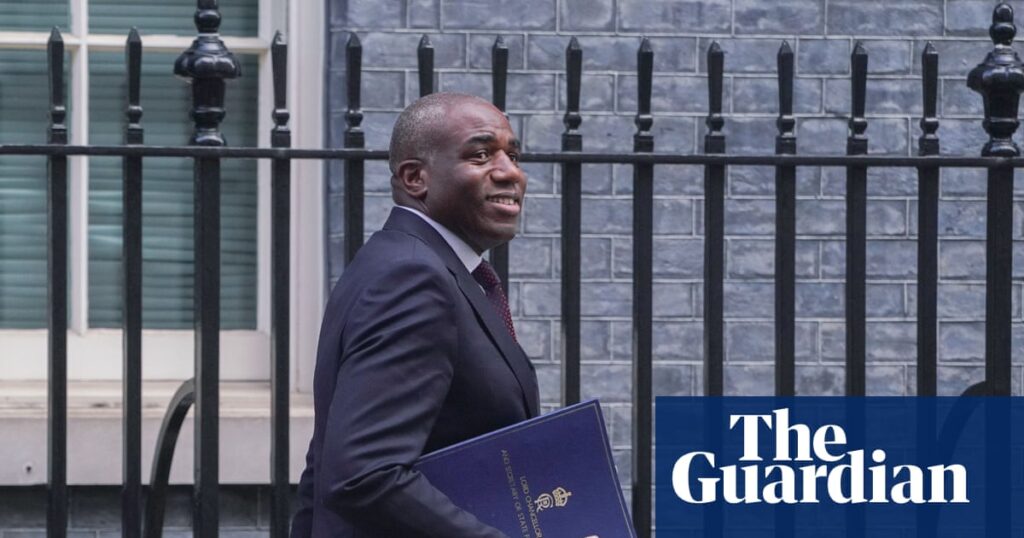
The justice secretary, David Lammy, said the government was determined to press ahead with the jury trial changes despite a potential rebellion from Labour MPs. He took aim at critics, who he said “sounded quite patrician, quite old-fashioned, quite male”.
It will take a decade for the changes to reduce the backlog even to below the current levels because of the scale of the increase, Ministry of Justice figures show. More than 80,000 cases are now in the crown court backlog, which is predicted to reach 100,000 by 2028, when the overhaul would come into force should the bill pass.
Lammy was speaking at the Microsoft AI Tour in London, in recognition of the fact that he is relying on artificial intelligence to help reduce the court backlog. But it is the decision to reduce jury trials that has attracted the most controversy among MPs and the legal profession.
In a rebuff to his critics, the justice secretary said jury trials were a small part of the package to cut the backlog and added there was a danger of failing to acknowledge the toll that delays were taking on victims of crime, in particular on women.
“There will be heated debate [in parliament] about what the government is proposing,” said Lammy. “And I hope that we centre victims in that debate and I have observed that sometimes the debates have sounded quite patrician, quite old-fashioned, quite male, forgetting often that the victims of crime are often vulnerable, often minorities, sadly children and very often women and we have to keep them in the front of our minds.”
Some of the strongest criticism of further limiting jury trials has come from the legal profession and Lammy, who qualified as a barrister in 1995, said that it was “a conservative profession with a small c”.
He pointed out that the bar had opposed changes to the double jeopardy rule, which had prevented someone being tried more than once for the same offence. However, once the changes were passed they provided “partial justice” for the family of Stephen Lawrence, who was murdered in a racist gang attack in 1993.
Lammy said only a combination of investment in modernisation and changes such as judge-only trials would start to bring the court backlog down.
On Tuesday, the government announced it would lift the cap on court sitting days, one of the measures that critics of the changes have said would help clear the backlog.
Lammy said that, as critics had requested, he had found more money for courts, with funding increasing to £2.8bn next year – including £287m to fix the crumbling court estate – from £2.5bn last year, and announced measures to tackle inefficiencies, including the failure to get prisoners to courts on time. But, he said, that was…
Source link
Disclaimer
We strive to uphold the highest ethical standards in all of our reporting and coverage. We blogs.grocliq.com want to be transparent with our readers about any potential conflicts of interest that may arise in our work. It’s possible that some of the investors we feature may have connections to other businesses, including competitors or companies we write about. However, we want to assure our readers that this will not have any impact on the integrity or impartiality of our reporting. We are committed to delivering accurate, unbiased news and information to our audience, and we will continue to uphold our ethics and principles in all of our work. Thank you for your trust and support.
Website Upgradation is going on for any glitch kindly connect at [email protected]