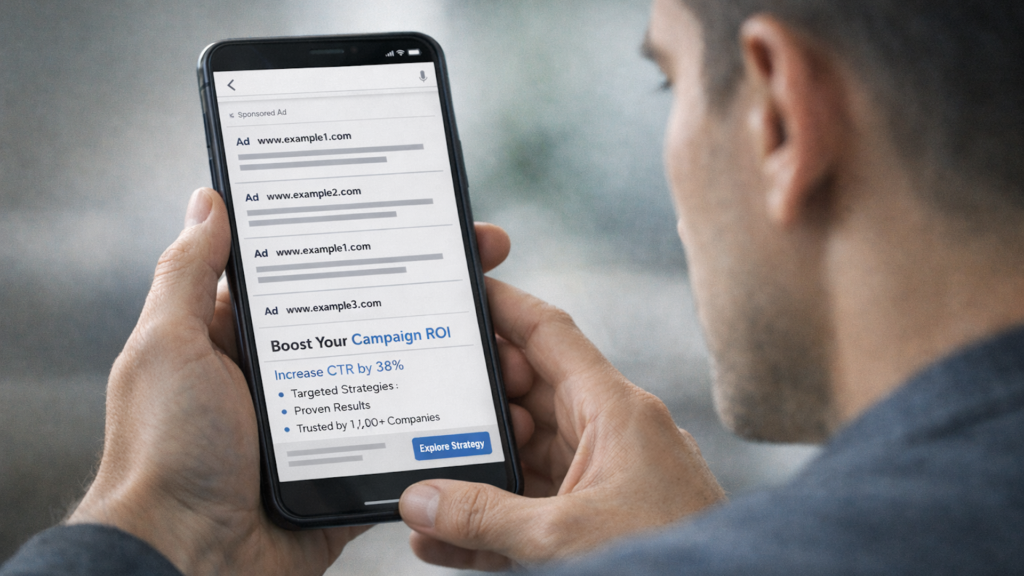

How often do you review your PPC ad copy? Not just analyzing the performance of each asset within the ad platform, but also reviewing your ads in the context of how they appear next to competitor ads?
Are you using the exact same messaging as your competitors? Does your offer stand out from theirs? Which ads are bland and generic, and which provide concrete calls to action and compelling selling points?
Let’s walk through several tips for writing paid search copy that stands out in search results and converts customers for your brand.
1. Think about how assets will appear together, not just individually
When you’re writing Responsive Search Ads, it’s easy to fall into the trap of simply filling in all 15 headline options and all four descriptions.
However, if each headline essentially says the same thing with slightly different wording, your ad copy will appear bland and repetitive in the SERP when two or three headlines are shown together.

For instance, if this example ad showed the following, it would be less helpful:
- “Project Management Software – Project Management Solution – Project Management”
Instead, it says:
- “Project Management Software – Trusted by 3 Million Users”
If you want to test multiple headlines with slightly different wording, pin them to the same position so the ad platform can rotate between them, but not show both at the same time. Zoho appears to be doing this by using both “Preferred by 3 Million Users” and “Trusted by 3 Million Users” as options.

Dig deeper: The anatomy of compelling search ad copy
2. Don’t obsess over ad strength
The visibility of the ad strength rating looms over every Google Ads account. Don’t let chasing an Excellent score consume your focus.
Focus more on making sure each headline and description speaks accurately to your benefit points than on including the maximum number of each. Pinning may negatively impact ad strength, but as discussed above, it can help make your messaging cleaner.
3. Use AI as a partner, but don’t blindly outsource all your copy to AI
Google and Microsoft make ad writing easy, generating text for all your ad assets with a single click. Your LLM of choice can also spin out halfway acceptable copy with the right prompt.
These tools can provide a helpful starting point, but they shouldn’t be the final result you use without careful review. Don’t skip the human touch when reviewing the copy you get back.
Problems can range from copy that doesn’t reflect your brand voice to flat-out inaccuracies. In industries such as finance and healthcare, where legal guidelines matter, AI-generated copy may not be compliance-friendly.
Dig deeper: How to write high-performing Google Ads copy with generative AI
Get the newsletter search marketers rely on.
4. Include value propositions, and back them up
It’s not enough to claim that you’re the…
Source link
Disclaimer
We strive to uphold the highest ethical standards in all of our reporting and coverage. We blogs.grocliq.com want to be transparent with our readers about any potential conflicts of interest that may arise in our work. It’s possible that some of the investors we feature may have connections to other businesses, including competitors or companies we write about. However, we want to assure our readers that this will not have any impact on the integrity or impartiality of our reporting. We are committed to delivering accurate, unbiased news and information to our audience, and we will continue to uphold our ethics and principles in all of our work. Thank you for your trust and support.
Website Upgradation is going on for any glitch kindly connect at [email protected]