
MediaNama’s Take
The DNPA’s case against OpenAI reflects a global reckoning over how AI reshapes news consumption. As AI models like ChatGPT deliver instant summaries and AI Overviews in search results by Google, publishers face shrinking traffic and reduced visibility. Users no longer need to click through to the source, eroding ad revenue and undermining the economic foundation of journalism.
OpenAI’s denial that it trains on Indian news content sidesteps a larger truth: AI outputs can still displace the need to visit original reporting, even if the data source is disputed. In markets like the US and Europe, licensing deals between AI companies and media, such as OpenAI’s partnerships with Time, the Financial Times, News Corp, and Axel Springer, offer a path forward. These agreements exchange archive and live content access for revenue, attribution, and product collaboration.
India’s legal framework has yet to define when AI use of journalism requires a license. Without clear precedent, publishers must fight case by case, losing ground to platforms in the meantime. The DNPA case could set that precedent, ensuring that when AI leverages news for real-time answers, it also compensates those who produce it. Otherwise, AI risks becoming the default front page, with no newsroom left to power it.
What’s the news?
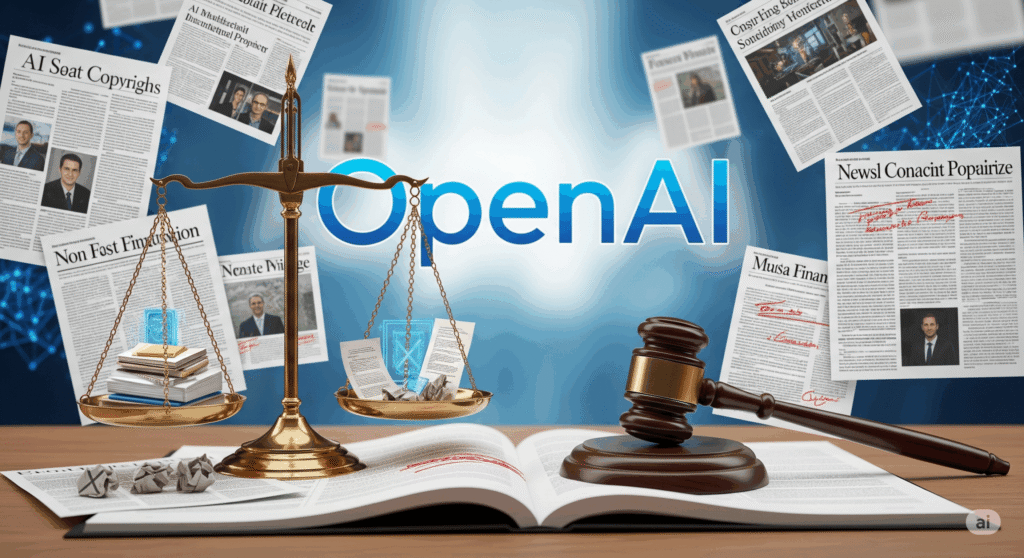
According to Bar & Bench, several of India’s digital publishers have accused OpenAI of threatening the survival of online journalism by allegedly using their content to train ChatGPT without permission. In a petition heard by the Delhi High Court on August 5, 2025, the Digital News Publishers Association (DNPA) argued that OpenAI “scrapes, stores, and reproduces” news articles from its members without paying any license fee or attribution.
The DNPA includes major media organisations such as India Today, Dainik Jagran, and The Times of India, and represents the interests of the digital arms of legacy news publishers. It has joined news agency ANI’s ongoing lawsuit against OpenAI for copyright infringement. Justice Amit Bansal is presiding over the case in the Delhi High Court, with Senior Advocate Rajshekhar Rao appearing for DNPA.
“Physical newspapers are disappearing, digital news will disappear, and only ChatGPT will remain,” Senior Advocate Rajshekhar Rao told the court, according to Bar & Bench. He claimed this undermines incentives to invest in journalism and violates copyright laws. DNPA described OpenAI’s practices as “erasing news media” and urged the court to compel the US-based company to stop using Indian news content.
OpenAI has denied the allegations. In a February 2025 filing, the company stated it “does not use Indian media groups’ content” to train ChatGPT and that its models are built on publicly available data under fair-use principles. It also told the court that removing training data would breach U.S. legal obligations.
What was argued in the…
Source link
Disclaimer
We strive to uphold the highest ethical standards in all of our reporting and coverage. We blogs.grocliq.com want to be transparent with our readers about any potential conflicts of interest that may arise in our work. It’s possible that some of the investors we feature may have connections to other businesses, including competitors or companies we write about. However, we want to assure our readers that this will not have any impact on the integrity or impartiality of our reporting. We are committed to delivering accurate, unbiased news and information to our audience, and we will continue to uphold our ethics and principles in all of our work. Thank you for your trust and support.
Website Upgradation is going on for any glitch kindly connect at [email protected]